

[비즈한국] The government is pushing to utilize Knowledge Industry Centers, which are currently suffering from high vacancy rates, for housing supply. While the industry is optimistic about the potential to resolve vacancies while simultaneously increasing housing supply, experts point to the high costs of structural remodeling, complex ownership structures, and the difficulties in obtaining permits for change of use as major hurdles. In the field, there are also calls for stronger communication with the industry to ensure the policy's effectiveness.
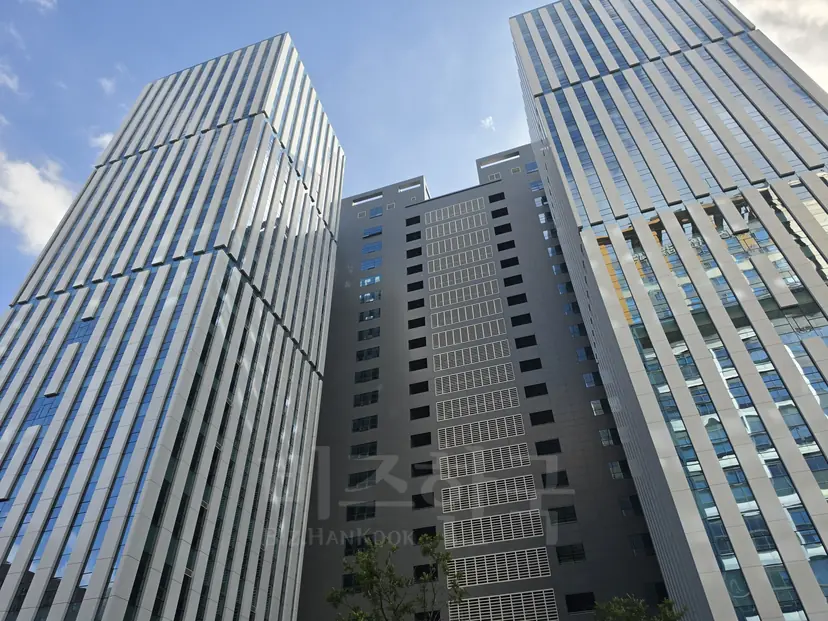
According to a report by the Korea Institute of Real Estate Development on "Reviewing the Change of Use for Knowledge Industry Centers to Resolve Supply-Demand Mismatches Between Residential and Industrial Spaces," the vacancy rate for Knowledge Industry Centers in the metropolitan area is estimated at approximately 55%. Due to these high vacancy rates, the idea of repurposing these facilities for residential use has been raised for a long time.
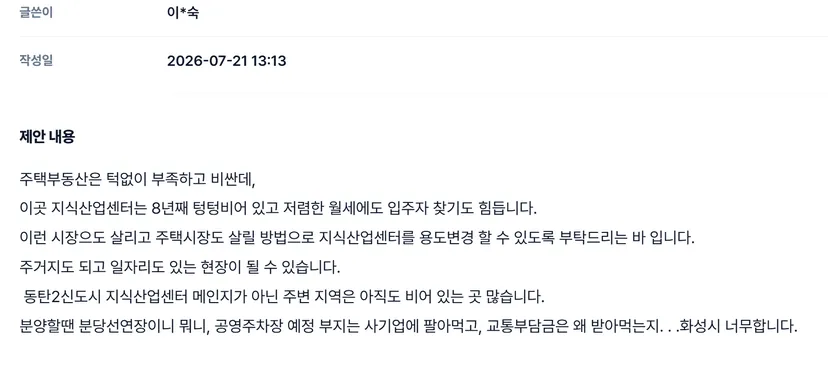
This topic was also discussed at the recent National Grand Forum on Real Estate Policy. On the forum's online proposal bulletin board, suggestions were frequently made to either supply vacant Knowledge Industry Centers as public rental housing or to relax regulations to allow for conversion into residential use.
The Ministry of Land, Infrastructure and Transport is also pushing for institutional reforms to utilize these vacancies for housing supply. To expand the supply of non-apartment housing, the ministry has issued a pre-announcement for the revision of the Enforcement Decree of the National Land Planning and Utilization Act, which would allow for the temporary conversion of Knowledge Industry Centers in general industrial zones into officetels until 2027.
The government also plans to expand the scope of properties eligible for purchase by the Korea Land and Housing Corporation (LH) so that Knowledge Industry Centers can be used as public rental housing. The Ministry has announced a legislative notice for the revision of the Enforcement Decree of the Special Act on Public Housing to include "factories" as objects for purchased rental housing, and is currently taking subsequent steps with the goal of finalizing the revision in September. Although the law has not yet been revised, LH has already included factories within Knowledge Industry Centers as targets for non-residential remodeling projects. Actual deliberation and selection of project targets are planned to be reviewed as the revision process progresses.
The government's push to utilize Knowledge Industry Centers stems from the view that existing buildings can be used to supply housing relatively quickly. Using these centers eliminates the need for relocation and demolition required in redevelopment projects, or the need to secure new land and infrastructure as is the case with public housing sites. Furthermore, centers located near transit hubs or business districts have the potential to serve as housing that offers proximity to workplaces.
However, aside from the policy's intent, there are significant practical constraints to overcome before actual residential conversion can occur. The revision of the enforcement decree only opens an institutional path for converting centers into officetels and for LH to purchase them; it does not automatically convert individual buildings into residential facilities. Because the original usage and structural design of each building vary, permits for change of use must be obtained on a building-by-building basis.
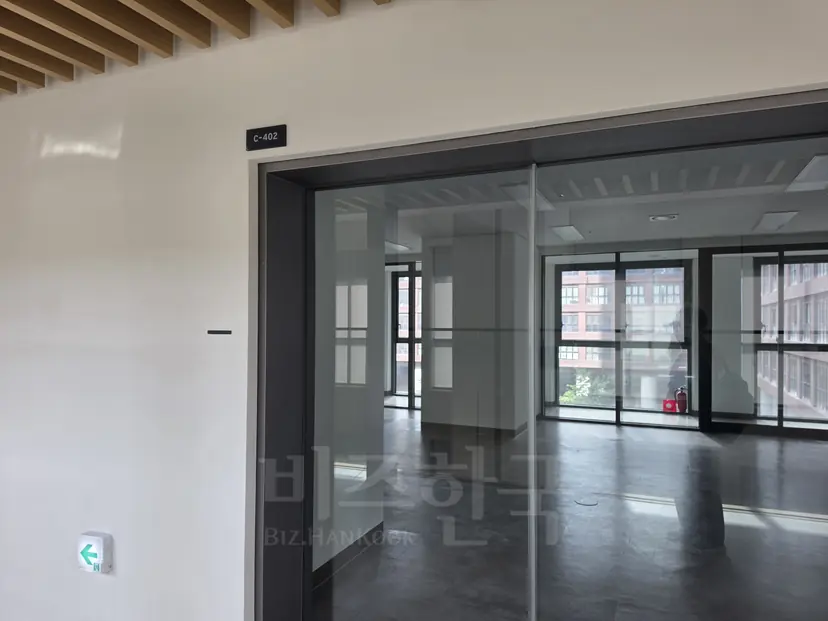
The cost of structural modifications is also a burden. Some Knowledge Industry Centers feature large, open floor plans divided by partitions, with shared restrooms on each floor. To convert these into residential spaces, individual bathrooms, kitchens, and water supply/drainage systems must be installed in each unit. Depending on the condition of the building, construction may also be required to reinforce waterproofing, lighting, ventilation, fire safety, and soundproofing. As the scope of structural changes expands, so does the burden of construction costs.
The separate ownership structure is another variable. Knowledge Industry Centers are often sold in units, meaning one building may be owned by multiple individuals. Changes to common areas or a building-wide change of use may require the consent of these individual owners. If only some units are converted to residential use, it could lead to issues where industrial and residential facilities are mixed within the same building.
Experts also believe that the facilities and ownership structure of these centers could act as constraints during the actual conversion process. Lee Eun-hyung, a research fellow at the Research Institute of Construction Policy, pointed out, "There are costs involved in installing individual bathrooms, kitchens, and plumbing, as well as reinforcing walls and soundproofing. In centers sold to individual owners, obtaining consent can also become a source of difficulty." This is why there are voices emphasizing the need for a process that carefully considers the conditions of each building if the policy is to lead to actual housing supply.
Within the industry, there is a positive sentiment toward the policy because it can address both vacancy issues and housing supply. During the National Grand Forum on Real Estate Policy held on July 23, a representative of a developer for a Knowledge Industry Center in Uiwang, Gyeonggi-do, attended and expressed support for the policy, stating their intention to participate in such projects.
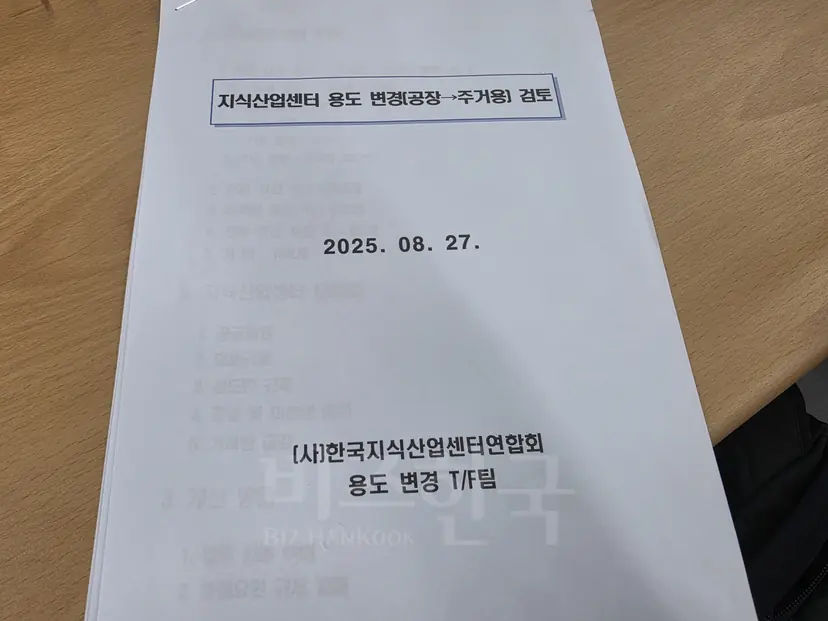
On the other hand, some argue that there is a lack of communication with those in the field during the policy implementation process. Lee Yong-bok, chairman of the Korea Knowledge Industry Center Association, while welcoming the policy, stated, "(The government) did not have separate communication with our association. It is regrettable that the opinions of stakeholders who are familiar with the actual field were not sufficiently reflected."