

[비즈한국] For foreigners, South Korea is a difficult country to find employment and settle in. Even after graduating from a Korean university, there are many hurdles to overcome, such as visa status and permitted job categories. Recently, however, there has been a noticeable push to lower these barriers. Companies expanding their overseas operations are actively recruiting international students who are fluent in both their local languages and familiar with Korean society, while the government is also providing support for employment and settlement by extending job-seeking and internship periods. In an era with 300,000 international students, this is an interesting shift toward connecting talent trained in Korea to the domestic labor market.
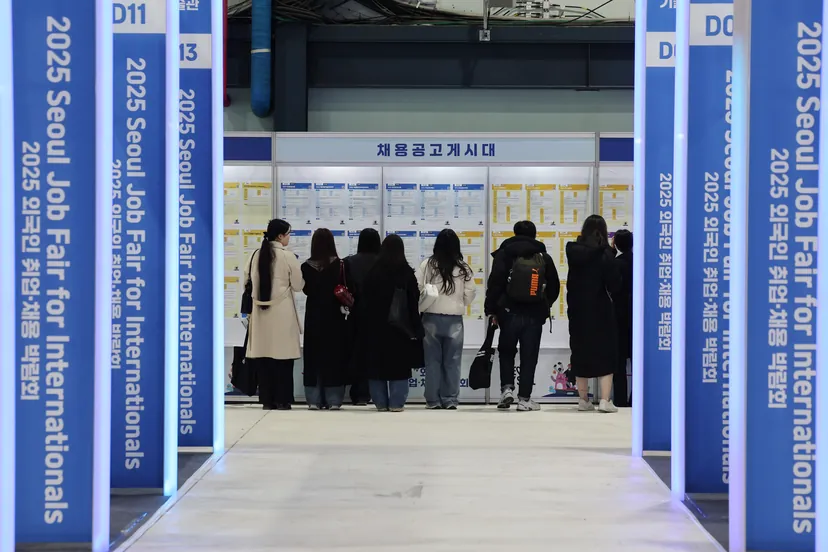
International Student Population Surpasses 300,000… Hyundai Motor, Lotte Chilsung, Ottogi, and Others Launch Separate Recruitment Drives
According to recent data from the Ministry of Education, the number of international students at domestic higher education institutions reached 307,464 this year, a 21.3% increase from the previous year. Previously, the government had announced plans to attract 300,000 international students by 2027 as part of its "Plan to Enhance Educational Competitiveness for International Students." They have essentially reached the target a year ahead of schedule.
Companies are now conducting separate recruitment processes specifically for international students. In July, Hyundai Motor Company recruited international students who are currently enrolled in or have graduated from domestic universities for internship-to-hire positions. The roles were in fields such as Japan business support, product strategy, and commercial services and quality, with native-level Japanese proficiency and a TOPIK (Test of Proficiency in Korean) score of level 4 or higher required.
Lotte Chilsung Beverage also recruited international students for internship-to-hire positions in global sales in September, requiring a TOPIK score of level 4 or higher and eligibility for an E-7 (Specific Activity) visa status. Ottogi also conducted separate recruitment for international students during its second-half new hire drive to secure overseas sales personnel capable of responding to their business expansion in Japan.
An official from Ottogi explained, "We started recruiting international students to secure additional overseas sales personnel in connection with the expansion of our Japanese subsidiary. As food companies have been expanding their global businesses recently, we are filling the necessary roles."
Rising Recruitment Demand Due to Overseas Business Expansion
The background to companies' moves to hire international students lies in their overseas business expansion. International students educated at Korean universities are proficient in their native languages and familiar with their home cultures while also possessing an understanding of the Korean language and society. For companies, this means they can expect employees who not only understand overseas markets but also have the capability to collaborate with domestic organizations.
In fact, companies that are actively recruiting international students are also expanding their overseas operations. Ottogi established 'Ottogi Japan,' its first local sales subsidiary in Tokyo, in May of this year and began full-scale operations last month.
Kia officially launched its 'PV5,' a model dedicated to Purpose Built Vehicles (PBV), in the Japanese market last May. The company has begun penetrating the Japanese market by expanding its sales and service network, centering on its local subsidiary, Kia PBV Japan. Lotte Chilsung Beverage aims to achieve 4.8 to 5 trillion won in consolidated revenue by 2030 and increase the proportion of its overseas business to 50% of its total revenue.
The number of South Korean companies establishing local subsidiaries in Japan is also on the rise. According to KOTRA’s '2026 Japan Entry Strategy,' the number of new corporate registrations by South Korean firms in Japan increased from 158 in 2022 to 269 in 2023 and 314 in 2024. In the first half of last year alone, there were 218 registrations, a 35.4% increase compared to the same period the previous year.
A JobKorea official stated, "As entry into overseas markets and responses to global customers have increased, so has the demand for talent with both foreign language skills and local understanding." They added, "International students are being noted as 'bridge talent' who can connect overseas business with domestic organizations, as they speak both their mother tongue and Korean and have an understanding of Korean culture and organizational life."
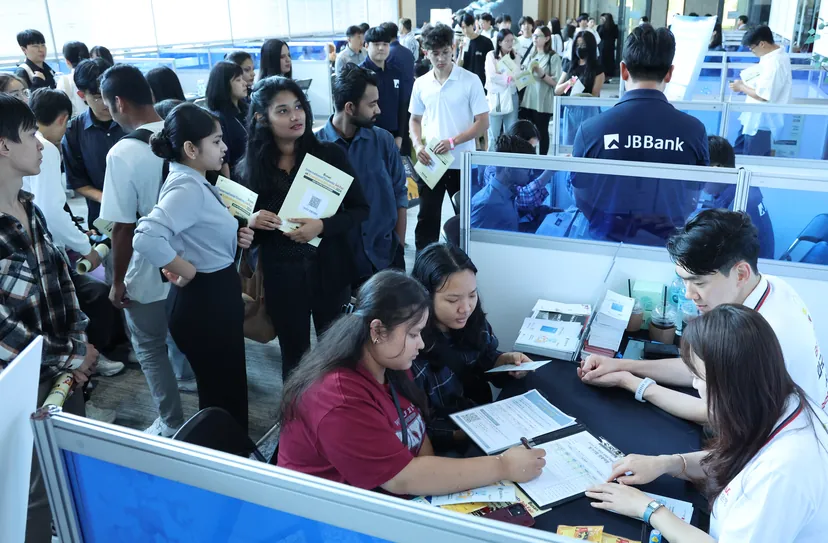
Ministry of Justice Expands Job-Seeking Period and Eligible Employment Sectors for International Students
The government is also refining relevant systems to help international students find jobs and settle in South Korea after graduation. The plan is to establish pathways for employment and residency so that the talent educated in Korea can work in domestic industries after graduating, in addition to simply attracting them.
Previously, the Ministry of Justice expanded the maximum stay for job-seeking (D-10) for international students who graduated from domestic universities from 2 years to 3 years last year. The duration of stay allowed per extension was also increased from 6 months to 1 year. The limit on internship activities during the job-seeking process—previously capped at a total of 1 year—was removed, and the duration for working at the same company was extended from a maximum of 6 months to 1 year.
As a result, graduates now have more time to stay in the country and prepare for employment. Companies also have more room to assess an applicant's job competencies and organizational adaptability through permitted internships. However, the extension of job-seeking and internship periods does not eliminate the requirements for obtaining a work visa. Before official hiring, companies must ensure that the job role and employment conditions meet the requirements for the relevant visa status.
Following these systemic improvements, the Ministry of Justice announced the results of the 'Consultative Council on Improving the International Student Visa System' on October 7th of this year. Experts in universities, education, and immigration participated in the council, which was launched in April, to discuss ways to improve the visa system from student entry to education, employment, and settlement. The Ministry of Justice presented a direction to treat international students as a strategic target for immigration policy, establishing an attraction and settlement system considering regional and industrial demand, and creating step-by-step visa transition pathways.
The fact that hiring international students already in Korea reduces the burden associated with entry and initial settlement compared to bringing in talent directly from abroad is another point companies are focusing on. A corporate human resources official stated, "Since international students are already residing in Korea, there is less burden regarding visa conversion and hiring procedures compared to recruiting talent directly from overseas, and the time and costs required for local adaptation are lower. Another strength is that we can expect longer tenure due to lower adaptation time and costs."