

[BizHanKook] Citibank Korea has welcomed a new CEO for the first time in six years. Kim Kyung-ho, a corporate finance expert and the new CEO, faces the task of finalizing the business restructuring following the withdrawal of consumer banking and strengthening the foundation for growth centered on corporate finance. Amidst the shrinking loan assets and shifting profit structures caused by the consumer banking exit, the bank also faces ongoing pushback from its labor union regarding store closures and high dividend payouts. Attention is focused on how CEO Kim will navigate these pending issues, including strengthening corporate banking competitiveness, protecting financial consumers, and managing labor-management relations.
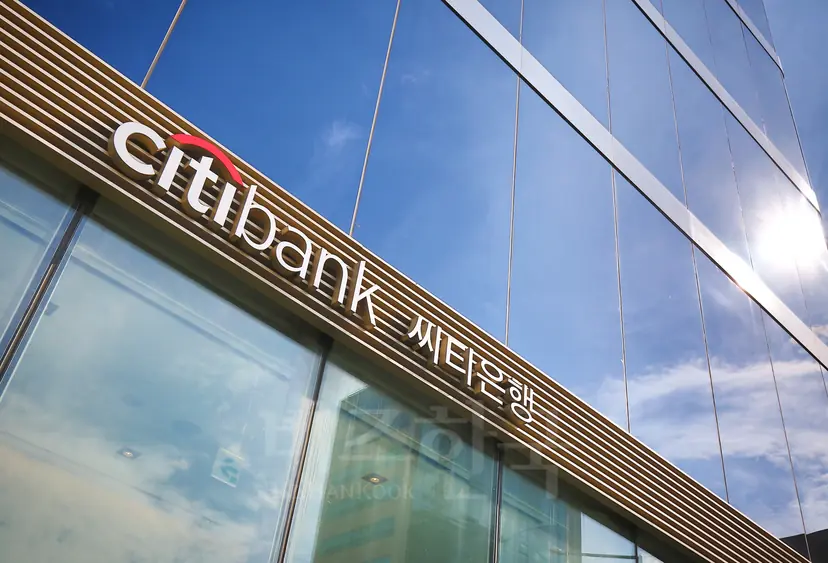
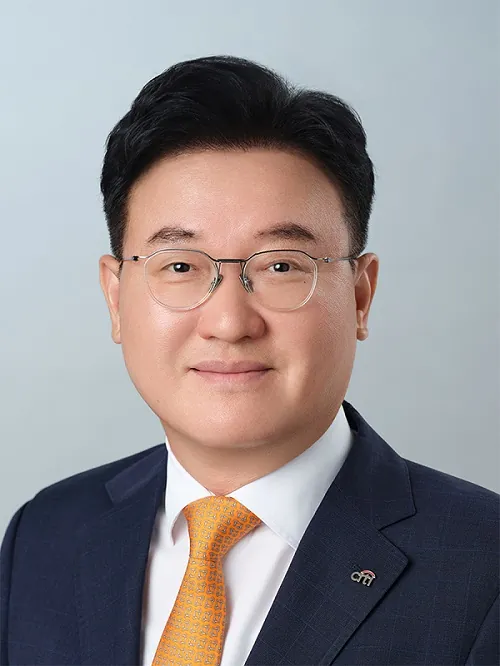
Citibank Korea held an extraordinary general meeting of shareholders and a board of directors meeting on the 27th, appointing Kim Kyung-ho, former Deputy CEO of the Corporate Banking Group, as the new CEO. CEO Kim Kyung-ho’s term is three years, ending on October 27, 2029. Former CEO Yoo Myung-soon, who led Citibank Korea for six years, stepped down on the same day. Following in the footsteps of the former CEO, Kim has also assumed the role of Chairman of the Board.
Citibank Korea’s Executive Recommendation Committee began the succession process at the end of June. After reviewing candidates internally recommended by the parent company, Citigroup, as well as candidates selected in accordance with the Act on Corporate Governance of Financial Companies, the committee officially recommended Kim Kyung-ho as the sole candidate for the next CEO on September 22.
CEO Kim previously worked at Samsung C&T and McKinsey & Company before joining the Citibank Seoul branch in 2001 as a corporate finance auditor. He served as the head of the Large Corporate Banking Division in 2015, became a division head in 2017, and was appointed Deputy CEO in 2021. His career path is similar to that of former CEO Yoo, who was promoted to CEO from the position of Senior Deputy CEO of the Corporate Banking Group.
Regarding CEO Kim, the Executive Recommendation Committee stated, "He has accumulated over 25 years of practical experience at Citibank Korea and is a corporate finance expert with extensive experience in both large corporate and financial institution operations." The committee further evaluated him, saying, "He possesses the capabilities to lead continuous growth and stable organizational management by presenting execution plans for internal cohesion, integration, strengthening internal controls, and cooperation with internal and external stakeholders."
CEO Kim Kyung-ho is expected to continue the final tasks associated with withdrawing from consumer banking. Citibank Korea is restructuring its business model to focus on corporate finance as it exits the domestic consumer banking market. The bank decided to phase out consumer banking operations in October 2021 and has ceased all new sign-ups for consumer banking products and services since February 2022.
The withdrawal from consumer banking was significantly advanced during the tenure of former CEO Yoo. According to Citibank Korea’s withdrawal plan, loan products with maturity extensions can only be extended through this year. From 2027, they will be converted to an installment repayment method with a maximum repayment period of seven years. Credit cards will expire in September 2027.
The number of branches is also being reduced rapidly. Following the 2026 branch relocation plan, the Ulsan and Cheongju branches closed on June 26, and the Jeju branch is set to close on October 30. With the closure of the Jeju branch, the number of remaining branches nationwide will be eight (three in Seoul, and one each in Incheon, Daejeon, Gwangju, Daegu, and Busan). Considering that two of the Seoul branches are dedicated to corporate banking, the number of branches available for general customers is even smaller.
In its user protection plan announced in January 2022, Citibank Korea stated that it would continue to operate at least two branches in the capital region and seven in provincial areas beyond 2025 for customer convenience. However, if the branches are closed as planned this year, the total number of branches will fall below the nine originally proposed.
Regarding future branch maintenance, Citibank Korea responded, "We are operating branches with the top priority of minimizing customer inconvenience in accordance with the standards and intent of the bank's user protection plan." The bank added, "Considering the counter partnerships with post offices and KB Kookmin Bank, as well as over 100,000 fee-free ATMs nationwide, we judged that the impact of closing the Jeju branch would be limited and proceeded with the integration after an advance impact assessment. Following this, a total of six branches will be operated."
CEO Kim also faces the challenge of strengthening corporate banking competitiveness and expanding the sales base. In the second quarter of 2026, Citibank Korea’s total revenue was 368.2 billion won. While interest income fell 14% compared to the same period last year, non-interest income related to corporate banking, such as foreign exchange, derivatives, and securities, increased by 59%. Kwak Soo-yeon, a senior analyst at Korea Investors Service, analyzed, "Loan receivables are decreasing significantly following the closure of consumer banking. With the reduction in loan volume, the proportion of interest income is expected to decrease while the proportion of non-interest income increases. As the impact of non-interest income grows, we must keep an eye on profit volatility resulting from changes in the profit structure."
Attention is also focused on whether CEO Kim will engage in dialogue with the labor union. Last June, the Korean Financial Industry Union and the Citibank Korea branch held a press conference to point out the issues of high dividends paid to the headquarters and the closure of branches. According to the union, the number of employees, which was about 3,500 at the end of 2020, has dropped to the 1,500 level as of June this year following the phased closure of consumer banking, while the number of branches has decreased from 44 to 9. Amidst this, Citibank Korea recorded a dividend payout ratio of 124% in 2025, paying 383.7 billion won in dividends against a net profit of 307.4 billion won. In 2024, the payout ratio reached 178% (311.9 billion won in net profit, 556 billion won in dividends).
The union argued, "The bank has repeatedly paid high dividends exceeding net profit while proceeding with the withdrawal of consumer banking, store closures, and workforce reductions. This could result in absolving foreign financial companies that shrink their business in the domestic market and recoup profits to their headquarters while passing the burden onto consumers and workers."
The union also raised the issue of relocation for employees working in regional areas due to branch closures. They protested, "Branch closures are a matter of reducing financial consumer access. The lives of on-site workers are also being shaken by forced transfers due to store downsizing. This is not just a simple change of seat, but a problem that affects commuting, housing, and family care."
Regarding this, Citibank Korea replied, "Regional work was mainly operated in a dispatch format," adding, "There is no change in the employment status of employees due to branch integration."