

[BizHanKook] For several years now, Chinese dramas have been gaining popularity in Korea. While initially limited to martial arts or fantasy historical dramas, recent interest has expanded to modern genres as well. This is because Chinese dramas offer elements absent in K-content. We can reflect on the deficiencies of K-content through a few examples.
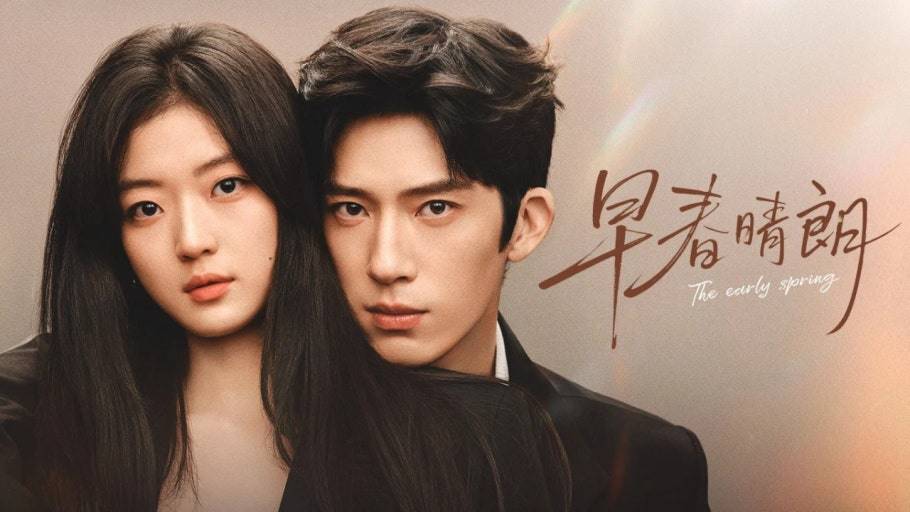
Generally, Chinese dramas are predicated on undying love, reminiscent of the love between Penelope and Odysseus in the ‘Odyssey.’ However, this trend is not confined to classic historical dramas. In the Chinese office drama ‘The Early Spring,’ two people who meet as boss (Ruan Nian) and subordinate (Sang Zhitao) fall in love; despite various twists and turns, their love never changes. They remain unable to forget each other for a long period of six years. Between meetings and partings, they eventually reaffirm their love and live happily ever after.
The finale, where Ruan Nian makes a moving proposal to Sang Zhitao at the ‘Time Museum,’ became a major topic of discussion. As of September, it reached 6th place among the most popular series on Netflix in Korea. In Korean dramas, such undying love accompanied by passionate courtship and proposals has long been dismissed as cheesy or "uncool."
Historical dramas often feature love that requires risking one's life. ‘Love Beyond the Grave,’ a fantasy-heavy ‘Xianxia’ (immortal hero) drama, is evaluated—as the title suggests—as a truly heartbreaking, tear-jerking drama that "causes chest pain." Duan Shi is a boy general who lives for about a hundred years, while Xia Sha-mo is an immortal ghost king who has lived for over 400 years. The fact that these two fall in love is a romance on borrowed time.
Xia Sha-mo was born unable to feel the five senses, but upon meeting Duan Shi, he begins to feel emotions, not only sensing the warmth of the world but also love itself. However, they are tragic figures fated to be separated. The ending, where the immortal Xia Sha-mo lives on forever carrying Duan Shi’s soul and memories after Duan Shi’s death, moved the hearts of viewers. Such melodramatic love stories, like the film ‘The Gingko Bed,’ can no longer be found in the Korean film industry.
Historical dramas do not just feature romance; they also highlight grand ideals, as well as female growth and self-realization. These settings strengthen the portrayal of independent women among modern female archetypes. ‘The Furthest Distance,’ a Chinese historical drama that gained immense popularity in Korea, is a romance between the daughter of a butcher, Fan Zhangyu, and a government official hiding his identity. It climbed as high as 2nd place on Netflix Korea and stayed in the top 10 for four consecutive weeks.
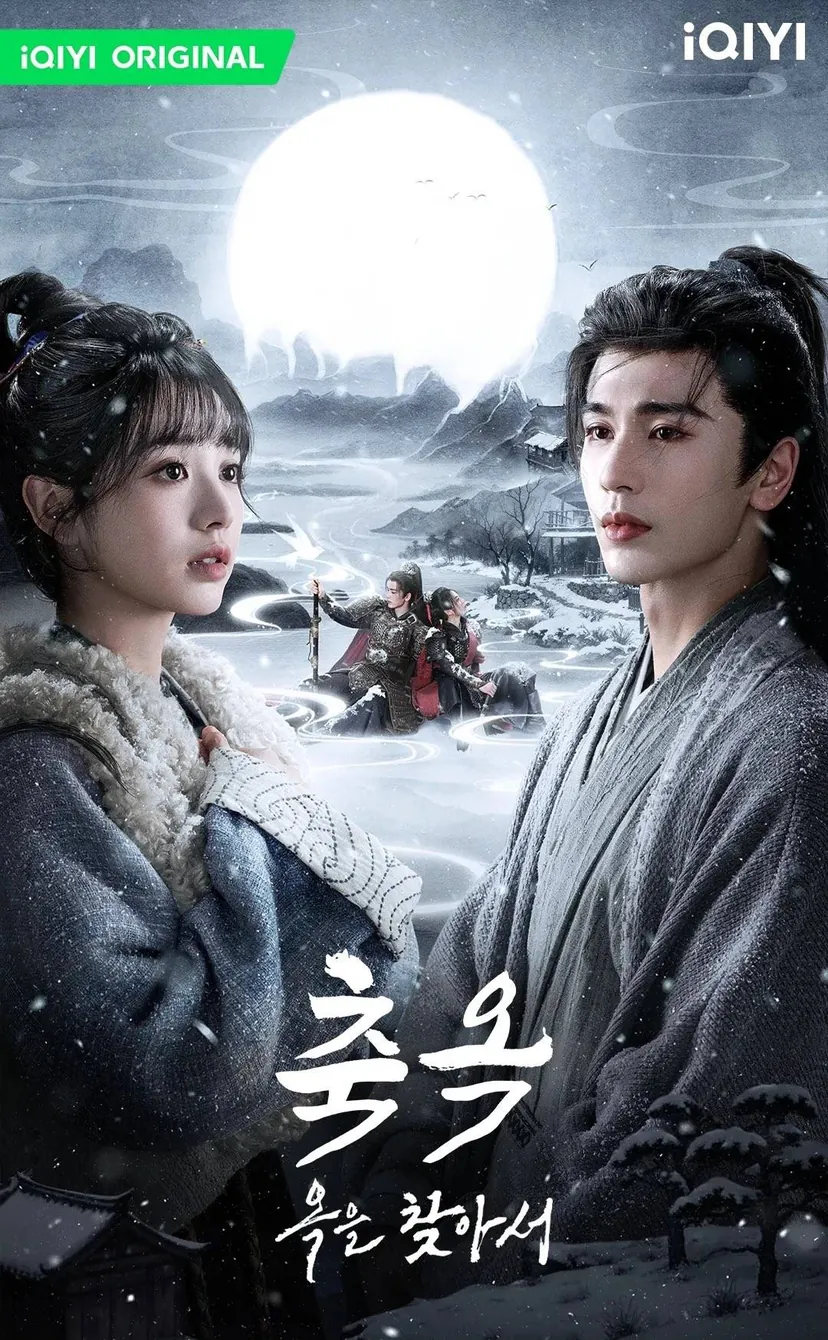
Although this drama is a historical piece, it incorporates modern elements, namely applying the concept of a "contract marriage." Within that, a classic story unfolds. The relationship between the protagonists deepens in earnest when the official accepts Fan Zhangyu’s proposal to become a live-in son-in-law in exchange for saving his life. As the two fall increasingly in love, romantic elements are added. They grow or rebuild their standing while enduring harsh storms. Notably, the female protagonist also transforms into a warrior, showing her wielding a sword to fight for the person she loves. The drama concludes with their love and a happy ending.
This drama embodies an attitude of dedication to society and country, and serving others. However, in Korean dramas, personal status and future often take priority over such grand causes, with romance added as an extension of that. Characters who talk about grand causes are often perceived as clichéd. Yet, the way men and women contribute to social values seems like a step forward from Korean content. The structure in palace dramas where men always handle politics and women are merely their lovers is, in fact, regressive. This is even more true for romances between a crown prince and a palace maid. There is no place for women in stories of war and martial arts.
Above all, in the current trend of strong genre-based Korean dramas, there are no "normal" human relationships. There is no trust in people, and protagonists in romantic relationships behave like a "show window couple" (a couple who only appear happy in public). Beneath the surface, they are stained with betrayal, conspiracy, adultery, and toxic passion. The abnormality of relationships is treated as the norm. It has become a formula to depict fragmentation and collapse rather than stories of passionate lovers or happily married couples. Just look at dramas like ‘Good Partner 2’ or ‘Liar.’ Romantic movies or dramas are harder to find. Variety shows, too, are uniformly preoccupied with the subject of divorce.
However, people fundamentally want to see beautiful and lovely relationships. That is because they are aesthetic beings. Koreans are no exception. K-content needs to reflect on why the younger generation seeks out re-releases of old romance films or falls for Chinese dramas. In particular, it is time to look at the hidden side of the flood of K-genre content.
The author, Kim Heon-sik, has walked or navigated through the forest of pop culture phenomena since his 20s, driven by the expectation that there is a way to make the world a better place through culture. He continues on the same path in the 21st century, where AI and quantum computers are at play, with the same belief.