

[비즈한국] Chiikawa, a crybaby but kind-hearted; Hachiware, bright and positive; and Usagi, who runs around wildly while shouting "Yaha!" and "Ura!". Named after the phrase "something small and cute," the first impression of Chiikawa is simply that it’s adorable. However, the world in which Chiikawa lives is not much different from our own. They work to earn money, fail exams, and sometimes have to face dangers. Even within that, Chiikawa and their friends find small moments of happiness as they live day by day. We took a look at the charm of Chiikawa, which has recently taken the domestic theater scene and merchandise market by storm.
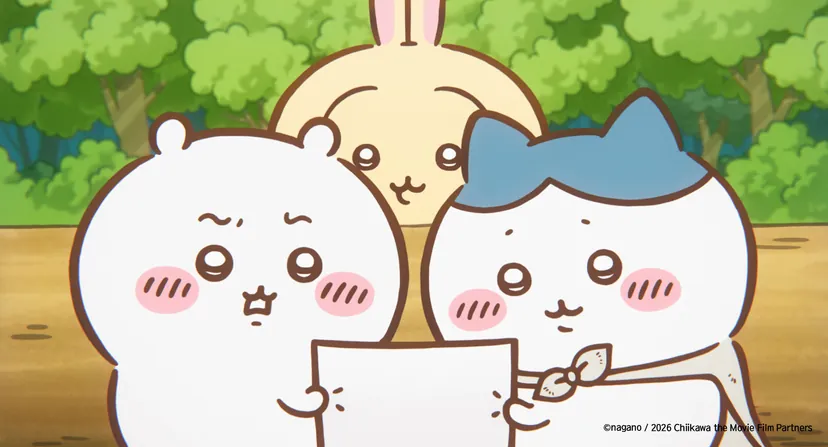
The Japanese animation ‘Chiikawa’ began with illustrations posted on X (formerly Twitter) in 2017 by Japanese illustrator Nagano. Born from the artist’s wish, "I want to live like this," the characters gained popularity and eventually developed into a manga. In 2022, it began airing as an animation on Japan's Fuji TV. The cumulative sales of its collected volumes have now exceeded 5 million copies.
In Korea, Daewon Media is managing the brand licensing business for Chiikawa under the name ‘Meonjakgwi’. They have opened an official merchandise store in Yongsan and are expanding their offline business. On September 30, the theatrical animation ‘Chiikawa: The Secret of Mermaid Island’ was released, drawing fan interest into movie theaters.
800,000 Viewers in One Week Since Release
According to the Korean Film Council’s integrated computer network for movie theater tickets on the 8th, ‘Chiikawa: The Secret of Mermaid Island’ surpassed a cumulative audience of 800,000 the previous day. This comes just one week after its release on the 30th of last month. It debuted at No. 1 at the box office with over 120,000 viewers on its first day. In Japan, it was released last July and accumulated 11.55 million viewers by its 10th week.
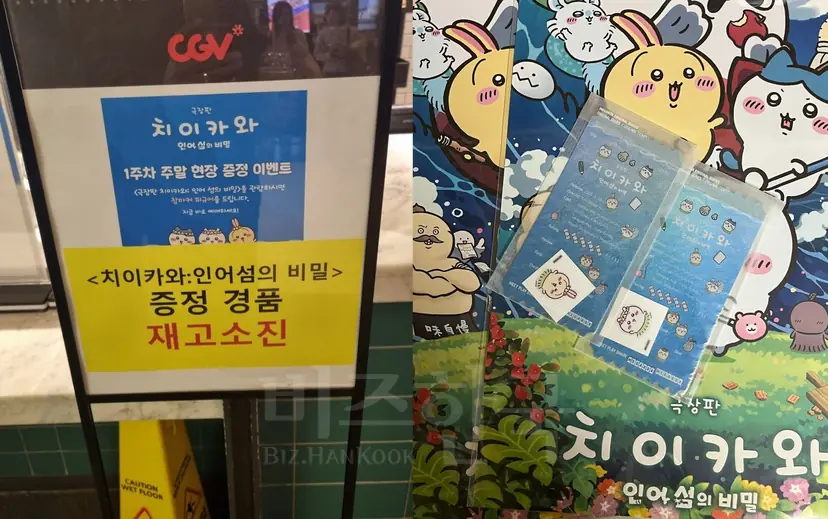
The film’s popularity also led to a competition to purchase merchandise. As fans flocked to receive character figures and posters given out on a first-come, first-served basis, some theaters ran out of stock during the very first screening. Special benefits and limited edition items began appearing on second-hand trading platforms immediately after the release. A search for ‘Chiikawa’ on Bunjang on the morning of the 8th yielded 39,593 related listings.
The official Chiikawa merchandise store was also packed with visitors looking to buy new items. At the Chiikawa Shop in Yongsan on the 7th, there were 1,253 people waiting as of 10:00 AM, with an estimated wait time of 11 hours and 9 minutes. Although the store opens at 10:30 AM, an "open run" occurred, with people lining up from the night before, and on-site queue tickets were fully exhausted by around 9:00 AM.

Working, taking exams, and facing danger… A world that is cute but tough
Chiikawa is a work that depicts a world where small, cute creatures live together. They eat, play, and rejoice over small fortunes together, but they also survive by doing jobs like weeding to earn money. Within the story, they sometimes risk danger to buy delicious food or acquire items they want.
Trying hard doesn't always guarantee the desired result. Chiikawa and Hachiware study for a weeding certification exam to get better working conditions. They study and take the exam together, but Hachiware passes while Chiikawa fails. Having failed the exam, Chiikawa sincerely congratulates their friend while shedding tears of disappointment over their own results.
Unexpected dangers also visit their ordinary daily lives. Situations arise where mysterious giant creatures appear, seemingly ordinary beings suddenly turn threatening, or the Chiikawa group has to engage in "subjugation," which involves hunting these creatures themselves. The animation production team explains that Chiikawa contains not just stories of eating delicious food and playing, but also quite "harsh" narratives.
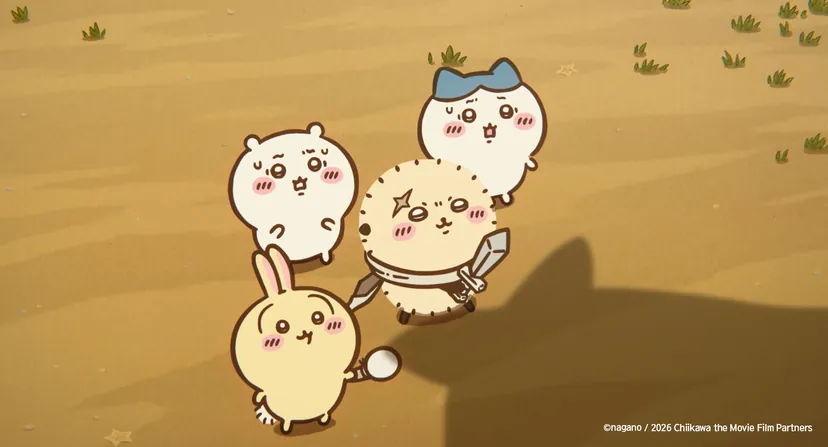
In the theatrical animation, this worldview expands further. The Chiikawa group is invited to a special island and sets off, but they soon discover that a giant creature called a Siren is kidnapping the island's residents. Contrary to their expectations of a fun trip, Chiikawa and their friends get caught up in a plan to subjugate the Siren and face unexpected danger.
‘It resonates because they are small and weak’: Why adults are going wild
Chiikawa is far from the strong protagonists seen in shonen manga. They are timid and cry easily. They fail exams they worked hard for. They don't solve crises with special powers or succeed through sheer effort. They get upset when they fail and get scared when dangerous things happen. However, even if they fail an exam, the next day comes, and they go back to work or continue their daily lives by eating delicious food with friends.
This aspect touches on the reality of adults who are accustomed to competition and failure. The Japanese weekly economic magazine ‘Toyo Keizai’ also analyzed the background of Chiikawa's popularity, focusing on the characters working and experiencing frustration. In particular, they highlighted the weeding exam episode where effort does not guarantee success, noting that many office workers empathize with this.
The phenomenon of characters appearing to be for children capturing the hearts of adults brings to mind the past Pengsoo craze. Pengsoo used its cute appearance combined with blunt remarks and an honest attitude to speak the inner thoughts that adults couldn't voice. In contrast, Chiikawa gains empathy through the image of a small, weak being struggling and facing frustration. If Pengsoo spoke for what people wanted to say, Chiikawa represents the feelings people wanted to hide. Although the methods of expression differ, they are similar in that people discover their own reflections in the characters and find comfort.
Their relationship with friends cannot be overlooked. When Chiikawa, Hachiware, and Usagi face difficult situations, they help each other and rejoice in even the smallest achievements together. Even when Chiikawa gets scared or cries, their friends do not blame them. The way they accept each other’s shortcomings and stand by each other during hard times contrasts with the harsh world in which they live.
The comfort provided by Chiikawa's story lies here. Even if results don't follow hard work and problems aren't solved, small joys and precious relationships still remain in daily life. In that one can feel happiness without grandiose success or dramatic growth, Chiikawa resonates with adults living in reality. This is why people laugh while watching the cute characters, only to find their own reflection in them at some moment.