

[비즈한국] Amidst intensifying competition to secure memory supply, SK Group Chairman Chey Tae-won has kept the door open to the possibility of building a full-process (wafer fabrication) memory semiconductor fab in the United States, provided the right conditions are met. While higher construction costs compared to South Korea and infrastructure challenges such as power and water supply remain obstacles, Chairman Chey believes that AI-driven demand for memory has grown to a level that necessitates an expansion of supply.
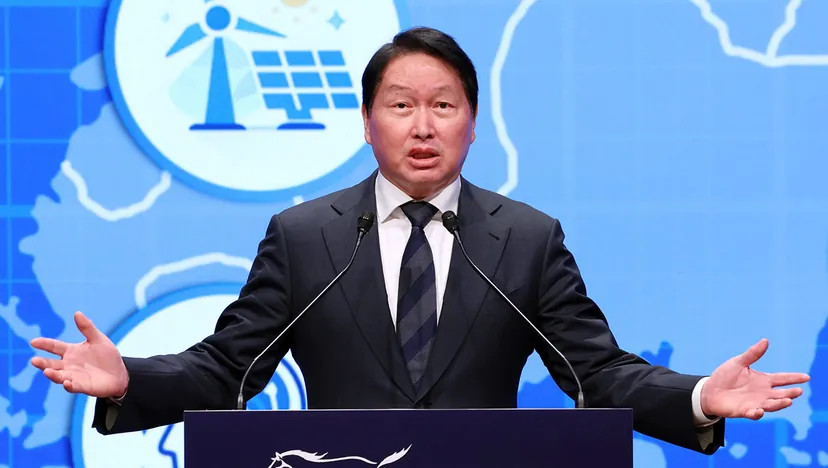
In an interview with the U.S. business news channel CNBC on the 13th (local time), Chairman Chey stated regarding a full-process fab, "We have been examining various regions around the world, including the U.S., from multiple angles for over a month." He added, "Every country wants to build a memory fab within its own territory, but the keys are water, power, land, and the establishment of an industrial ecosystem."
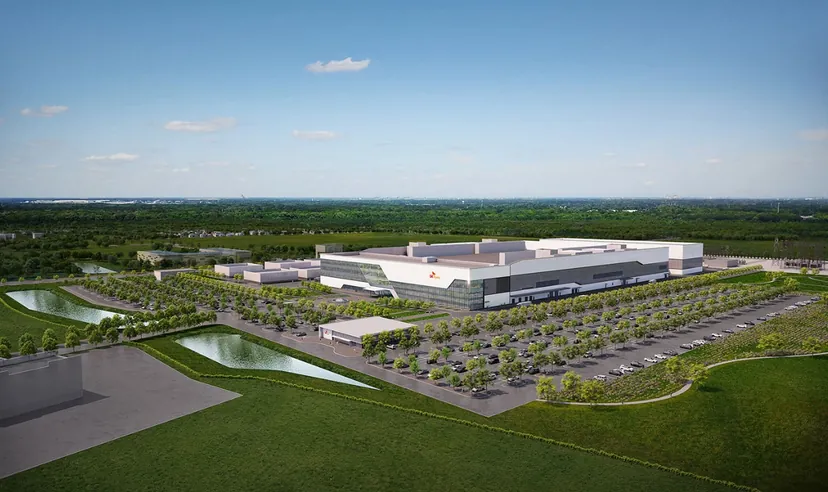
SK Hynix is currently investing $3.87 billion (approximately 5.4 trillion KRW) to build an advanced packaging plant in West Lafayette, Indiana. However, a plan for a full-process fab that produces memory directly in the U.S. has not yet been confirmed. Within Korea, the company is pushing to expand production capacity, including the recent announcement of two new full-process fabs in the Honam region.
He specifically mentioned U.S. demand. Chairman Chey said, "U.S. customers want fabs built within the U.S.," and added, "If customers want it, we intend to pursue this opportunity together." He noted, however, that he has not yet held direct consultations with the U.S. government.
The biggest hurdle for U.S. investment remains cost. Chairman Chey revealed that the cost of building a fab in South Korea is about half that of the U.S. Since land, power, and water prices are higher in the U.S. and regulations are stringent, the perspective is that it is difficult to proceed with large-scale full-process investment simply by securing a site.
Nevertheless, the background to his consideration of expanding global production capacity, including the U.S., is confidence in AI memory demand. Chairman Chey believes the demand structure itself has changed compared to the past. He explained that while the memory market was previously influenced by the number of hardware devices like smartphones and PCs, in the AI era, memory demand can continue to expand as individual users utilize multiple AI agents.
Chairman Chey remarked, "I cannot say that cycles don't exist at all, but we will likely see a much longer boom cycle than in the past." He continued, "There are no signs of the HBM market shrinking at all. While we announced we would double our production capacity within five years, customers are demanding even more than that."
He also said, "Every customer is asking to nearly double their volume for next year, but supply cannot keep up," adding, "A kind of war is underway to secure memory chips." His forecast is that 2027 will be the year of the most extreme memory shortages.
If the demand for high-performance memory, including HBM, increases faster than expected due to the proliferation of AI services, the need for SK Hynix to increase production capacity in the U.S., the largest AI market, may grow.
In particular, he saw that the importance of customized products would become even greater starting with HBM5. Chairman Chey explained, "Nvidia wants custom chips, and Google wants HBM tailored to their needs," adding that memory, which was a general-purpose product in the past, is changing into a product designed to fit the computing environment of each customer in the AI era.
He also expressed caution regarding "chipflation," where rising memory prices are passed on to the prices of IT products. The idea is that since prolonged supply shortages could lead to cost burdens for finished products such as servers and smartphones, there is a need to expand production capacity in line with demand.
To address the risk of over-investment due to new fab expansions, he plans to share investment risks with customers through Long-Term Agreements (LTA), Joint Ventures (JV), and "Memory as a Service." Instead of simply selling memory, the goal is to lower the risk of downturns caused by demand fluctuations by supplying it in the form of long-term contracts or rentals.
In the second quarter, SK Hynix recorded 79.3187 trillion KRW in revenue and 60.5426 trillion KRW in operating profit. The operating profit margin was 76%, indicating a significant improvement in profitability based on AI memory demand.
Chairman Chey's current visit to the U.S. is tied to the expansion of SK Hynix's local production base. SK Hynix is scheduled to hold a groundbreaking ceremony for its advanced packaging plant in West Lafayette, Indiana, on the 27th (local time). The Indiana advanced packaging plant is seen as the starting point for SK Hynix's U.S. strategy to expand beyond sales and customer support into local production and R&D. The facility aims to begin mass production of AI memory products, including HBM, in the second half of 2028.