

[비즈한국] The court has ruled that Chey Tae-won, Chairman of SK Group, must pay 944 billion won in property division to Roh Soh-yeong, director of Art Center Nabi. Although the amount is 436.8 billion won less than the 1.3808 trillion won recognized in the second trial, the court maintained its judgment that the SK shares held in Chairman Chey's name constitute property formed jointly by the couple.
The Seoul High Court's Family Division 1 ordered Chairman Chey to pay 944 billion won in cash to Director Roh during the sentencing of the remand appeal for the divorce suit held on the 24th. If the payment is delayed, an annual interest rate of 5% will be applied from the day after the judgment becomes final until the full amount is settled.
The court set the property distribution ratio at two-thirds for Chairman Chey and one-third for Director Roh. The scope of the division includes the SK shares held by Chairman Chey. Instead of transferring the shares themselves, the court adopted a method where Chairman Chey settles Director Roh's share in cash.
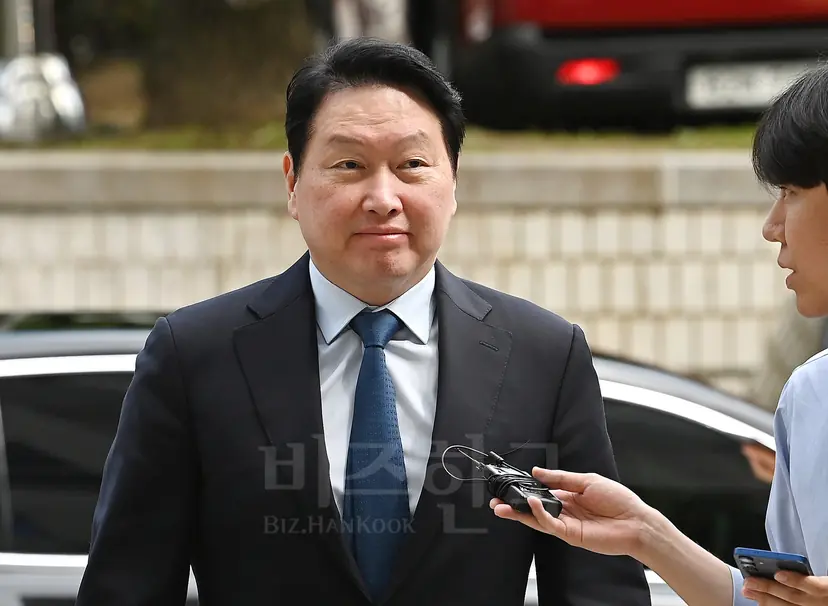
The court did not provide a lengthy explanation of the specific calculation process or grounds for the judgment in the courtroom immediately after sentencing. However, synthesizing the amount of property division and subsequent explanations, it is interpreted that the court recognized that Director Roh's role in managing the household, raising their children, and performing external roles related to SK Group contributed to the maintenance and increase in the value of the stocks.
Chairman Chey's side argued that the SK shares should be excluded from the division in principle, as they are personal property formed through inheritance and gifts. However, the court judged that it should look not only at the initial acquisition of the shares but also at how much the spouse contributed to the preservation and growth of the assets during their long-term marriage.
Evaluated based on April 2024, when the stock price was 160,000 won
A key point of contention in this trial was which point in time to apply the SK stock price for the property division calculation. Because SK's stock price rose significantly after the end of the previous appellate trial, the total value of the property varies greatly depending on the valuation reference date.
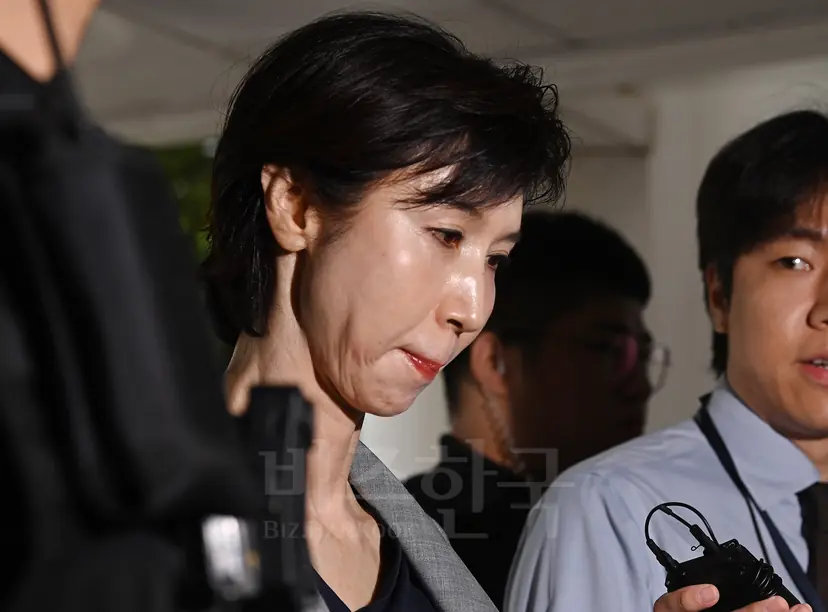
The court set the valuation reference date as April 16, 2024—the closing date of arguments in the previous appellate trial—rather than the end of the remand proceedings. At the time, the SK stock price was around 160,000 won. Considering that the stock price rose to the 800,000-won level by the end of the remand proceedings, the valuation could have differed by several times depending on the application date.
The court considered it appropriate to confirm the existence and value of the assets based on that time, as the fact-finding regarding the divorce itself had already concluded. The court reasoned that including the stock price increase that occurred after the appellate court's conclusion in the joint property would lead to the issue of dividing values created by Chairman Chey's management activities after the divorce was effectively finalized.
However, the recent steep rise in stock prices was reflected in the process of determining the property division ratio. While acknowledging Chairman Chey’s management contribution to the increased corporate value after the appellate trial, the court decided on a one-third share for Director Roh in the interest of equitably settling the entire estate.
The ratio for Director Roh recognized in the previous second trial was 35%. The remand appeal lowered this slightly to 33.3%. While the difference in ratio is not large, the total payout decreased from 1.3808 trillion won to 944 billion won as the scope of property included in the division also narrowed.
The "30 billion won from Roh Tae-woo," excluded by the Supreme Court, was left out of the calculation
The remand appeal court did not evaluate the 30 billion won that the late former President Roh Tae-woo allegedly passed to SK as a contribution by Director Roh. This follows the Supreme Court's decision last October, which overturned the original verdict by taking issue with this part.
The 2024 appellate court had determined that the former President's funds were delivered to the late SK Chairman Chey Jong-hyun and used for the group's growth. Combining this financial support with Director Roh's domestic support, the court included SK shares in the division and recognized a 35% contribution rate for Director Roh.
The Supreme Court's judgment was different. It ruled that if the funds were illegal slush funds created during the former President's term, they cannot be protected by law, and even if they were actually used for the growth of SK Group, they should not be evaluated as a legitimate contribution from Director Roh's side.
Accordingly, the remand court completely excluded the 30 billion won from Director Roh’s contribution to the formation and value increase of SK shares. This fund was not considered when determining the property division ratio.
Nevertheless, it did not accept the argument that the entire SK stake is Chairman Chey's sole personal property. Regardless of the illegal slush fund issue, the court saw that Director Roh's support of Chairman Chey's management through household and external activities during a marriage of over 30 years could be recognized as an independent contribution.
Some shares that Chairman Chey transferred to relatives before the marriage broke down were also excluded from this division. The court determined that if shares were gifted for the sake of maintaining management control and business operations—not to hide assets or reduce Director Roh's share—shares no longer held cannot be reclaimed as divisible property.

From 66.5 billion won in the 1st trial to 1.3808 trillion won in the 2nd, then back to 944 billion won
The legal battle between the two began in earnest in 2017 when Chairman Chey filed for divorce mediation. Chairman Chey and Director Roh, who married in 1988, have three children. The crack in their marriage became public in 2015 when Chairman Chey revealed the existence of a child from an extramarital relationship through the media.
As no agreement was reached during mediation, Chairman Chey filed a formal divorce suit in 2018. Director Roh also filed a counterclaim in 2019, stating she would agree to the divorce but demanded alimony and property division.
In December 2022, the first trial ordered Chairman Chey to pay Director Roh 100 million won in alimony and 66.5 billion won in property division. At the time, the court viewed the SK shares held by Chairman Chey as personal property formed before the marriage and did not include them in the division.
The conclusion was overturned significantly in the appellate court. In May 2024, the second trial court raised the alimony to 2 billion won and the property division to 1.3808 trillion won. This was the result of viewing SK shares as joint property and broadly recognizing Director Roh's contribution.
The Supreme Court confirmed the second trial's judgment on the 2 billion won alimony last October. However, it sent the property division part back to the Seoul High Court, stating that recognizing the 30 billion won from former President Roh as Director Roh's contribution was contrary to legal principles. Because of this, the remand trial re-examined only the scope of the property and the distribution ratio, not the responsibility for the breakdown of the marriage or alimony.
The remand court recommended mediation to both sides after the first hearing in January this year, but an agreement was not reached. After concluding deliberations last month, it reached the conclusion today to order a payment of 944 billion won.
Interest on how to secure 944 billion won in cash
If this ruling is finalized, Chairman Chey will need to secure nearly 1 trillion won in cash. As the court ordered a cash settlement rather than dividing the SK shares themselves, attention is turning to how he will secure the funds in the future.
If Chairman Chey sells a large portion of his holdings on the market, it could put a burden on SK's governance structure and stock price. Methods such as stock-collateralized loans, utilizing dividends and other personal assets, or disposing of some stakes in over-the-counter transactions could be discussed. However, as the ruling is not yet final, it is not the stage to begin actual fund-raising.
Immediately after the ruling, major SK Group stocks showed different movements. As of 2:10 PM, the holding company SK was trading at 639,000 won, down 2.44% from the previous trading day. While SK Hynix and SK Square fell by 6% and 7% respectively, SK Telecom showed a 4% rise.
However, since the overall flow of the domestic stock market and individual supply and demand for each company also played a role, it is difficult to interpret the affiliate stock fluctuations solely as an effect of the property division ruling. In particular, since the court ordered a cash payment rather than transferring SK shares directly to Director Roh, the ownership structure of the holding company will not change immediately.
Chairman Chey's side stated they would decide whether to file another appeal after receiving the written judgment. Chairman Chey's legal representative explained that the Chairman is sorry for causing social concern during the long litigation process, but will announce a specific stance after reviewing the judgment details. Director Roh's legal representative did not issue a separate statement after the sentencing.
Both sides can appeal to the Supreme Court again if they are dissatisfied with this judgment. If a re-appeal trial is held, the Supreme Court will focus on whether the remand court properly followed the intent of the previous Supreme Court ruling and whether the legal principles regarding SK shares and the division ratio were applied appropriately, rather than re-judging the facts.
In the nine-year-long lawsuit, the property division amount surged from 66.5 billion won to 1.3808 trillion won, then was adjusted back to 944 billion won. Although the amount decreased, the court's judgment remains unchanged: even management shares acquired by a conglomerate head before marriage can be subject to division if their value is maintained or increased through the spouse's long-term household management, child-rearing, and social activities.
However, this ruling is not yet the final conclusion. If Chairman Chey and Director Roh pursue a re-appeal, the conclusion of the largest divorce property division case in Korea will once again be decided by the Supreme Court.