

[BizHanKook] As the public redevelopment of Zone 6, District 1 in Yongdu-dong, Dongdaemun-gu, Seoul, gains momentum following the approval of its project implementation plan, merchants at the Cheongnyangni Fish Market within the zone are demanding the provision of an alternative market to continue their business. While the merchant association argues that livelihood protection measures are necessary based on laws related to traditional markets, the Seoul Housing and Communities Corporation (SH) contends that the project operator has no obligation to provide a separate alternative site, leading to an ongoing conflict between the two sides.
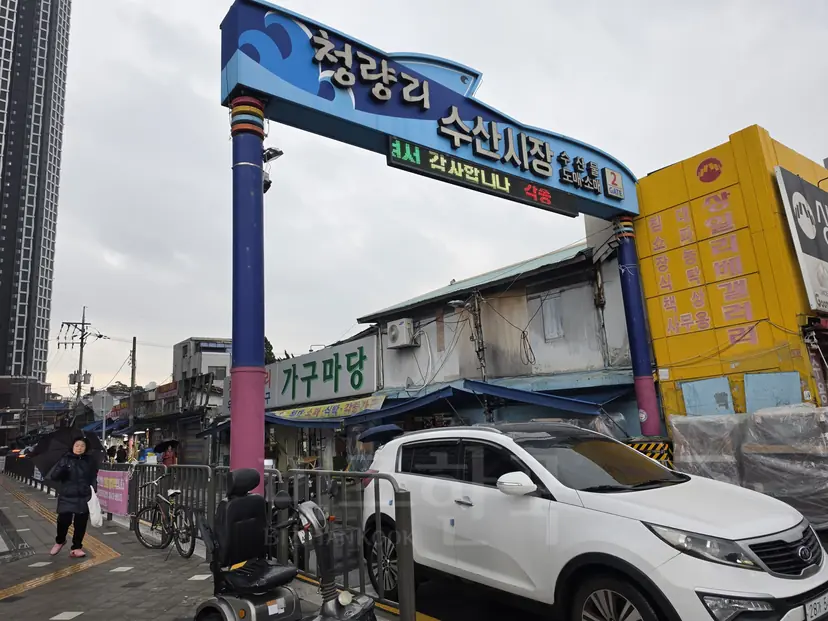
On the 23rd, the Cheongnyangni Fish Market in Dongdaemun-gu, Seoul, remained busy despite the inclement weather. Customers looking to buy salted shrimp for the Kimjang season were seen asking merchants about prices or examining the seafood on display. However, unlike the vibrant market atmosphere, banners demanding livelihood measures and an alternative market hung here and there, revealing the anxiety of merchants facing the upcoming redevelopment.
Zone 6 of the Yongdu-1 district is a public redevelopment project being pursued on a 20,600.50㎡ site near 14-1, Yongdu-dong, Dongdaemun-gu. Although the project had been stagnant for a long time after being designated as an improvement zone in 2000, it began to gain speed again after being selected as a candidate for public redevelopment in 2021. Following a change in the urban renewal promotion plan in 2023 and an integrated review of the maintenance project in 2025, a plan to build 958 apartment units and 138 studio apartment units (officetels) was finalized, and the project implementation plan was approved this October.
As the project gains speed, the concerns of the Cheongnyangni Fish Market merchants within the project zone are also deepening. They will soon have to vacate the market, but no alternative site has been provided to continue their livelihoods.
The merchants' demand for an alternative site is influenced by the operational nature of the fish market. Seafood requires refrigeration and freezing, and each store holds a significant amount of stock. They argue that if business is interrupted without a designated relocation site, they would have to dispose of or discard the seafood in storage, which could lead to significant financial losses.
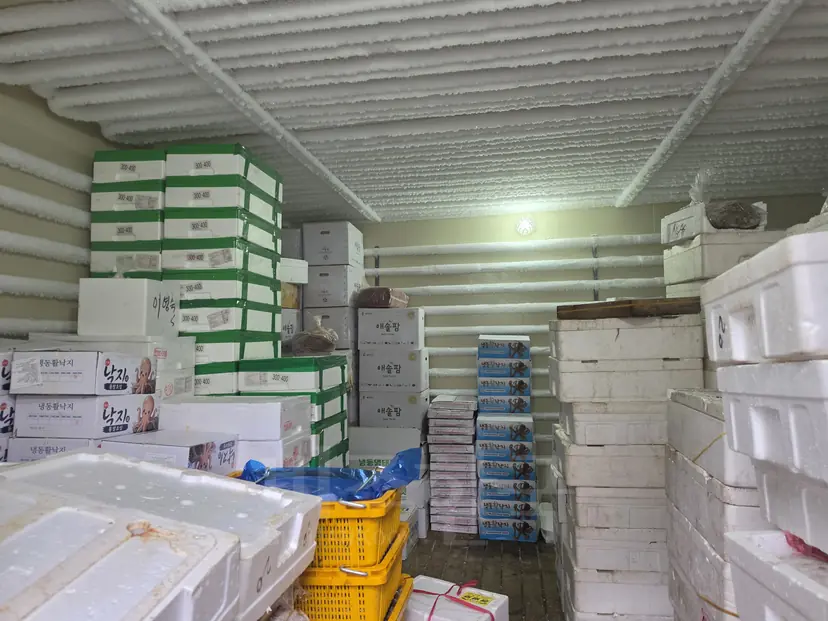
Merchants also worry that if store operations are interrupted, they could face difficulties in collecting outstanding payments, such as goods supplied on credit, as their connections with existing business partners would be severed. Additionally, the merchants explain that if store operations cease, employees who have worked in the market would lose their jobs, directly impacting the livelihoods of both the shop owners and the workers.
An official from the Cheongnyangni Fish Market Merchants Association said, "We are not against redevelopment. We are saying that if they just provide an alternative site, the merchants will relocate," adding, "Receiving compensation is not the point; what we need is a place where we can continue to do business."
These concerns did not emerge just recently. In 2023, about 130 market merchants formed an emergency committee to demand relocation measures. At the time, the Seoul Housing and Communities Corporation (SH) stated that once the zone zoning was finalized, they would listen to the opinions of residents and merchant representatives and present alternatives.
The issue of relocating the Cheongnyangni Fish Market was also raised in the Seoul Metropolitan Council. Seoul City Council member Oh Joong-seok pointed out during the SH parliamentary audit by the Housing and Space Committee on the 9th that concrete measures for market merchants had not been presented, and requested that SH prepare a relocation and alternative business site plan in consultation with the merchants before establishing a management and disposal plan. He also required that the status of shops, merchants, and workers in the market, whether they are eligible for business compensation, review plans for alternative/temporary business sites, and schedules for management and disposal/relocation be reported by December 31.
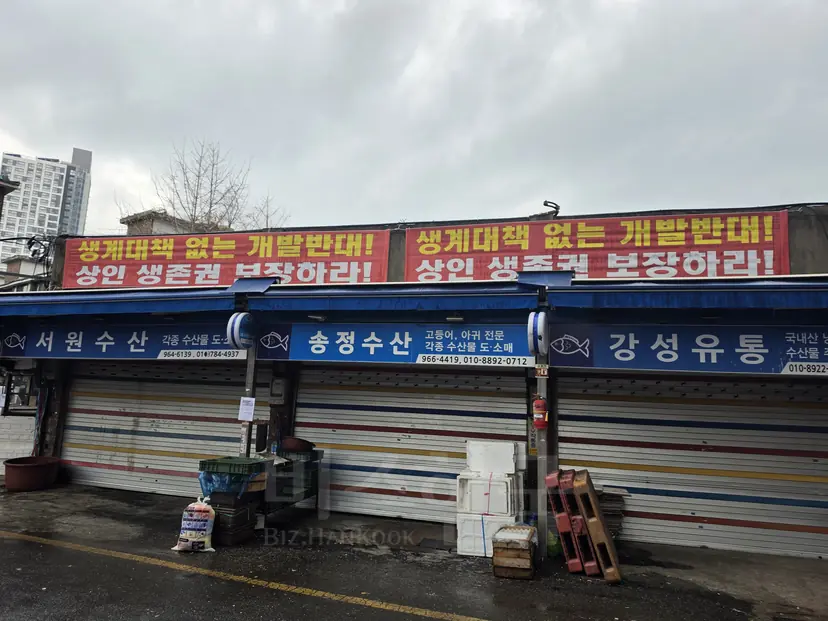
The merchants' association argues that based on laws related to traditional markets, space must be provided to allow business to continue even during the redevelopment period. The Cheongnyangni Fish Market is a recognized market under the Traditional Markets Act. Article 49 of the Traditional Markets Act stipulates that when pursuing a market improvement project, the project operator must establish measures to protect tenants and include plans to provide a temporary market so that business can continue during the project period. However, it must be determined separately whether this clause applies directly to public redevelopment projects.
SH maintains that under the 'Act on the Improvement of Urban Areas and Residential Environments,' there is no obligation for the residents' representative council or the project operator to provide an alternative site. An SH official said, "The Act on the Improvement of Urban Areas and Residential Environments has provisions for installing temporary stores for commercial tenants, but this should be distinguished from the alternative site mentioned by the merchants' association," adding, "The alternative site is a matter that the merchants' association should arrange separately."
They continued, "Since neighborhood living facilities are planned in the architectural plan for Zone 6 of the Yongdu-1 district, the Cheongnyangni Fish Market merchants can move in after completion," and "However, regarding future move-ins, it is a matter for the tenants to decide whether to move back in by comprehensively considering factors such as rent levels and the impact on the residential environment."
SH plans to compensate merchants for business losses. Their policy is to compensate, in accordance with relevant laws, businesses that were operating continuously in a lawful location with human and physical facilities since before October 22, the date of the project implementation plan notification.
To this end, they sent registered mail to business tenants within the zone on the 19th for property surveys, and plan to provide additional information on the survey through banners after the 24th. The results of the survey will be used as basic data for verifying eligibility for compensation and calculating the compensation amount.
Whether an alternative business site is provided and the scope of responsibility surrounding it are expected to be key points of contention in future negotiations. In particular, it remains to be seen whether the tenant protection regulations under the Traditional Markets Act, which the merchants' association cites, can be directly applied to this public redevelopment project. As the merchants' association is considering collective action, including protests, if the alternative site issue is not resolved, significant friction is expected in the future negotiation process.