

[BizHanKook] Seo Jung-jin, Chairman of Celltrion Group, expressed a cautious view on the commercial viability of artificial organ research, emphasizing the need to focus on cutting-edge biotechnology integrated with artificial intelligence (AI). He also noted that while AI has opened new opportunities in the bio-industry, it is fundamentally changing how companies approach recruitment.
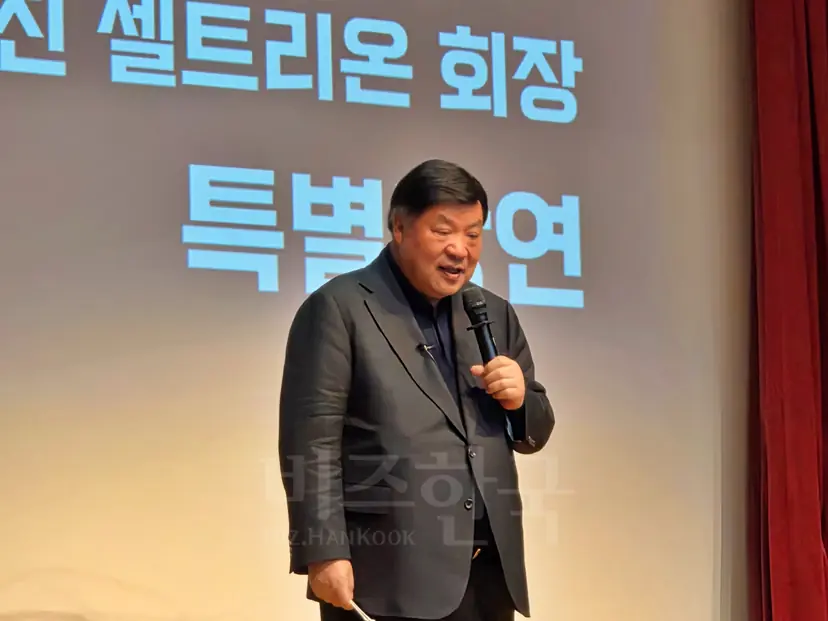
Chairman Seo made these remarks on the 4th at the 11th special lecture of the Sogang University Mentoring Center "Window of Thought," held at St. Ignatius Hall at Sogang University in Mapo-gu, Seoul. The lecture, themed "Seo Jung-jin's Management Leadership," was moderated by Park Young-sun, former Minister of SMEs and Startups.
The session focused on providing advice to university students on the spirit of challenge and how to prepare for the future, drawing on the trial and error Chairman Seo experienced during his startup journey. In particular, he highlighted the changes in the industrial environment driven by the spread of AI and the competencies the younger generation needs to cultivate.
A highlight of the event was the Q&A session with students that followed the lecture. A student identifying as a life science major at Sogang University asked for advice, stating that while they are interested in bio-artificial organs and organoids, they are reconsidering their career path due to negative outlooks from professors and experts around them.
In response, Chairman Seo advised, "When you go to graduate school, don't be afraid to change your major specialty." Regarding the artificial organ field, he noted, "There are too many barriers to overcome before it can be commercialized for actual patients," pointing to immune rejection in the body as a core difficulty.
He particularly noted that in the process of securing research funding, some researchers have tended to exaggerate the commercial potential of such technologies, citing past research on porcine pancreatic islet transplantation as an example.
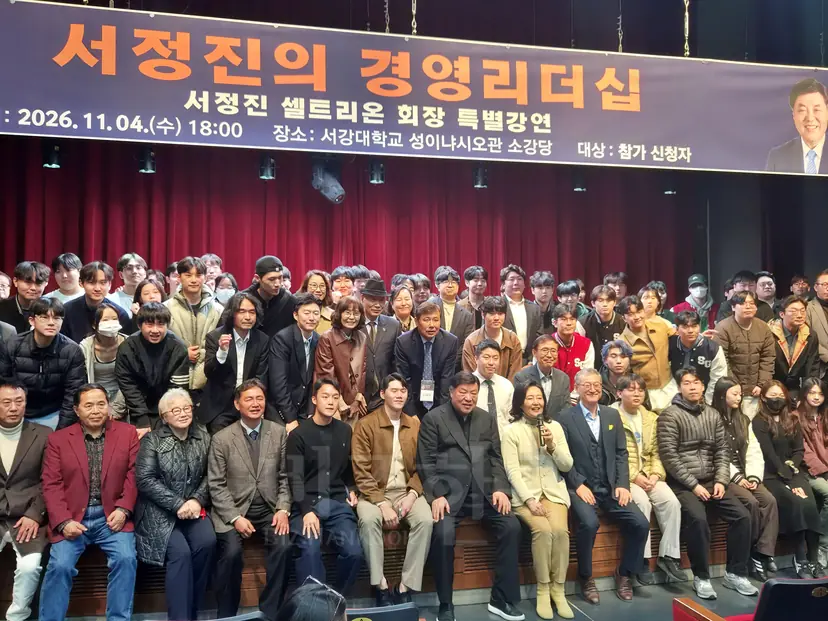
Chairman Seo recommended that the student maintain a foundation in life sciences but pivot their research direction in graduate school. His advice was to focus on cutting-edge therapies or bio-platforms with high potential for realization within the next 5 to 10 years by integrating AI with existing biotechnological knowledge.
Organoids are a technology that uses stem cells or patient-derived cells to create 3D cultures that mimic the structure and function of human organs. Beyond developing artificial organs to replace organ function upon transplantation, they are also used in non-clinical research to evaluate the efficacy and toxicity of drug candidates.
In the field of drug development, organoids are gaining attention as an alternative testing method to reduce animal testing. In April last year, the U.S. Food and Drug Administration (FDA) included new approach methodologies (NAMs)—such as organoids, organ-on-a-chip, and AI-based predictive models—in its "Roadmap to Reduce Animal Testing in Non-Clinical Safety Evaluation."
Chairman Seo emphasized AI as a core technology that will transform the future of the bio-industry. Regarding the spread of AI, he assessed that "the current era is by no means an era of crisis, but an era of opportunity."
He explained that within Celltrion, the adoption of AI is leading to changes not only in work productivity but also in recruitment and organizational operations. Celltrion spends over 8 billion won annually on platform subscriptions to support employees' use of AI. Chairman Seo emphasized the productivity gains from AI, stating, "Tasks that used to keep researchers and employees busy all day are now finished in 30 minutes."
Chairman Seo explained that he is dismantling the traditional pyramidal organizational structure, encouraging employees to use AI to analyze global papers, patents, and promising researchers to independently discover new business opportunities. The company supports this by providing funding and opportunities to verify these ideas. Describing how he operates employees effectively as "one-person startups," he said, "Even if there is a 10% success rate, if 10 people jump in, one of them will hit the jackpot."
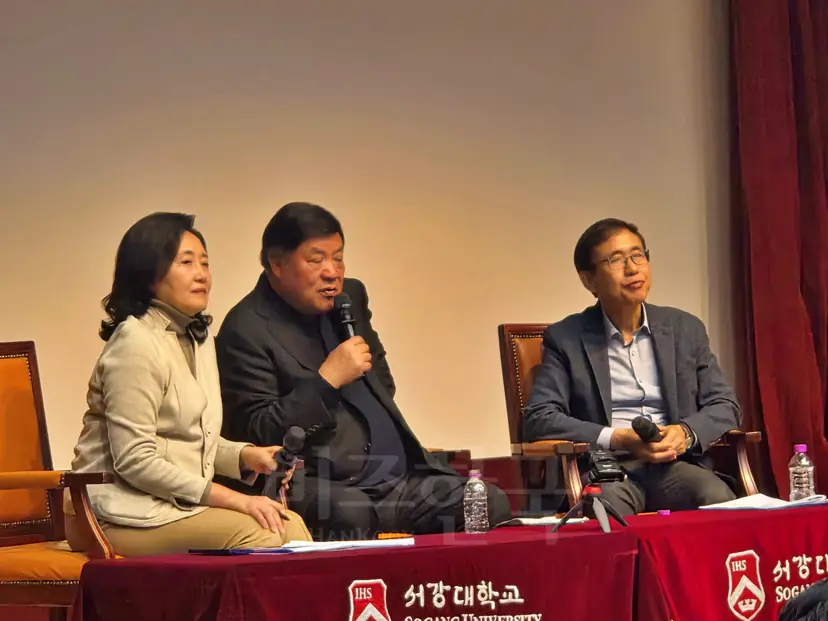
He also introduced a global drug development strategy utilizing AI. Chairman Seo distinguished between "upstream" (early exploratory research) and "downstream" (clinical trials and commercialization), explaining that Celltrion's strength lies in the latter.
Rather than performing all basic research in-house, Celltrion’s strategy is to use AI to discover promising researchers and technologies worldwide, introduce technologies with proven potential at the preclinical stage, and connect them to global clinical trials and commercialization.
He further revealed that the company has changed its organizational management and recruitment practices in line with the spread of AI. Chairman Seo stated that they are reorganizing the traditional pyramid structure to allow employees to use AI to independently discover business opportunities, adding, "We have reduced the hiring of entry-level staff, and if we must hire, we select experienced professionals."
This suggests that the adoption of AI is influencing corporate labor demand and hiring practices beyond simple operational efficiency. While he views AI as a new opportunity for the younger generation, the fact that companies are reducing entry-level hiring highlights the challenges between technological advancement and youth employment.
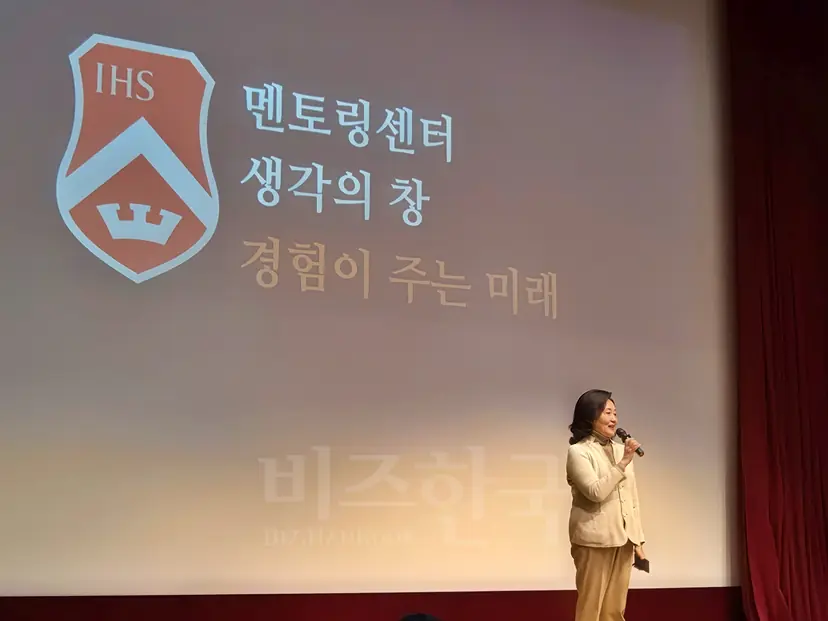
The Sogang University Mentoring Center "Window of Thought," which hosted the lecture, is a youth mentoring program led by former Minister of SMEs and Startups Park Young-sun in 2024, inspired by the mentoring systems at U.S. universities. It aims to share the experiences and knowledge of experts from various fields with the younger generation. Previous speakers include former Bank of Korea Governor Lee Chang-yong, Korea Enterprises Federation Chairman Ryu Jin, former Korea Chamber of Commerce and Industry Chairman Park Yong-maan, former Acting Chief Justice of the Constitutional Court Moon Hyung-bae, and former NCSoft President Yoon Song-yee.