

[BizHanKook] They say a "disease(?)" called "Busan Fever" is spreading among foreign tourists visiting Korea. It is a neologism that refers to the aftereffects of being unable to forget Busan's unique scenery and atmosphere even after returning home, leading to a desperate longing to visit again. When I first heard about "Busan Fever," I was skeptical. I suppose I felt, "I know Busan is nice, but is it really *that* good?" I also doubted whether foreigners could enjoy Busan as much as the locals do. But to my surprise, when I visited in late autumn, Busan was packed with foreigners from all over the world.
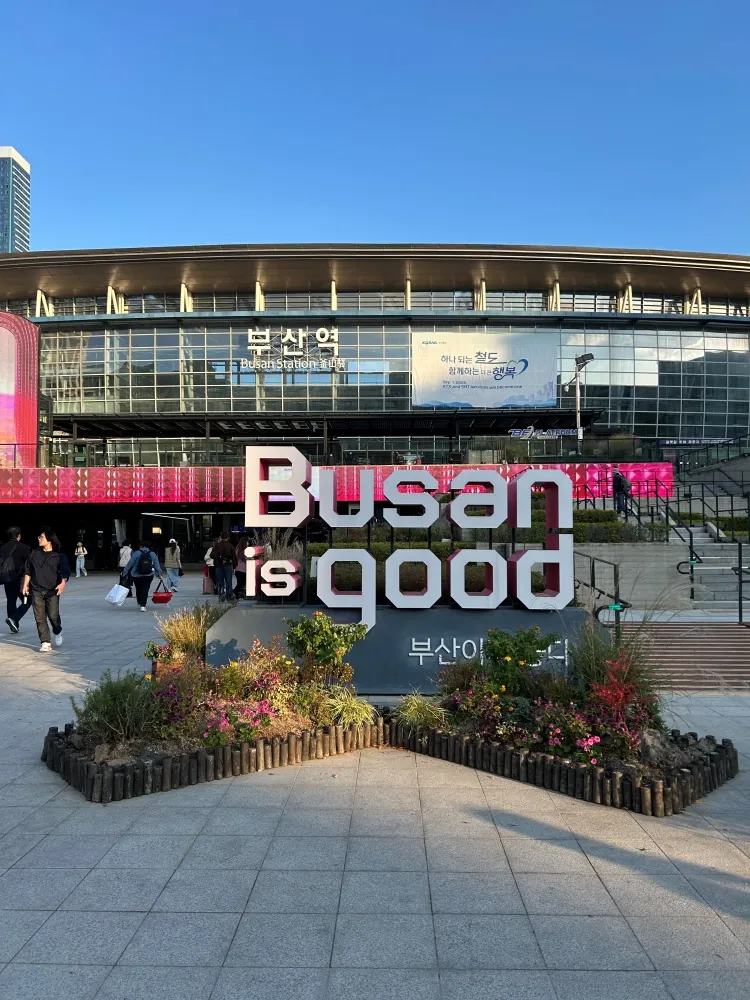
The first place I visited after arriving at Busan Station was the Bosu-dong Book Street, which is filled with all kinds of secondhand books. It began as a street stall where a couple who had fled to Busan during the Korean War—when it was the temporary capital—sold used books and magazines obtained from the U.S. military base on boxes spread on the ground. This is where Yu-mi (Kim Go-eun) visited with her fellow writer Ju-ho (Choi Daniel) and editor Sun-rok (Kim Jae-young) in the drama "Yumi’s Cells 3," and it is also where Park Ha-kyung (Lee Na-young) encountered a stranger named Chang-jin (Koo Kyo-hwan) while looking for nostalgic comic books in "One Day Off."
Much like the unexpected meetings in the dramas, you can find unexpected fun here, such as a 1977 issue of "Sunday Seoul" featuring the youthful face of Jang Mi-hee, or a 1980 issue of "Weekly Chosun" with a massive photo of former U.S. President Jimmy Carter on the cover. What’s fascinating is that even foreigners, who one might think wouldn't be interested in old books, prowl the alleyway with quite serious expressions. If you aren't interested in Bosu-dong Book Street, you can also check out Bupyeong Kkangtong Market and Gukje Market located right across the street. There are countless famous spots, such as the bakery "Milgot" visited by Samsung Electronics Chairman Lee Jae-yong, "Jangwoo-son Eomuk" (fish cakes), and "Kkotbunine," known as a filming location for the movie "Ode to My Father."
Another famous filming location in Busan is "Domoheon." Originally built in 1984 as a presidential retreat and later used as the Busan Mayoral Residence for a long time, it was transformed in 2024 into a complex cultural space that hosts exhibitions and events, with the name meaning "to plan new work and picture a new Busan." It will be familiar to many as Jeongsimjae, the mansion of Chairman Jin Yang-cheol (Lee Sung-min) in the drama "Reborn Rich." After ordering a drink from the local Busan brand "Momos Coffee" located there, let's look around the exhibition and outdoor spaces with a relaxed and luxurious feeling, as if you were the Mayor of Busan or Chairman Jin Yang-cheol himself.
Once you’ve enjoyed some leisure, head toward Haeundae to take in the Busan sunset. You’ll want to ride the "Haeundae Blueline Park," a tourist facility that redeveloped a 4.8-kilometer section of the old Donghae Nambu Line railway from Haeundae to Cheongsapo and Songjeong. If you want to spend quality time with family, a partner, or friends, take the 4-passenger Sky Capsule from Mipo in Haeundae to Cheongsapo and get off there. Walking from Cheongsapo to the Cheongsapo Daritdol Observatory allows you to experience the beautiful coastal scenery of Cheongsapo while simultaneously feeling the thrill of walking on the observatory's transparent floor as if walking on the sea.
When returning from Cheongsapo to Haeundae, try the beach train during sunset hours. When the sunset spreads out as you pass "Korea's Kamakura" Cheongsapo—which shares a similar vibe to the Japanese town of Kamakura, the setting of "Slam Dunk"—and travel through Dalmaji-gil to reach Mipo Station, everyone on the train lets out an exclamation in unison. Both the Sky Capsule and the beach train are extremely popular and frequently sold out, so I recommend booking online for peace of mind. Also, if you want to avoid standing and prefer to sit and watch the sunset, it is advantageous to start from Songjeong.
And then there’s the sea, cited as the fundamental reason for traveling to Busan. Even if you've fully enjoyed the sunset and the sea of Haeundae via Blueline Park, you will find yourself heading to Gwangalli to enjoy the day and even the night to the fullest. It’s because it's lined with restaurants, cafes, and pubs, and most importantly, it’s home to the Gwangandaegyo Bridge. While you can't experience stand-up paddleboarding now in the winter, you can admire the vast sea and the bridge on a yacht tour, or enjoy busking performances held on the beach against the backdrop of the spectacular nighttime lights of the Gwangandaegyo Bridge. The "Market Night" at Millac the Market, a complex cultural space where you can eat, shop, and rest all at once, is also worth a visit. It's no wonder young people love the fun of having a drink while looking out through the floor-to-ceiling windows at the night view of Gwangandaegyo Bridge.
The "Gwangalli M Drone X Laser Show," held every Saturday evening, turns Gwangalli, which is already bustling with crowds, into a festive scene. A performance featuring 1,100 drones, combined with laser effects set against the backdrop of the Gwangandaegyo Bridge, creates a spectacle where the drones, lasers, and bridge lighting harmonize. The theme on the day I watched was "Myth of Troy," and the Trojan Horse, Odysseus’s ships, sirens, and Agamemnon’s helmet from the movie "The Odyssey" appeared one after another, miraculously embroidering the night sky. On November 28, it plans to captivate people once again with the theme "Avengers: Doomsday." During the winter season (October–February), the show takes place twice, at 7 PM and 9 PM, lasting about 12 minutes each.