

[비즈한국] A lawsuit filed by Booyoung Housing to cancel a soil purification order for the former Taihan Electric Wire factory site in Geumcheon-gu, Seoul, has been dismissed in the first trial. The court determined that the second purification order, which Booyoung Housing contested, was merely an amendment that relaxed the fluorine standards from the first order; therefore, there was no legal interest to pursue the case. The court’s position is that any arguments regarding purification liability should have been raised against the first order, for which the period for appeal had already expired. Booyoung Housing filed an appeal on the 2nd of last month.
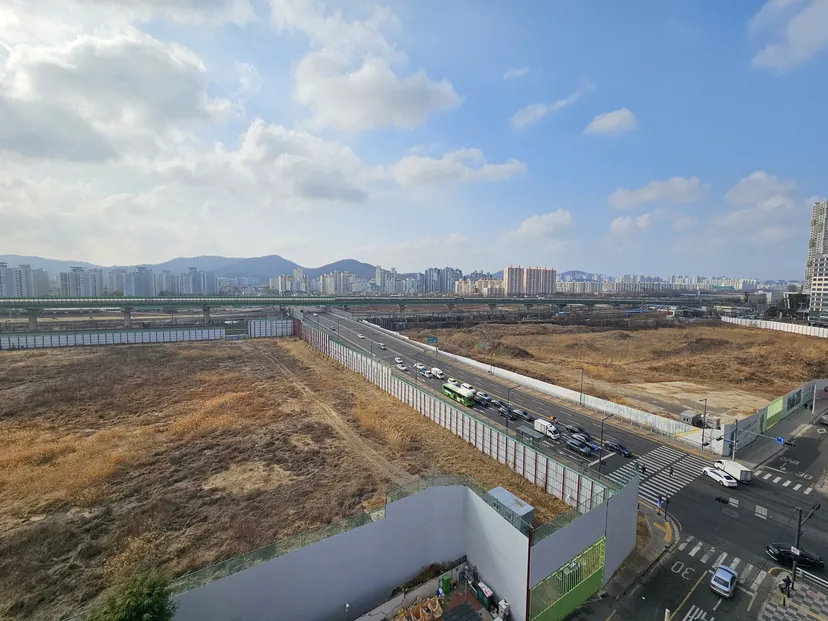
According to coverage by Bizhankook, the 14th Administrative Division of the Seoul Administrative Court dismissed the lawsuit filed by Booyoung Housing against the Head of Geumcheon-gu Office to cancel the contaminated soil purification order last May. A dismissal is a ruling that ends a trial without judging the merits of the case because the legal requirements for the lawsuit were not met. The court stated, "The second purification order is an administrative action that modifies the fluorine portion of the first order in a way that is favorable to Booyoung Housing," adding, "Therefore, the legal interest to contest the second purification order is not recognized."
The dispute between the two sides originated at the former Taihan Electric Wire factory site in Siheung-dong, Geumcheon-gu, Seoul. In February 2013, Booyoung Housing purchased the approximately 80,000-square-meter factory site from Taihan Electric Wire for 125 billion won. Later, it donated a portion of the southern site to the Woojeong Medical Foundation. The project has involved the Woojeong Medical Foundation constructing an 810-bed general hospital south of Geumha-ro, which bisects the site, while Booyoung Housing has pursued a project to build a 990-unit residential complex to the north.
The root of the problem was soil contamination in the area. In March 2022, Booyoung Housing commissioned a professional agency to conduct a detailed soil survey for the new apartment and hospital construction projects. The results revealed high concentrations of pollutants, including copper (up to 32,784 ppm), fluorine (934 ppm), and total petroleum hydrocarbons (TPH, 16,305 ppm). That same month, Geumcheon-gu issued its first purification order, mandating that the contaminated soil be cleaned to meet regulatory standards.
Following the first purification order, fluorine contamination standards were relaxed. In December 2024, the government increased the standard for "Zone 1" areas (such as residential land) from 400 ppm to 800 ppm, and for "Zone 2" areas (such as general land) from 400 ppm to 1,300 ppm. Reflecting this, the Geumcheon-gu Office issued a second order last April, which excluded Zone 2 areas—including the hospital site—from fluorine purification requirements and relaxed the standards for Zone 1. Although the deadline was extended to April 2027, the obligation to purify copper and TPH remained.
Booyoung Housing filed a lawsuit last December to cancel the second purification order. Their argument was that since the site was a vacant lot with the factory already demolished at the time of purchase, they were unaware of the contamination and therefore held no liability for purification. They contended that even if liability existed, the former factory operator that actually caused the contamination should be held responsible first. They also argued that applying the current Zone 1 standards is unjust, considering potential future changes in urban planning.
However, the court did not rule on whether Booyoung Housing held purification liability in its judgment. It viewed the second purification order not as a new order replacing the first, but as an amendment that relaxed the fluorine standards in favor of Booyoung Housing. The court judged that the issue of liability should have been contested against the first order in March 2022. Since Booyoung Housing did not file a lawsuit within the statutory period at that time, the court concluded that they could not use the second order as a basis to re-litigate the issue.
The court also added a negative stance regarding Booyoung Housing’s claims of good faith and lack of negligence. The court ruled, "As a large construction company, Booyoung Housing did not undergo a soil environment assessment in accordance with the Soil Environment Conservation Act when purchasing the large-scale factory site; therefore, even if they were in good faith, they cannot be considered free of negligence." The implication is that even if they were unaware of the contamination, it is difficult to consider that they performed sufficient due diligence during the purchase process.
Meanwhile, the apartment development site and the project were transferred to Dongkwang Housing while the lawsuit was ongoing. Dongkwang Housing is a Booyoung affiliate controlled by Booyoung Group Chairman Lee Joong-keun through Dongkwang Housing Industry and Namkwang Construction Industry. In November of last year, Booyoung Housing signed a contract to sell 10 plots of land in the area for 465.2 billion won and transferred ownership the following month. In March of this year, Geumcheon-gu also approved the change of the project operator for the 990-unit residential complex to Dongkwang Housing.
Booyoung Housing, dissatisfied with the first-instance ruling, filed an appeal on the 2nd of last month. Bizhankook reached out to Booyoung Housing to ask about the grounds for their appeal and their purification plans, but received no response. A Geumcheon-gu official stated, "So far, no part of the purification order has been implemented," adding, "While construction start and soil purification can proceed in parallel, buildings cannot be constructed without purifying the contaminated soil. We consider that if land ownership changes, the purification liability is succeeded without the need for a separate administrative action."