

[비즈한국] Gaming companies are on high alert regarding content protection. Programs that run PlayStation-exclusive games on PC have emerged, unreleased footage of highly anticipated games is leaking, and cases of so-called "jailbreaking" to neutralize game console security are continuing. As artificial intelligence (AI) is even being utilized for developing unofficial programs, the burden of copyright protection on game companies is growing.
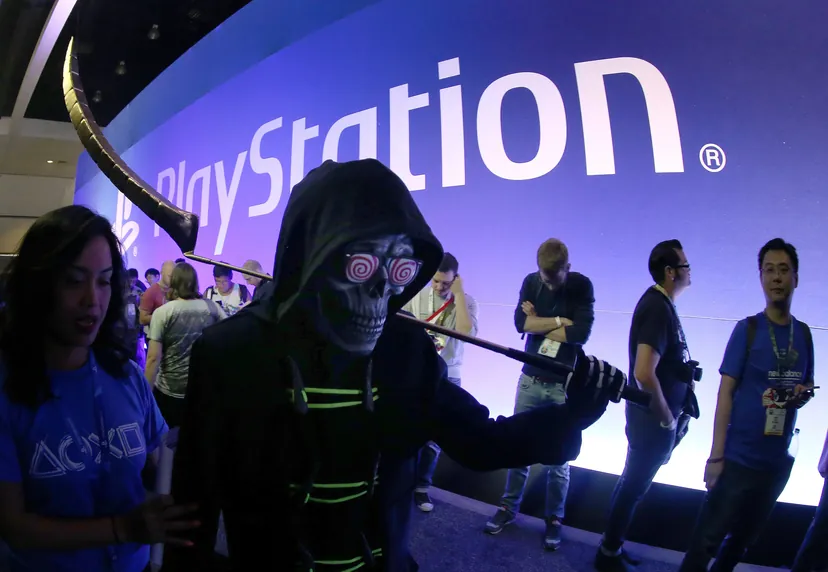
According to the gaming industry on the 14th, a program that allows Sony's PlayStation 4 (PS4) exclusive game "Bloodborne" to run on PC was distributed on GitHub on the 1st. Bloodborne is an action RPG released in 2015, and an official PC version has not been released for over 10 years since its launch.
Rockstar Games' highly anticipated title "Grand Theft Auto 6 (GTA6)" has been suffering from leaks of unreleased footage even before its launch. "Cyberleek," which has been leaking unreleased GTA6 footage, recently threatened to distribute a development version containing the game's entire story mode.
Cyberleek claimed that it would release the build once the market capitalization of a specific cryptocurrency it promotes reaches $30 million. At the same time, it proposed a condition that it could withdraw the distribution if Rockstar Games' parent company, Take-Two Interactive, releases the game on physical discs and issues a public apology.
Jailbreaking attempts are also continuing on the PS5. Recently, an emulator called "XPSemu," which can run games from Microsoft's old console, the original Xbox, on a jailbroken PS5, has appeared. An emulator is a program designed to allow games released for other consoles to be run on the device currently in use.
PlayStation game discs to disappear from 2028… Consumer backlash
These movements are drawing attention as Sony reduces physical disc sales and shifts toward digital downloads. As the structure in which platforms directly manage the distribution and usage of game content expands, voices among consumers demanding the right to freely use and store the games they purchase are growing. This backlash against digital distribution methods has emerged as a justification for game leaks.
Sony Interactive Entertainment announced last July that it would stop producing physical discs for new PlayStation games starting in January 2028. New titles released after that will be sold only in digital form through the PlayStation Store and retail outlets.
Sony stated that the decision was based on the fact that the way games are purchased and enjoyed is shifting from physical discs to digital downloads. They explained that since digital transformation is taking place across the entire content industry, including games, they intend to cater to the changed consumption habits of users.
However, consumer backlash has continued since the announcement of the end of physical disc production. While digital games can be executed immediately without changing discs and are easy to store, unlike physical games, it is difficult to freely resell or transfer purchased content. Previously, one could sell a game used or lend it to another user after purchase, but such transactions are restricted in the download method.
Concerns are also being raised about the right to use games. The fact that the scope of use for a game, even one purchased by a consumer at a cost, can change depending on the platform's policies and terms of service is a point of contention. There is a possibility that access to purchased games could be restricted if account usage is limited or service operation methods change in the future.
Purchasing a game on the PlayStation Store is not a method of acquiring ownership of the game itself, but rather granting a license to use it. Sony's domestic terms of service also state that the purchaser can only use the game content according to the set conditions, and that intellectual property rights belong to Sony and the respective rights holders.
Lowered barrier to hacking with AI… A new task for copyright protection
With the development of AI technology, it is becoming easier for individual developers to reverse-engineer existing games or create programs that bypass security restrictions. In the past, professional development knowledge and a considerable amount of time were required to reverse-analyze game structures and change execution environments, but recently, as generative AI supports code writing and error correction, the barrier to entry for related technologies is lowering.
In fact, it is known that the unofficial PC port program for Bloodborne also utilized AI. It was confirmed that Anthropic's generative AI, "Claude," was listed as a co-author in the actual code change history.
Similar movements are appearing not only in games but across the entire software industry. Recently, individual developer Brandon Thomas showcased free software that recreates the functions and usage environment of major programs like Adobe's Photoshop and Premiere Pro by utilizing Claude.
Regarding this, Kim Myung-joo, head of the AI Safety Research Institute (Professor of Information Security at Seoul Women's University), explained, "As AI has become capable of analyzing and modifying code, it has become possible to reverse-engineer existing programs and create new versions," adding, "The barrier to entry for related technologies has been significantly lowered."
He continued, "To verify copyright infringement, one must secure the source code and compare it one by one, but since there are so many cases of creating similar programs using AI, it is not easy to file lawsuits individually." He added, "AI companies say the responsibility lies with the users, but users can claim that it is a result created by AI. In the future, the location of responsibility for copyright infringement will become a key issue."