

[비즈한국] Every year at the end of September, a slightly unusual scene unfolds in Munich, Germany. Men dressed in leather breeches (Lederhosen) and women in dresses with aprons (Dirndl)—attire that doesn't seem very breathable—flood the subway from morning until night. They are preparing to head to the festival grounds after work. They are all there for Oktoberfest, the world's largest beer festival. During this same period, the Munich exhibition center is swarmed with founders holding laptops and investor pitch decks, venture capitalists, and corporate innovation leads. This is because Bits & Pretzels 2026 is taking place from September 28th to 30th.
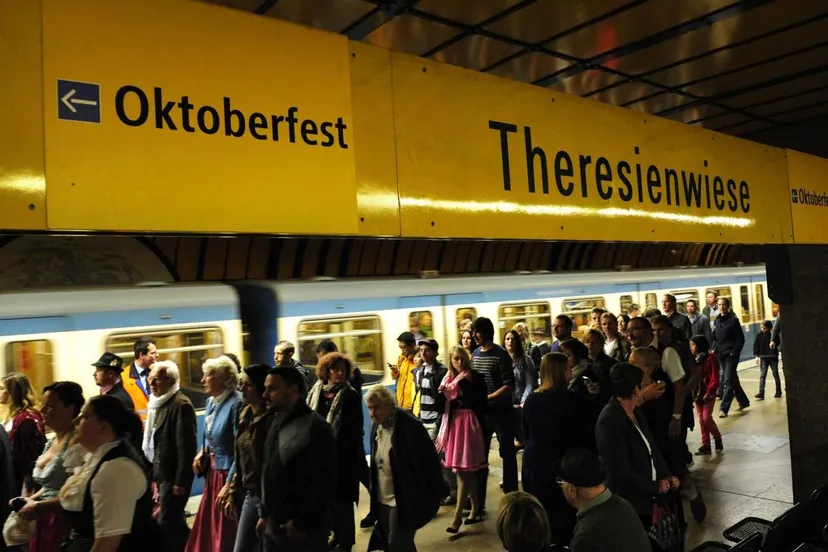
Started as a founder's morning gathering, now combined with Oktoberfest
The origins of Bits & Pretzels were humble. It began around 2014 as a morning meetup for about 80 founders in Munich. Since then, the scale has grown rapidly, and with world-renowned figures like Richard Branson, Barack Obama, Michelle Obama, and LinkedIn co-founder Reid Hoffman taking the stage, it has become one of the premier startup events representing not just Germany, but all of Europe.
While it may seem smaller than other startup events or trade shows, it is more vibrant than any other. This is thanks to the heart-shaped pretzels and unlimited beer provided throughout the event. The final day of Bits & Pretzels is held right at the Oktoberfest grounds. The organizers rent out an entire tent called the "Schottenhamel," creating a space where participants can engage with investors without any formality.
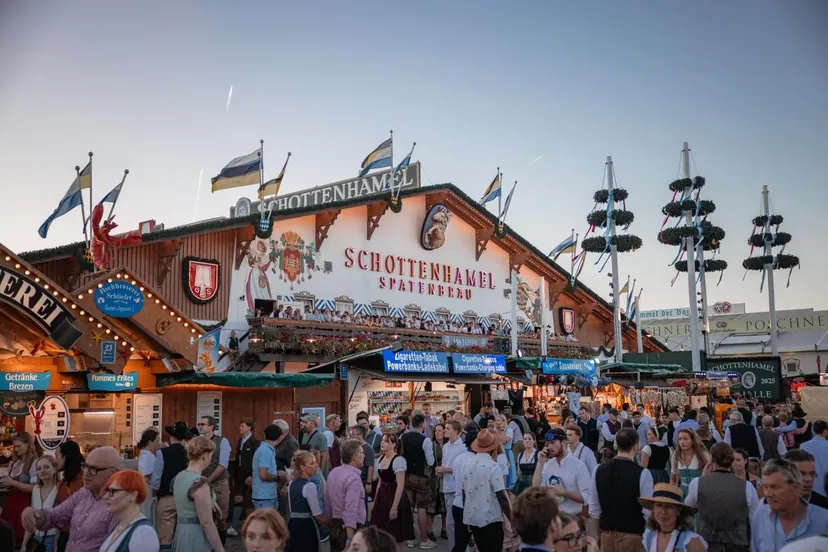
The Schottenhamel tent is the most iconic location at Oktoberfest. It is where the Mayor of Munich taps the first beer barrel every year and announces the start of the festival by shouting “O’zapft is!” (It is tapped!) in the Bavarian dialect. Oktoberfest began in 1867 in this small, 50-seat beer booth and has since grown into a massive tent that accommodates about 9,000 people. The beer is supplied by the traditional Munich brewery, ‘Spaten’.
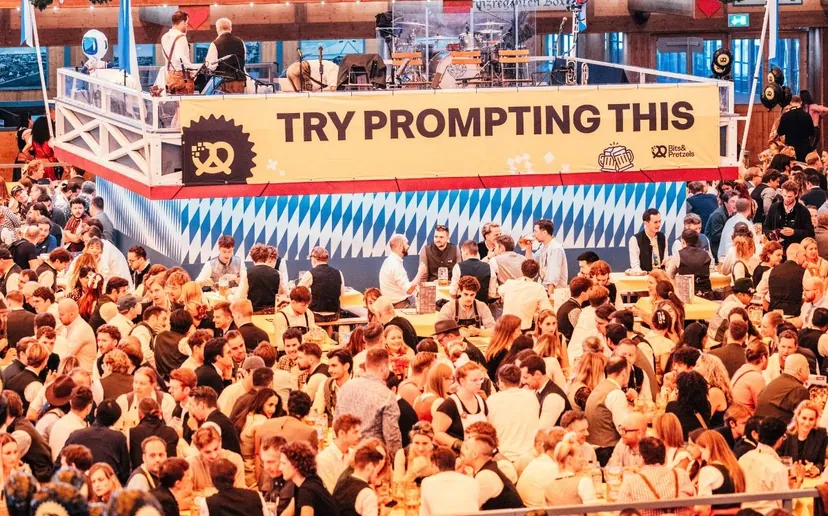
Bits & Pretzels transforms this historic space into a massive startup networking venue for one day. Founders, investors, and corporate executives sit together at long wooden tables, each seating over 300. This year, about 250 “Table Captains” led the conversations. These captains include famous investors, entrepreneurs, and leaders from the startup ecosystem. While investment discussions often conjure images of people sitting in conference rooms in suits, here, conversations about investments and business flow over 1-liter beer mugs.
A total of 7,500 people participated in this year’s Bits & Pretzels. According to the organizers, this includes over 3,000 founders and more than 1,700 investors. The assets under management by the investors present reach approximately $390 billion, and over 21,000 meetings between founders and investors were scheduled over the three days. Over 600 decision-makers from large corporations also took part.
If you only look at the numbers, it might seem like just another large startup event. However, while observing this year’s Bits & Pretzels, what stood out more than the number of participants was a single question that appeared repeatedly throughout the venue: What will Europe compete with in the future? And the answer, unexpectedly, was closer to the industrial competitiveness that Europe has long possessed rather than "yet another American-style software company."
"Europe needs more global companies"
One of the most interesting messages at this year's event came from former Google CEO Eric Schmidt. Schmidt said that because Europe has a sufficiently large market and customer base, it can create its own companies in various industries, including pharmaceuticals and financial services. The problem is that not enough of those companies grow to a global scale. The specific suggestion he threw out to the founders in Munich was to apply AI to manufacturing.
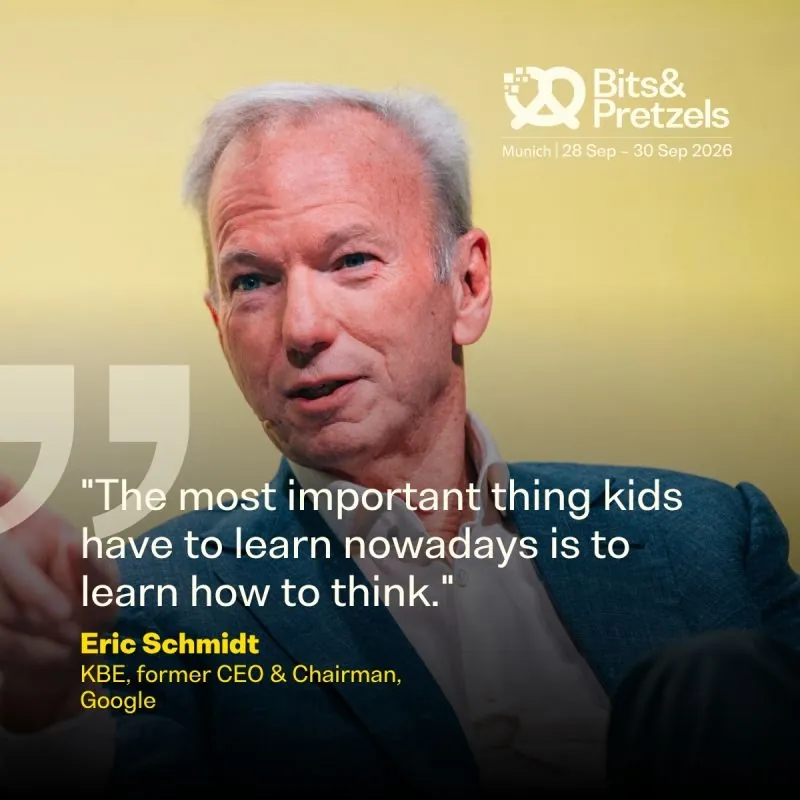
Imagine defining a difficult design problem in the morning and having AI create a new design. You then produce it overnight with a 3D printer and test it the next day. He encouraged attendees to imagine a manufacturing process that repeats from design to production and testing on a daily basis. The conditions Schmidt set were simple: "It has to be smart, it has to be fast, and it has to actually work." He argued that by combining AI with manufacturing, Germany can still create a unique competitive edge.
This comment quite accurately summarizes the atmosphere of this year’s Bits & Pretzels. As the global startup market's focus has been concentrated on generative AI for the past few years, the question "Where is the European OpenAI?" was repeated in Europe as well. However, the mood in 2026 was a bit different. How to apply AI to industry has become more important than the AI itself.
Germany should stick to what it's good at, and introduce AI!
If you walk around the event, you can easily confirm this change. UnternehmerTUM, the leading startup support organization in Munich, highlighted "Frontier AI" and "Industrial Horizons" at Bits & Pretzels this year. The focus is on applying cutting-edge, high-performance AI technology to traditional manufacturing sectors such as production, construction, and logistics.
During the event, a separate "Frontier AI" roundtable and TUM Venture Labs' "Industrial Horizons" program were held. Not only founders and investors, but also universities, research institutions, and industry leaders discussed the intersection of AI and industry in the same place.
In Munich, this is not such an unfamiliar combination. Munich is home to global manufacturing companies like BMW and Siemens; engineering and natural science research is active, centered around the Technical University of Munich (TUM); and a system to turn research results into actual startups through UnternehmerTUM and TUM Venture Labs has been established for a long time.
Recently, this is being combined with AI, robotics, aerospace, quantum technology, climate tech, and defense. If words like SaaS, fintech, and platforms dominated European startup conferences until a few years ago, the atmosphere is clearly different now. Deep tech, defense tech, industrial AI, robotics, and climate tech were the keywords of the year. This is a trend of trying to re-commercialize the industrial and research capabilities that Europe originally possessed through startups.
From lab to business
Another scene to note at this year’s Bits & Pretzels was the "EXIST Startup Factories." EXIST is a university startup support program that the German federal government has operated for a long time. Recently, the German government has gone one step further and is pushing a "Startup Factories" policy that builds large-scale startup hubs around universities and research institutions.
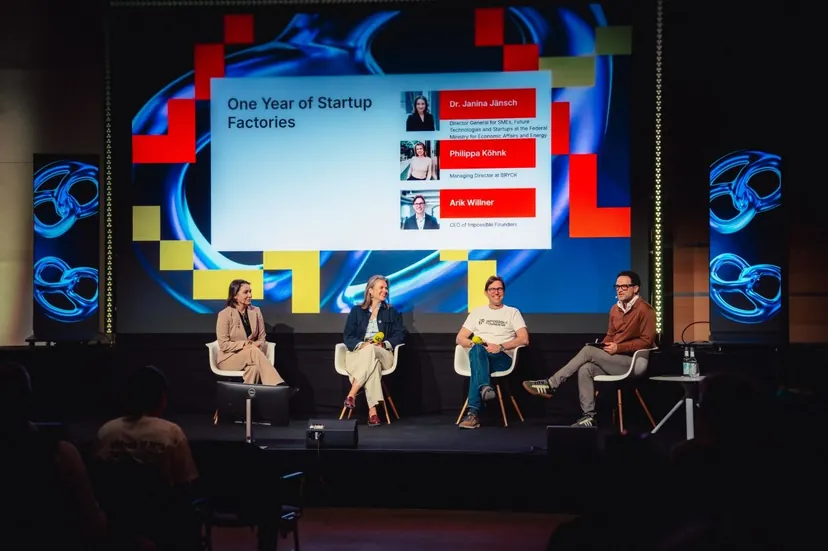
The Startup Factory, which began in 2025, aims to connect scientific research, industry, and founders more closely to quickly convert research results into high-growth companies. At this year’s Bits & Pretzels, the achievements and future tasks were introduced to mark the 1st anniversary of the Startup Factory launch. The core emphasis of the program was clear: "Science to Business."
Through the Startup Factory policy, the German government's goal is to not just stop at creating good papers or patents, but to create a path where researchers can start businesses, meet with industry, and grow into enterprises. Germany has traditionally had world-class research institutions like Max Planck, Fraunhofer, Helmholtz, and Leibniz, along with numerous technical universities. The key is how quickly those researches can be turned into companies and grown into the global market. Through this policy, the German government is trying to build a system where startups can emerge repeatedly, rather than just waiting for a few good startups to appear by chance.
Back to the 'human'
Interestingly, the official theme of this year's Bits & Pretzels was not AI. It was "Human After All." In an era where AI writes code, automates corporate tasks, and even investors use AI to find startups, the organizers wanted to put the founder back at the center.
By putting forward this theme, Bits & Pretzels re-emphasized the role of the entrepreneur who takes risks, endures failure, makes judgments in uncertain environments, and leads organizations.
It might sound a bit cliché. However, if you walk around the event, you come to understand why this theme emerged. While the main stage talks about AI and massive markets, the actual concerns of founders are still very human and realistic.
Where do I find my first customer? How do I convince investors? How do I hire good employees? How do I overcome Germany's strict regulations? Can I survive until the next round of funding? If I go abroad, who will open the first door for me? AI can take over many tasks. However, a significant part of the process of building a company is ultimately about persuading people and building relationships.
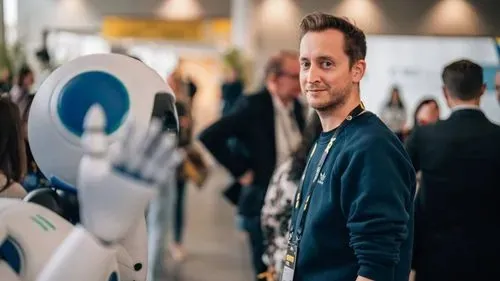
This is why, even as pitching sessions and speed dating with investors are managed digitally through the official app, many meetings were arranged in a more personal, "old-fashioned" way on-site, with first-come, first-served registrations and post-it notes attached to matchmaking boards.
There was also a small experiment that showcased this philosophy. They changed the pitching format where only investors judge startups. In a typical startup event, a founder stands on stage and explains their company for a few minutes in front of investors, and the judges evaluate it. The newly introduced "Golden Pretzel Award" this year took a slightly different structure.
Eleven early-stage investors selected the startups they had invested in or were paying attention to, and both the founder and the investor went up on stage to compete together. They moved away from the method of only putting the founder in front of the judges. It is a way of showing not just the pitching ability of the founder, but "which investor believed in this team and why," rather than evaluating the success of an early-stage startup solely on the individual's performance. It showed that the relationship between founder and investor is also changing from a one-sided assessment to a partnership.
70 matchmakers, the ultimate networking event
The part that sets Bits & Pretzels most apart from other startup events is its networking—the way it brings people together. The organizers limit the number of participants to 7,500. It's not an environment where anyone who buys a ticket can enter; they manage the ratio of founders to investors and employ a team of 70–80 people specializing solely in matchmaking. The matchmakers wearing red t-shirts at the event actively ask participants who they want to meet, grasp exactly who has come to the event, and connect the two parties.
The pinnacle of this obsession with networking is its combination with Oktoberfest. At first glance, it might look like a kind of event marketing that combines a startup event with a beer festival, but it is actually a quite clever networking device.
At a conference hall, the hierarchy between investors and founders, and large corporations and small startups, does not easily disappear. However, at Oktoberfest, everyone sits together at long tables, sharing food and clinking beer mugs, which narrows the hierarchy and distance.
That is why I felt that Bits & Pretzels was the most "human-centered" of the many startup events I have visited. After the official events, participants continued to talk through the night over beer and wine at after-parties and side events that continued throughout.
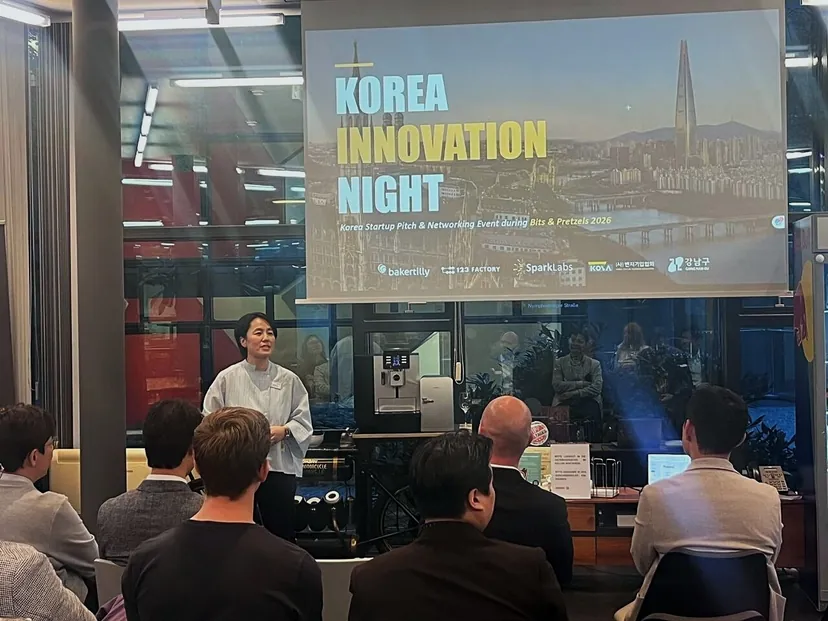
There have been many pessimistic expressions in the news about the European economy in recent years. The crisis in German manufacturing, rising energy prices, declining competitiveness between China and the US, regulatory burdens, lack of venture capital, etc. These problems have not disappeared. However, at this year's Bits & Pretzels, I at least saw how Europe is trying to find a breakthrough. No matter how advanced technology becomes, it is ultimately people who connect researchers and founders, startups and large corporations, and investors and companies.
Founders discussing the most advanced technologies in the world sit at 200-year-old wooden tables at Oktoberfest on the last day and clink their beer mugs. Perhaps this is the scene that best illustrates the current state of the European startup ecosystem. To create something new, Europe has begun to reconnect the things it was originally good at.
The author, Lee Eun-seo, majored in law in Korea and studied theater in Berlin. Based in Berlin, a city of arts and a European startup hub, she leads 123Factory, which connects the startup ecosystems of Korea and Germany while growing alongside the city.