

[비즈한국] As the era of Artificial Intelligence (AI) goes into full swing, next-generation nuclear power plants capable of providing stable, massive amounts of electricity are emerging as a major new interest for global Big Tech and the energy industry. In particular, as the construction of large-scale data centers requires significant time to expand power grids, nuclear power and Small Modular Reactors (SMRs) that can generate electricity 24/7 are being highlighted as alternatives to meet the power demands of AI infrastructure.
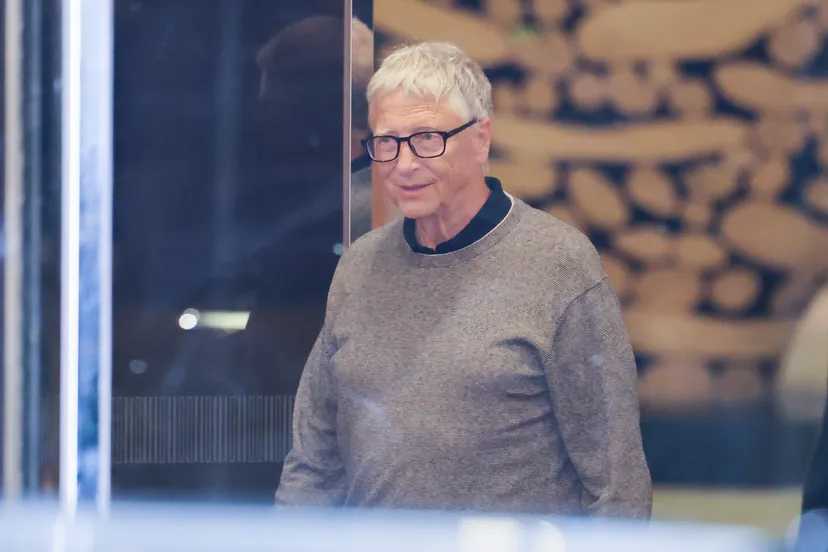
The fact that Bill Gates, co-founder of Microsoft (MS) and founder of next-generation nuclear company TerraPower, has returned to South Korea after a year is closely aligned with this trend.
On the 14th, Gates met consecutively with National Assembly Speaker Woo Won-shik, Prime Minister Han Duck-soo, and Minister of Trade, Industry and Energy Ahn Duk-geun, followed by meetings with HD Hyundai Chairman Chung Ki-sun and SK Group Chairman Chey Tae-won. These moves are interpreted as efforts to expand the participation of the Korean government and corporations in TerraPower's next-generation reactor business.
Power demand fueled by AI... Big Tech turns eyes toward SMRs
As the AI era progresses, the competition among Big Tech companies to secure AI data centers is intensifying, and ensuring the massive amounts of power needed to operate them has become an emergency. The problem is that simply building more power plants is not enough. Because power must be supplied to wherever the data centers are at the required time, the expansion of transmission grids and substation facilities must also occur in tandem.
In reality, Big Tech companies are not relying solely on power grids; they are securing power by signing long-term Power Purchase Agreements (PPAs) or by partnering directly with power generation businesses. However, in regions where AI data centers are concentrated, it is becoming difficult to secure power when needed due to the time required for grid connection and infrastructure expansion.
As the competition for power becomes fiercer, nuclear power—specifically SMRs—is emerging as a new means for Big Tech to secure energy. This is because they are designed on a relatively smaller scale than large-scale nuclear plants and feature modularized core equipment, allowing them to be deployed more flexibly in areas where power demand arises.
Google signed a contract in 2024 with next-generation nuclear firm Kairos Power to receive up to 500MW of SMR power. They are aiming for the first reactor to go online by 2030. Amazon has also partnered with X-energy to secure the next-gen nuclear power needed for its AI data centers. Amazon is investing $500 million in X-energy's SMR business while simultaneously pushing to build up to 5GW of new nuclear capacity within the U.S.
TerraPower has taken a step further by signing a contract with Meta to supply actual Natrium reactors. In January, the two companies agreed to develop up to 8 Natrium reactors and energy storage system plants in the U.S. The deal involves developing the first 2 units, with Meta securing the rights to the power produced by up to 6 additional reactors thereafter. The total contract size reaches up to 2.8GW, and when utilizing the energy storage system, output can be expanded up to 4GW. The initial reactor supply is expected to begin between 2031 and 2032.
TerraPower's 'Natrium' commercialization... The role of Korean companies takes shape
TerraPower is currently developing 'Natrium,' a 4th-generation reactor based on Sodium-cooled Fast Reactor (SFR) technology. It is designed to transfer heat generated from the reactor using liquid sodium and combines this with an energy storage system to respond more flexibly to power demand.
TerraPower is currently pushing to build the first 345MW Natrium power plant in Kemmerer, Wyoming, USA. Beginning with this project, the company plans to establish a commercial model of supplying identical reactors to various regions.
In this process, Korean companies are growing their presence beyond being simple investors, playing roles across the value chain including business development, design, and manufacturing.
SK Inc. and SK Innovation participated as co-lead investors in TerraPower’s funding round in 2022, investing $250 million. Since then, they have maintained a strategic relationship for the development of TerraPower's reactors and global business expansion.
On the 14th, TerraPower and SK Innovation agreed on key terms to cooperate on SMR projects in the U.S. and overseas. This represents a step beyond their existing investment relationship, establishing a foundation to explore future business development and project participation.
In the manufacturing sector, HD Hyundai and Doosan Enerbility are growing their presence by supplying core components to TerraPower’s Natrium projects.
HD Hyundai Heavy Industries signed a basic agreement with TerraPower in May to supply Natrium reactors and was selected as the preferred manufacturer for the Reactor Enclosure System (RES) core equipment. The goal is to move beyond manufacturing the first unit and establish a production system that can be applied to future units.
Previously, TerraPower announced in 2024 that for the first Natrium reactor's RES, HD Hyundai would be responsible for the reactor vessel, while Doosan Enerbility would handle the reactor protection vessel, internal support structures, and core internal structures.
In the same year, Doosan Enerbility signed a contract with TerraPower for the manufacturing feasibility review and design support of these three main components. Based on this, it is expected that the company will expand its business scope to include the actual manufacturing of equipment in the future.
Hyundai E&C is also participating in cooperation for the global commercialization of Natrium alongside TerraPower and HD Hyundai. The three companies are pursuing cooperative measures covering design, manufacturing, supply chains, construction, business structures, and multi-unit supply.
In this way, Korean companies are participating in TerraPower's Natrium business by leveraging their respective strengths. The structure involves SK providing capital and business development, HD Hyundai and Doosan Enerbility handling core equipment manufacturing, and Hyundai E&C managing design and construction capabilities.
Analysts suggest that if SMRs firmly establish themselves as a power source, the role Korean companies play in the global supply chain could grow. Jeon Yu-jin, an analyst at iM Securities, stated, "SMRs have advantages over fuel cells in terms of power capacity expansion, fuel costs, and voltage and frequency stability," adding, "Under the current timeline, TerraPower is expected to be the first to start commercial SMR operations in the U.S."