[비즈한국] There was a time when Baedal Minjok (Baemin) was a brand that made you look forward to its advertisements. Even if I had no reason to order food, I would still seek out their commercials. I was drawn to the witty taglines, the slightly offbeat typography, and the genuinely serious way they approached whimsical ideas. They created and gave away fonts, hosted literary contests about food, and even held auditions for "chicken sommeliers." Baemin did things that made you wonder, "Do they really need to go this far to promote a delivery app?" And just like that, people began to love the brand even before they started using the service.
At some point, that fun factor faded a little. It doesn't mean Baemin stopped branding altogether. It’s just that compared to the frequency of opening the app, the moments spent smiling while thinking about the brand became rarer. Concerns about what to eat today, how much of a discount I could get, and how much the delivery fee was became more pressing. The brand that once held my attention with every word became, before I knew it, just a familiar "order" button.
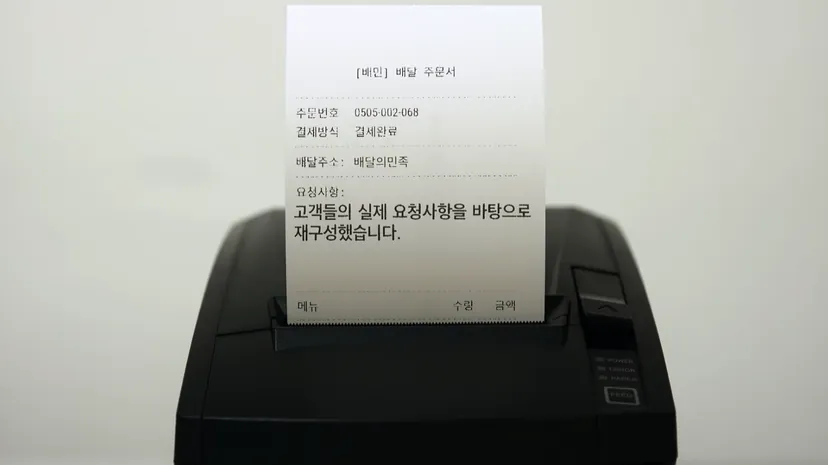
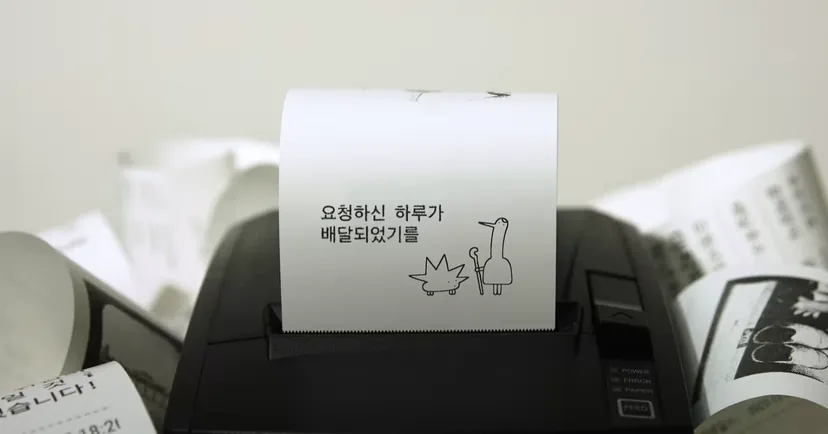
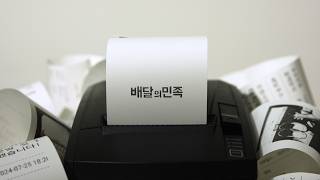
It was in this context that the recently launched 'Baemin Receipt Project' caught my eye. The title of the video is, "The day you requested has been delivered." It is a campaign that reveals the stories written in the request section of delivery order slips. For the first time in a while, I thought: Baemin hasn't lost their touch after all.
Reconstructing actual customer requests
In truth, it’s not easy to associate the term "delivery request" with warmth. The requests often encountered on online communities are usually phrases that make people angry. They involve demanding excessive service, pressuring restaurant owners with the threat of a bad rating, or sending delivery drivers on bizarre errands. Videos exposing complaints about restaurant owners slyly manipulating menu options or the rude or dangerous behavior of delivery riders are endless. After reading such posts one after another, it makes you wonder if buying and selling a single meal has become this harrowing.
However, what appears most often is not necessarily what happens most frequently. Shocking cases are captured, shared, and turned into articles precisely because of that shock value. You cannot gauge the proportion of those cases relative to total deliveries based on the number of posts. People who eat a delicious meal and clean up their takeout containers usually just return to their evening. A safe and quiet meal just passes by unnoticed.
Baemin's latest campaign turns its gaze toward those quiet but warm places. The video begins with a note that it was reconstructed based on the actual requests of customers. Among the menus, prices, and dates written on order slips, they retrieve a few lines that we would normally just glance over.
A representative from Baedal Minjok who planned this campaign explained the background: "While reviewing our services, we discovered that customers were conveying their hearts to one another through request notes, almost as if they were writing letters. We wanted to showcase those stories that carry the scent of humanity instead of just letting them pass by."
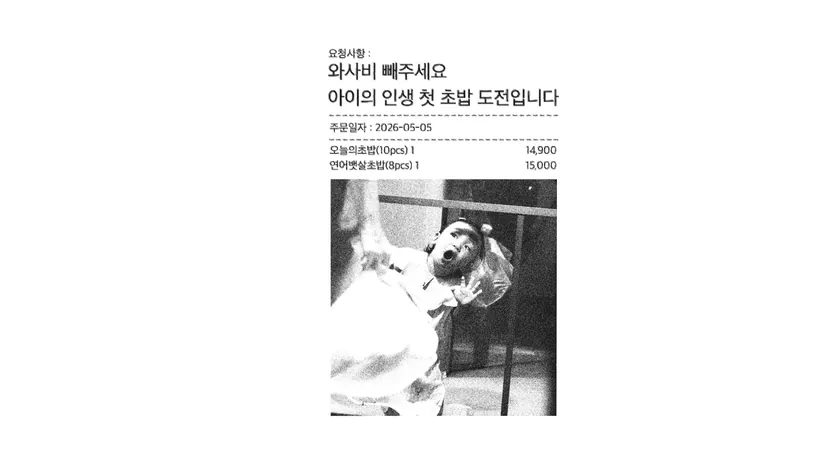
“Please leave out the wasabi. It’s my child’s first attempt at sushi.”
Asking to remove wasabi is a common cooking request. But when that one sentence is added, the expression of that plate of sushi changes. To someone, it is just a menu item made daily, but to a child, it is a new flavor they are encountering for the first time. The order slip shows the quantity and price of the sushi, but a small challenge is being delivered to that household's dinner table.
“I’m moving away now. Thank you for the great food for the last 10 years.”
This is a farewell note attached to an order for two bowls of cold noodles. It’s in the request section, but there is nothing to request. It seems the customer just felt it was a pity to leave without saying anything upon their final order. Through busy days, rainy days, and days when there was nothing in the fridge, they likely sustained themselves with food from that shop. As 10 years are packed into the greeting of "thank you for the meal," the short sentence becomes quite heavy.

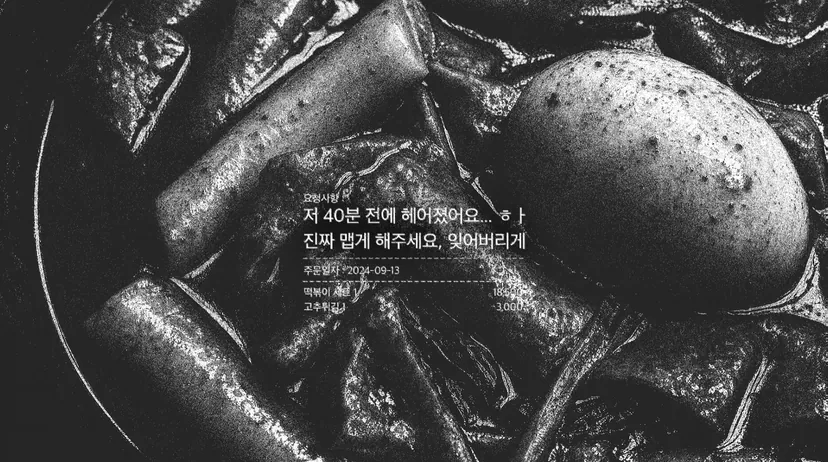
There is also a tteokbokki order asking to make it "really spicy" so they can forget a breakup that happened 40 minutes ago. There is someone who orders malatang on the day their exam results confirm they have to retake it, asking for it to be delicious. They want to think about something else, at least while their mouth is tingling, and even if the day didn't go as planned, they want at least one meal in the evening to be satisfying.
Delivery has become a common part of daily life, but for the person ordering, it can still be a small event. A late-night snack for one, enjoyed after a grueling day of childcare, is a moment of looking forward to some "me time." A request to keep the broth warm because a son with a cold wants to eat it is filled with a parent's love. A sentence asking for the food to be as delicious as possible because they are upset after fighting with their dad contains both heartache and an appetite side-by-side.
Eating tteokbokki won't bring back the person you broke up with, and a bowl of malatang won't make the hopelessness of failing an exam disappear. But if you eat something delicious, you feel a little better for a while. The emotion in this campaign is persuasive precisely because it is of that scale. Even if you don't forcefully claim that one meal can change your life, it is likely that everyone has had an evening that was at least bearable thanks to a single meal.
Restoring 'Baemin-ness' by turning customer sentences into a campaign
From a branding perspective, the point to note is the place where these stories were found. The reason for the order, which wasn't revealed by the menu or quantity alone, was in the request section. By reading the sentences—which were previously viewed as just necessary information for cooking—as human circumstances, new meaning was added to the familiar delivery process. They transformed a format that had been consumed as evidence of conflict online into material for empathy.
The aforementioned Baemin representative said, "In these days when anyone can easily create videos with AI, Baemin, which delivers the warmth of food, wanted to tell more human stories." This shows the point where this campaign attempted differentiation. As the barrier to entry for video production lowers, the judgment of what to choose to turn into video becomes more important. Baemin found its material in the customers' sentences that had accumulated within the service. If the early Baemin attracted attention with witty copy, this time they led with a sense of discovering and editing the language of everyday life.
This approach also shows what a brand can talk about once it has become deeply ingrained in daily life. When a service is unfamiliar, you must explain how to use it and its convenience. Once it is sufficiently familiar, you can look back at the place the service has taken in daily life. This campaign makes people reflect on the time they have spent using Baemin. The moment order history is read as a record of life, emotion is attached to the relationship between the app and the user.
However, for this empathy to lead to lasting brand favorability, it must be backed by actual user experience. The hands that make sushi without wasabi, the hands that package broth so it doesn't leak, and the hands that carry food to the door are what make a request into a meal. The warmth discovered by the campaign can also only last as long as it is supported by the service provided by the people doing that work.
The final phrase, "I hope the day you requested has been delivered," summarizes this approach in one sentence. It leads people to read their own expectations for the day into the food they ordered. Advertising can suggest that connection of imagination. It is now the service's role to ensure that people feel that meaning in their next order as well.