

[비즈한국] The Supreme Court has dismissed all appeals filed by the management, the corporation, and the prosecution regarding the Hwaseong Aricell factory industrial disaster, which claimed the lives of 23 workers, effectively upholding the original sentences.
The First Division of the Supreme Court (presiding Justice Cheon Dae-yeop) on the 20th upheld the second-instance ruling that sentenced Park Soon-kwan, CEO of Aricell, who was indicted on charges including violating the Serious Accidents Punishment Act, to four years in prison. The sentences for his son, Aricell General Manager Park Joong-won, who was the head of safety and health management, were also finalized at seven years in prison and a fine of 1 million won, while the Aricell corporation was ordered to pay a fine of 800 million won. With this, the sentences for the main defendants contested in the first and second trials have been concluded.
On this day, the court read the dismissal order in less than 10 seconds without providing any detailed explanation and left the courtroom. The bereaved families who were watching from the gallery broke down in tears. Civic groups harshly condemned the judiciary, stating, "It was a ruling that brushed off 23 lives in 10 seconds and ran away."
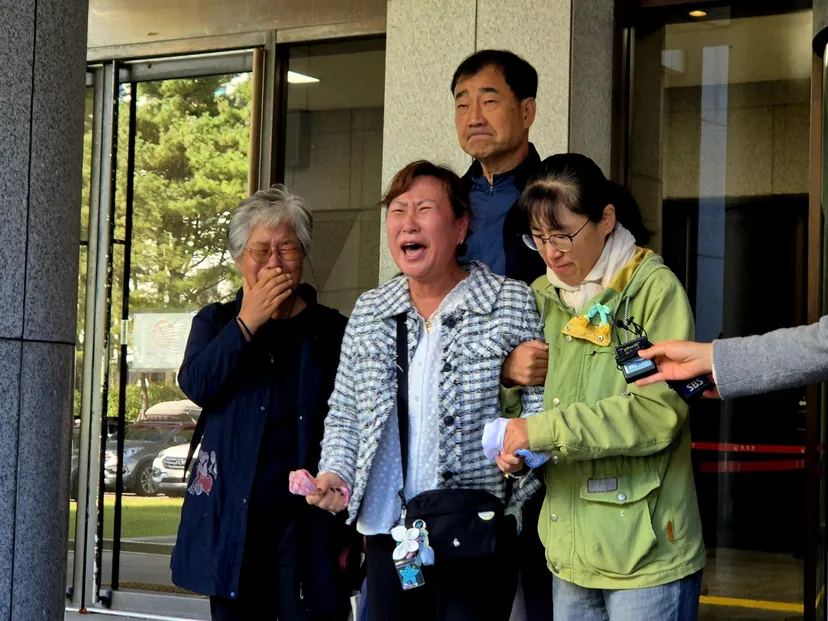
Wails and sighs fill the courtroom and beyond
The inside and outside of the main courtroom were instantly filled with wails and sighs as the sentencing proceeded. As the court read the dismissal of the appeals in less than 10 seconds without providing a detailed oral explanation regarding the social impact of the case or the legal reasoning, the bereaved families, who had been monitoring the trial for over two years, expressed profound frustration and anger.
Lee Soon-hee, mother of the late victim Eom Jeong-jeong, vented her anger, asking, "How can the laws of the Republic of Korea be like this? 23 people died. How can they discriminate like this just because they were foreigners?" She added, "I don't know how to tell the families in China." Yeo Guk-hwa, cousin of the late Lee Hae-ok, said, "Honestly, I came here today having let go of my expectations, but the dismissal was so perfunctory. I was so angry in that moment that I could only curse." She continued, "I am sorry to my family members who became 23 stars, sorry that this is all we could do, and sorry to the victims of industrial accidents who worked so hard to create the Serious Accidents Punishment Act."
In particular, there was criticism regarding the fact that the compensation agreements reached by the bereaved families served as grounds for leniency, reducing the prison sentences for the corporate executives. Lawyer Shin Ha-na, representing the bereaved families, protested, "When sentences are reduced due to settlements, the bereaved families—who were forced to settle out of financial necessity while harboring deep grievances—are left suffering from guilt." She added, "Also, the true victim is the deceased; how can the damage to the deceased be compensated? There was no genuine reflection or apology from the company, and secondary victimization continued, so it is unacceptable to provide such exceptional leniency just because a settlement agreement was signed."
Legal precedent for management responsibility and the ‘emergency exit acquittal’ controversy
This ruling serves as an important precedent for judging the safety and health management systems of workplaces and the legal responsibilities of management under the Serious Accidents Punishment Act. The Supreme Court upheld the lower court’s legal determination that CEO Park Soon-kwan, as a person with the authority and responsibility to represent and oversee the company's business, falls under the category of a "person responsible for management," the primary subject of obligation and responsibility under the Act.
The court also accepted the lower court’s legal reasoning that a causal relationship exists between the management's failure to provide safety manuals for imminent hazards in workplaces handling dangerous materials and their failure to properly establish and implement a safety and health management system, which led to the massive death toll of 23 people.
However, the acquittal on certain charges, which the bereaved families and civic society have consistently pointed out, was also upheld, leaving behind significant controversy. The prosecution had indicted the defendants for violating the Occupational Safety and Health Act because emergency exits and passages were not maintained on the second floor of the factory at the time of the accident. However, the court upheld the acquittal, reasoning that the safety regulations regarding emergency exits were not clear and that, under the principle of legality (nullum crimen, nulla poena sine lege), the law cannot be interpreted broadly to the detriment of the defendant.
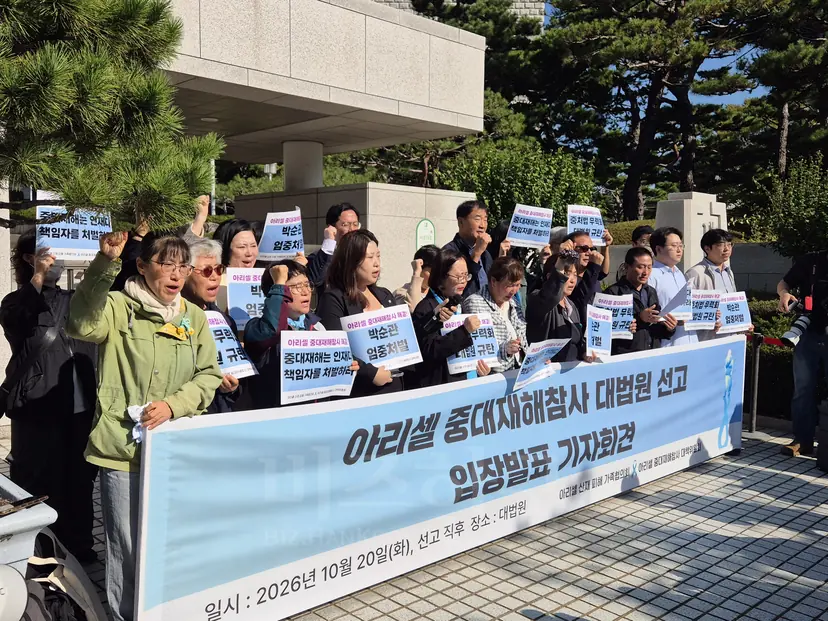
The Aricell Serious Accident Countermeasures Committee and the legal team for the bereaved families held a press conference immediately after the Supreme Court verdict, strongly criticizing the ruling for causing a fatal regression in industrial safety standards. Song Seong-yeong, co-representative of the committee, pointed out, "Today's Supreme Court ruling is a diabolical verdict that kills the deceased a second time and plunges the bereaved families into suffering once again." He added, "Since a worker's life is not an object that can be traded for corporate profit, safety is not an option but a corporate obligation. If an atmosphere is created where responsibility can be reduced by providing compensation after an accident occurs, the preventive function of the Serious Accidents Punishment Act becomes useless."
Lawyer Shin Ha-na denounced the Supreme Court for excluding common-sense safety principles. "It is common sense that workplaces and buildings that handle materials especially dangerous in the event of a fire must have emergency exits and passages that can be used at any time," Shin said. "Presiding Justice Cheon Dae-yeop is the very person who ruled in the 2020 'Samsung Geoje Shipyard Crane Accident' that it is 'only natural to interpret the Occupational Safety and Health Act normatively according to the situation and purpose of the workplace.' What has happened in the last six years?"
The committee and the legal team stated that since the Supreme Court did not even explain the specific reasons for the ruling in the courtroom, they would carefully analyze the full text of the written judgment once it is delivered and initiate follow-up legal measures. The legal team stated that if the review of the judgment reveals clear and serious factual errors or legal distortions that infringe upon constitutional basic rights, they would formally file a "constitutional complaint" with the Constitutional Court to challenge the unconstitutionality of the judiciary's decision to the very end.