

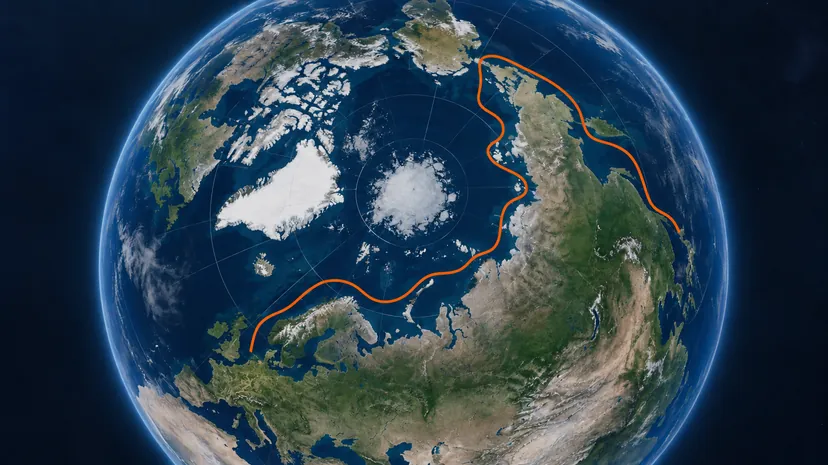
[비즈한국] As climate change accelerates the melting of polar ice, the Northern Sea Route (NSR) is gaining attention as a next-generation maritime trade route to replace the Suez Canal. It is attractive in terms of logistics efficiency, as it can reduce sailing distances by approximately 30–40% compared to the traditional route connecting Asia and Europe via the Suez Canal. In particular, whenever uncertainty in major trade routes increases due to geopolitical instability in the Middle East or crises in the Red Sea, the NSR is discussed as an alternative to support the global supply chain. However, some caution that it is premature to be optimistic about its commercial competitiveness based solely on the reduction in distance. High fuel costs due to strengthened international environmental regulations, expensive icebreaking fees, and safety and security risks are overlapping to put pressure on the actual economic feasibility of operations.
Low Probability of Cost Advantage Over Suez Canal, Barely 16% in Summer
A practical variable hindering the economic viability of the Northern Sea Route is the issue of ship fuel. With the enforcement of the International Maritime Organization’s (IMO) International Code for Ships Operating in Polar Waters, the use and carriage of heavy fuel oil (HFO) within Arctic waters has been completely banned since July 2024. To protect the sensitive marine ecosystem of the Arctic, vessels are mandated to use only expensive clean fuels, such as marine gas oil (MGO) with extremely low sulfur content or ultra-low sulfur diesel, instead of the cheap heavy oil typically used in general open seas.
These regulations erode a significant portion of the fuel savings gained from the shorter distance. Based on the Singapore and Rotterdam bunkering markets, marine gas oil is priced up to around 50% higher per ton than conventional heavy oil. Even if the total amount of fuel consumed decreases due to the shorter distance, the sharp rise in the unit price of the fuel injected makes it difficult to achieve significant savings in net fuel expenditure.
Alongside fuel costs, a major burden for shipping companies is the icebreaker support fee charged by Russian authorities. Even during the thaw, the Arctic Ocean is often dotted with drifting ice and icebergs, requiring icebreaker guidance for the safe passage of merchant ships. Icebreaker fees are calculated based on a combination of cargo type, vessel tonnage, and ice-class rating, and in many cases, these charges exceed Suez Canal transit tolls.
According to a simulation analysis conducted this year by researchers at Mokpo National Maritime University—which modeled key operational cost variables such as seasonal conditions, Arctic geopolitical risks, fuel prices, fuel penalties due to icing, icebreaker fees, and insurance premiums—the current commercial economic feasibility of the Northern Sea Route is difficult to justify compared to the Suez Canal. The probability of the NSR having a cost advantage over the Suez Canal route was a mere 16.6% in summer and 1.4% in winter. The study analyzed that for the Northern Sea Route to have a tangible comparative economic advantage over existing routes, icebreaker support fees would need to be drastically reduced by at least 86%.
A study last year by Shanghai Maritime University and Shanghai Jiao Tong University, utilizing actual operational data from China Ocean Shipping Company (COSCO), also identified icebreaking transit taxes as a key expense item accounting for 11–13% or more of total voyage costs, concluding that without a reduction in fees, there is little incentive for liner companies to initiate service.
Ice-Class Vessels Required to Withstand Extreme Cold Are 20% More Expensive than Standard Merchant Ships
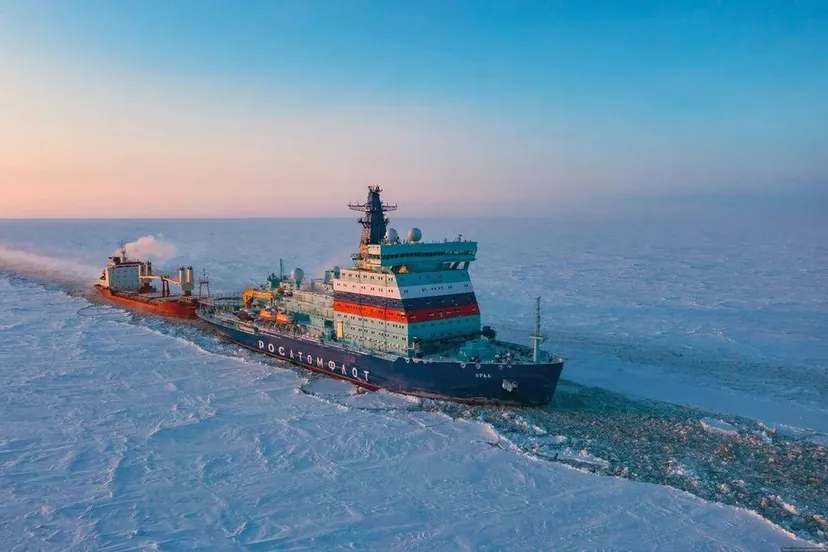
Costs related to the vessels themselves are also an entry barrier. To withstand the extreme cold and ice pressure of the Arctic Ocean, shipping companies must deploy ice-class vessels reinforced with thick, high-tensile special steel plating and equipped with anti-icing devices, rather than standard vessels.
The newbuilding price of an ice-class cargo ship that meets polar operational standards is set at approximately 20% or more higher than that of a standard deep-sea merchant ship of the same type. High ship prices increase the burden of fixed costs for shipping companies. Furthermore, maintenance costs incurred as the hull and propulsion systems wear down against ice are about 50% higher than on standard routes.
Another weakness is the difficulty in achieving 'economies of scale' to lower transport costs per unit of cargo. The average depth of major bottleneck sections of the NSR, such as the Sannikov Strait, is only about 13 meters, making it physically impossible for the 15,000–20,000 TEU (Twenty-foot Equivalent Unit) class ultra-large container ships currently operating on the Asia-Europe route to pass through. Consequently, fleets must be composed primarily of small- to medium-sized ships around the 4,000 TEU class, raising concerns about losing out in cost competition against existing routes that utilize ultra-large vessels.
In terms of logistics operations, another hurdle for container ship service is the lack of schedule reliability. In Arctic waters, it is often impossible to maintain the economic speed (around 18–20 knots) used in flat waters due to lingering drift ice, thick sea fog, and sudden extreme weather events. Frequent speed reductions are necessary for safety. It is difficult for shippers of consumer goods or industrial products, for whom delivery deadlines are crucial, to entrust cargo to a route where schedule stability is not guaranteed. This is why the current performance of the Northern Sea Route is skewed toward non-liner bulk cargo, such as LNG, crude oil, and other energy resources or minerals, which are less sensitive to schedules.
Lack of Emergency Infrastructure and Geopolitical Crises
The lack of coastal infrastructure to guarantee ship safety and the geopolitical crisis surrounding Russia also amplify the uncertainties of the Northern Sea Route. Around the Suez Canal or the Strait of Malacca, there are densely packed major ports capable of ship repairs, refueling, and emergency medical treatment for crews. Conversely, the Arctic ports along the Siberian coast have shallow waters and poor loading and repair facilities, making immediate refuge and emergency restoration difficult in the event of an emergency, such as hull damage or engine failure.
Added to this is the geopolitical crisis caused by Russia's invasion of Ukraine. According to analysis by the Korea Maritime Institute (KMI), the "Arctic Exceptionalism"—a term referring to the region as a "space of cooperation unrelated to militarization"—has ended since the outbreak of the Russia-Ukraine war. While maintaining control over the Northern Sea Route, Russia is blatantly pursuing a "dual-use" strategy that integrates its nuclear icebreaker fleet and civilian coastal infrastructure with military strategy.
As a result, the Northern Sea Route has transformed from a mere logistics passage into a theater of security confrontation between the West and Russia. Due to international sanctions against Russia, Western major shipping companies and insurers are seeing their access to the NSR restricted. Furthermore, actual damages have been confirmed, such as major shipyards and equipment suppliers withdrawing from previously promoted Arctic resource development projects like Yamal LNG and Arctic LNG-2.
This lack of safety infrastructure and security risk leads to higher marine insurance premiums. According to maritime insurance market statistics, when passing through the Arctic Ocean, an additional polar navigation insurance premium is levied on top of standard hull insurance, which typically exceeds 150% of the basic premium, acting as a major variable that increases the cost burden.
The fact that the ice-free period is lengthening due to the climate crisis and that polar operational technology is improving is evaluated as a long-term potential. However, for the Northern Sea Route to settle as a viable commercial trade route, it appears that rational improvements in operational costs must be accompanied by the construction of coastal safety networks and the creation of infrastructure for eco-friendly fuel supply.