

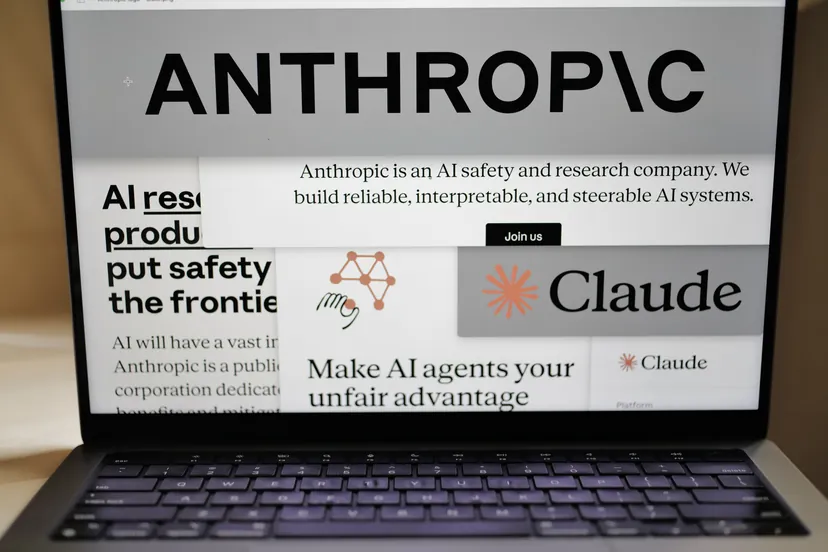
[비즈한국] It has been confirmed that at least 46 Korean-related books, including classics such as 'The Tale of Hong Gildong' and 'The Nine Cloud Dream', as well as novels by North Korean authors, are included in the copyright settlement list for pirated books by the U.S. artificial intelligence (AI) company Anthropic. Among these, 16 titles—including the British CWA Dagger Award-winning 'The Plotters', works by Park Wan-seo and Hwang Sun-won, and an anthology of poems by 34 poets—had not been previously identified.
From Dagger Award-Winners to Works by Park Wan-seo and Hwang Sun-won Added
BizHankook cross-referenced over 1,300 English-translated books published by 2022, sourced from the 'Information on Translated and Published Korean Literature' data released by the Literature Translation Institute of Korea, with the compensation list on Anthropic's settlement site. The findings show that in addition to works by contemporary authors like Han Kang and Kim Young-ha, the list includes five Joseon Dynasty classics, an anthology of poems by 34 poets ranging from Kim Sowol to Kim Chi-ha, and works by North Korean and defected writers. Also included are memoirs of North Korean defectors, books by Zainichi Koreans and Korean-American authors, and books written in foreign languages by Korean-born authors such as Cambridge University Professor Ha-Joon Chang.
The compensation list is the result of the 'Authors Guild v. Anthropic' class-action lawsuit filed by American authors. Anthropic agreed to pay approximately $3,000 (about 4.3 million won) per item for about 480,000 works that were downloaded from pirate sites for AI model training and met settlement requirements, such as timely registration with the U.S. Copyright Office. A U.S. court finalized the settlement this past July. Anthropic did not admit to any illegal activity during the settlement process.
Beyond the works of Han Kang, Kim Young-ha, and Shin Kyung-sook, which were already known through the Translation Institute's guidance and previous reports, 16 additional titles were found to be subject to the settlement. These include 'The Plotters' by Yun Ko-eun, which in 2021 became the first work by an Asian author to win the CWA Dagger Award for translation; an English short story collection containing Park Wan-seo’s 'The Last of My Things'; Hwang Sun-won’s 'Descendants of Cain'; and an English anthology of poems by Park Jae-sam.
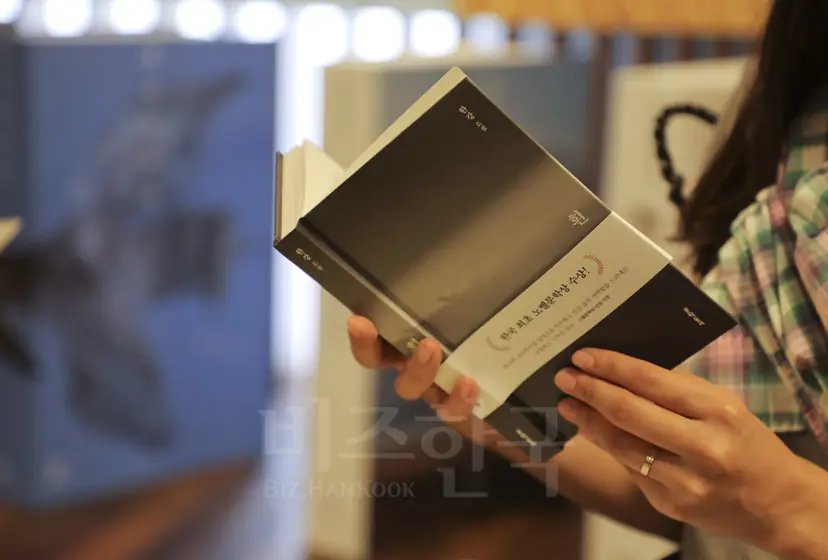
A review of the U.S. copyright registration documents for each book revealed that among the 46 titles, 23 were registered under the names of translators, while 16 were registered under institutions such as publishers or universities. All three of Han Kang's works—'The Vegetarian', 'Human Acts', and 'The White Book'—were registered under the name of translator Deborah Smith. In the English-language registrations, rights holders are categorized as translators or publishers, with the original author typically listed in the author field.
Except for three books written directly in English by Professor Ha-Joon Chang—'23 Things They Don't Tell You About Capitalism', 'Bad Samaritans', and 'Ha-Joon Chang's Economics: The User's Guide'—and Ahn Jung-hyo’s 'White Badge', the only instances where the original author's name appears are in books like Shin Kyung-sook’s 'The Court Dancer' or joint registrations with translators, such as those by Ven. Haemin. The settlement dictates that for general books, compensation should be split equally between the author and the publisher, though the actual share for the original author depends on the specific contracts for the original work, translation, and publication.
Where Does the Compensation Go for the 400-Year-Old 'Tale of Hong Gildong'? It’s Based on Translation Rights
Five translated Korean classics were identified on the list. Heo Gyun's 'The Tale of Hong Gildong' and Kim Man-jung's 'The Nine Cloud Dream' appear as English versions published in the 'Penguin Classics' series by global publisher Penguin Books. The memoir 'The Memoirs of Lady Hyegyeong', written by Lady Hyegyeong, the wife of Crown Prince Sado, is included via an English translation published by the University of California Press. 'The Annals of King Taejo', translated by Professor Choi Byung-hyeon—a pioneer in translating Korean classics—and Jeong Yak-yong’s 'Admonitions on Governing the People' are also included.
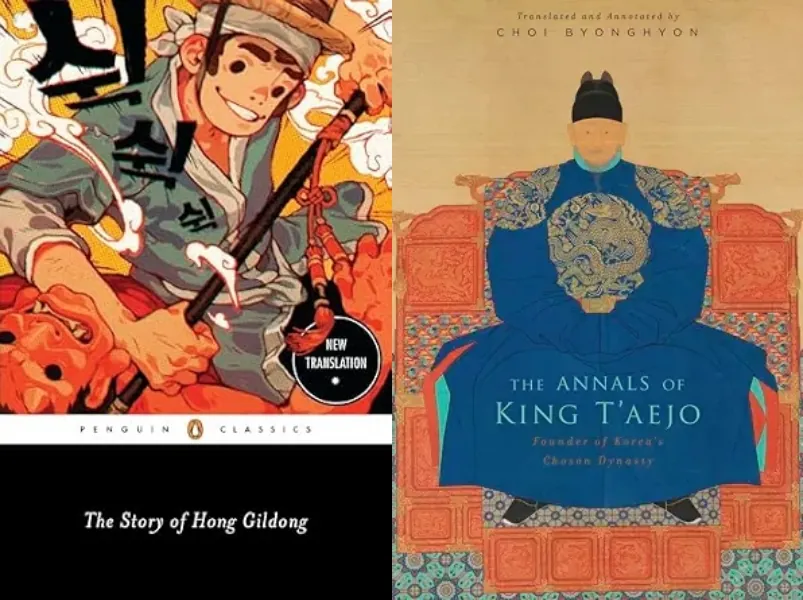
Why were classics written hundreds of years ago included in the compensation? Heo Gyun and Kim Man-jung were figures from the 17th century; their works are in the 'public domain', meaning they can be used freely by anyone. What appears on this compensation list is not the original work, but the modern English translation. Translations can be protected as separate derivative works because they reflect the translator's creative expression—the choice of words, sentences, footnotes, and commentaries.
The U.S. copyright registration names reflect this distinction. As the copyright for the original classics has expired, the compensation for these books is structured around the rights holders of the English translations listed.
Literature related to North Korea and displaced persons was also identified. A prime example is 'Friend' by major North Korean author Baek Nam-ryong. This novel, which deals with divorce, was published in English in the U.S. in 2020 and was named one of the 10 best world literature books of the year by the library industry magazine 'Library Journal'. Also included are two works by defected author Lee Tae-jun—an English translation of his essay collection 'Musorok' and a short story collection containing 'Dust'—along with 'The Long Road Home' by North Korean defector Kim Yong, 'The Ghost Tales of Man-deok' by Zainichi Korean author Kim Sok-bom, and 'The Grass Roof' by Korean-American author Kang Young-hill.
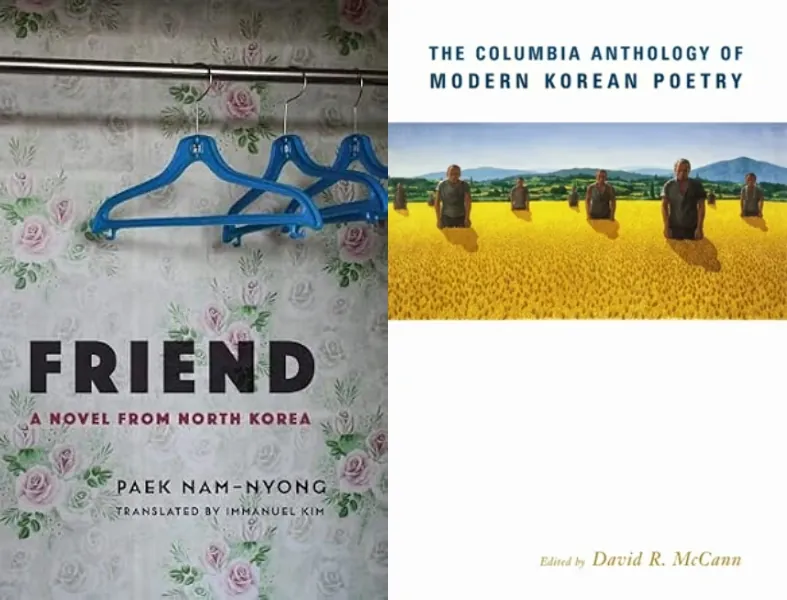
For deceased authors, the issue of rights belonging to bereaved families remains. The 'Modern Korean Poetry Anthology', which collects 228 poems by 34 poets from Kim Sowol to Kim Chi-ha, is registered as a single item under Columbia University Press. In the settlement list, this anthology is counted as one work, with a base amount of approximately $3,000 before distribution among rights holders.
South Korean copyright law protects rights for 70 years after the author's death, so the works of Kim Sowol, Yun Dong-ju, and Han Yong-un (who passed away before 1962) are already out of the protection period, whereas families of poets like Seo Jeong-ju, Kim Chun-su, and Kim Soo-young still hold rights. Determining the rights of individual poems and the actual distribution of compensation requires checking translation and publication contracts. The deadline for claiming the settlement was March 30.
Differences based on the publisher were also apparent. Out of some 690 English-language books published by overseas publishers, 39 were on the compensation list, whereas not a single one was found among the 300 or so English books published by domestic publishers. This is interpreted as being due to the prerequisite that the work must have been registered with the U.S. Copyright Office in a timely manner to be included in the settlement.
The issue of books used for AI training has also emerged as a pressing matter in Korea. Following reports that a domestic book distributor supplied books to Anthropic, it was reported that major bookstores have been receiving bulk purchase inquiries from overseas entities. On the 16th, the Korean Publishers Association issued a 'Plea of the Republic of Korea', stating, "Without books, there is no AI," demanding transparency in training data and fair compensation, and is currently conducting a signature campaign.
The Korean Publishers Association pointed out, "Those who created these books do not even know when, how, or by which AI their works were used. AI companies must pay fair compensation to rights holders, and small-to-medium publishers and individual creators with weaker bargaining power must also be able to negotiate and be compensated under fair conditions." As of the 23rd, 268 organizations and 971 individuals have signed the petition.