

[비즈한국] As the competition for artificial intelligence (AI) performance has evolved into a race to secure training data, it has been revealed that a list of books downloaded by the U.S. AI company Anthropic from illegal piracy sites includes works by Korean authors such as Han Kang, Hwang Sok-yong, and Kim Young-ha. Following the exposure of a project that involved purchasing and scanning physical books in bulk, Anthropic is also facing copyright disputes with music publishers, making its data acquisition methods a significant legal risk. Experts suggest this could also place a burden on the company’s planned initial public offering (IPO) next month.
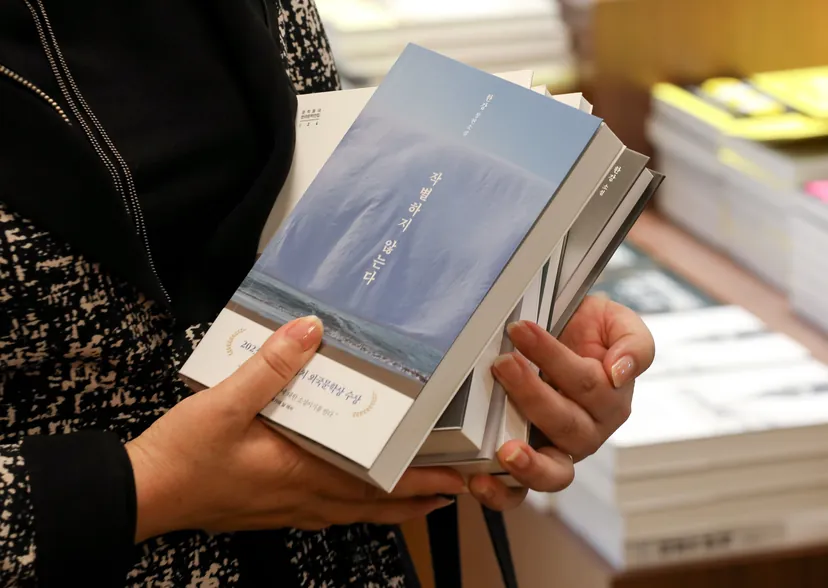
Downloading Illegal E-books and Purchasing Physical Books for Scanning… Courts Distinguish Between Acts
This controversy gained attention following a lawsuit between American author Andrea Bartz and Anthropic. In August 2024, Bartz and others filed a lawsuit alleging that Anthropic had downloaded a massive number of books from illegal e-book piracy sites such as "Library Genesis" and used them to develop its AI chatbot, Claude.
In June 2025, a U.S. court ruled that the act of using legally purchased books for AI training constitutes "fair use." Fair use is a legal system that permits the use of copyrighted works without the owner's permission, considering specific purposes such as criticism or research, the method of use, and the impact on the existing market. Conversely, the court viewed the act of downloading and storing illegal copies as a separate issue of copyright infringement, distinguishing the legality of AI training from the legality of the process used to acquire training data.
Subsequently, Anthropic and the plaintiffs reached a settlement of $1.5 billion (approximately 2 trillion won) covering about 500,000 books, which the U.S. court finally approved in July of this year. Anthropic did not admit to any legal liability during the settlement process.
Based on the total settlement amount, the compensation per work is estimated at about $3,000 (approximately 4.3 million won). However, the actual payout depends on individual claims from copyright holders and the distribution of rights. The preliminary first-round distribution amount revealed in September was approximately $2,204 per work. A procedure to adjust some claims also took place due to disagreements over the distribution ratio between authors and publishers.
Meanwhile, another data acquisition method used by Anthropic was revealed during the trial process. Based on court documents released in January 2026, The Washington Post reported that Anthropic had been pursuing "Project Panama" since 2024. This involved spending tens of millions of dollars to purchase physical books in bulk from used bookstores and book distributors, cutting off the bindings to scan them, and recycling the remaining materials.
Critics point out that purchasing physical books legally does not automatically grant the right to reproduce their content. In this case, the U.S. court distinguished between the act of scanning purchased books for AI training and the act of obtaining and storing illegal copies.
Rising Costs of Data Acquisition
The reason companies are putting so much effort into acquiring books is the quality of the data. Unlike internet posts, books are long-form texts that have undergone editing and proofreading, making them valuable for learning sentence structure and the relationships between concepts.
Anthropic's copyright disputes are spreading to various fields. In January, music publishers such as Universal Music Group, Concord, and ABKCO filed a lawsuit alleging that Anthropic illegally downloaded lyrics and sheet music. They claimed copyright infringement of over 20,000 songs and demanded more than $3 billion in statutory damages. In August, Sony Music and Warner Music-affiliated publishers also initiated copyright infringement lawsuits. In the music sector, the use of content acquired without the permission of the copyright holder for AI training has also emerged as a legal flashpoint.

The domestic publishing industry has also taken action. On the 16th, the Korean Publishers Association issued an appeal to the government, the National Assembly, and AI companies, demanding the disclosure of training data sources, consent from rights holders, and fair compensation. Previously, on the 29th of last month, 12 publishing and author organizations, including the Writers Association of Korea, released "AI Usage Principles for Publishers and Authors for Readers." The focus is on establishing transparency and compensation standards for the use of works rather than outright rejecting the use of AI.
The European Union (EU) requires general-purpose AI model providers to establish policies that comply with copyright regulations and to disclose summaries of their training data. If a copyright holder has legally indicated that they opt out of text and data mining, this must be respected. In Korea, there is also a growing call for concrete standards that protect creators' rights while supporting data utilization in the AI industry.
Anthropic is reportedly pushing for an IPO in the middle of next month. Bloomberg reported on the 1st that Anthropic is planning to start the public offering process during the week of November 9th, aiming for a transaction before Thanksgiving.
According to Reuters, Anthropic’s third-quarter revenue was $16.8 billion, a 45% increase from the previous quarter. However, due to a slowdown in growth, some investors have reportedly lowered their expectations for the IPO valuation from the previously discussed $2 trillion to around $1.5 trillion. While the revenue growth continues, attention is focused on how the company will reflect its pre-listing valuation and legal risks related to copyright.