

[BizHanKook] "Why did you set this disease as your primary target? Have you met with clinicians in this field?"
This is the question Han Seung-hoon, CEO of Aims BioScience, asks pharmaceutical and biotech companies that seek his consultancy for new drug development. He notes that some companies target specific diseases simply because the market size is large, without being able to provide objective evidence as to why that particular indication or patient group should take priority. Han diagnosed that while South Korean pharmaceutical and biotech companies have improved their ability to produce preclinical and clinical data, their strategies for connecting this data to the actual value and commercialization of a treatment remain insufficient.
Aims BioScience is a new drug development consulting firm under the Ildong Pharmaceutical Group. It supports clients in everything from establishing Target Product Profiles (TPP) to setting up preclinical and clinical development plans, designing trials, and analyzing data.
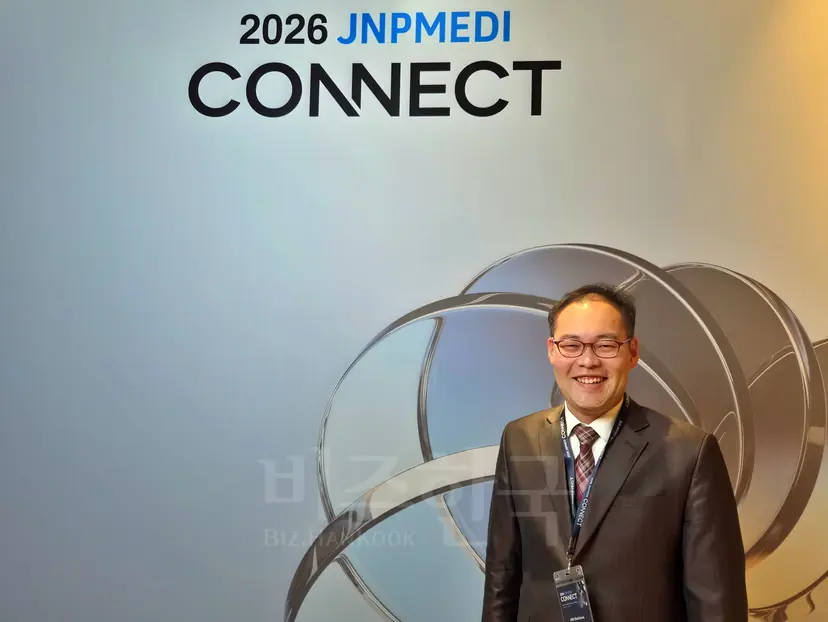
At the '2026 JNP Medical Connect' event held at the Josun Palace Seoul Gangnam in Gangnam-gu, Seoul, on the 6th, Han asked attendees if domestic new drug development capabilities had improved compared to the past. Almost no one raised their hand, but when he asked if the ability to generate data had improved, many did. The question was intended to emphasize that the ability to secure data is different from the capability to develop that data into a product needed by the market.
In an interview with a reporter after the event, Han explained that this gap begins appearing at the very start of drug development. He pointed out that there are cases where drug candidates derived from basic research proceed to the development stage without having their medical and commercial value sufficiently verified. He stressed that a clear distinction must be made between basic research driven by a researcher’s interest and the process of developing a drug that patients actually need.
"Even before reaching the business development stage, you can verify if a drug has value while preparing for Phase 1 clinical trials in patients," Han said. "At the very least, you must be able to convince physicians that your drug offers better value than existing treatments so that they will register their patients for such trials."
In particular, early-stage clinical trials involving patients carry significant uncertainty regarding therapeutic effects and risks. If a company cannot explain the advantages over existing treatments, it is difficult to persuade medical staff to enroll patients in clinical trials, and it is also difficult to prove the validity of the development to regulatory agencies or global pharmaceutical companies considering in-licensing the technology later.
Han remarked, "There are countless cases where the indication a company intended to pursue based on vague assumptions was not actually the optimal entry indication." In his actual consulting work, Aims BioScience has experienced redesigning development strategies by analyzing the characteristics of a candidate, competitive drugs, and market conditions to change a client's initial entry indication. The approach is to first develop a drug for an indication where it is relatively easier to secure clinical evidence, then expand to other indications later.
However, it is not easy to make such judgments throughout the entire development process. Han pointed out that the domestic pharmaceutical and biotech industry has a tendency to focus on development milestones—such as Investigational New Drug (IND) approval or entry into Phase 2 clinical trials—rather than verifying the competitiveness of the candidate. He explained that a corporate culture driven by government research project evaluation methods and investor demands causes moving to the next stage to be viewed as an achievement in itself, making it difficult to make rational decisions to discontinue development.
He noted that this can lead to the problem of focusing on filling out checklist items rather than securing the necessary scientific evidence. He explained that if a company spends significant money on clinical trials but fails to convincingly demonstrate that its drug is better than competing ones, it loses its appeal in the technology transfer market as well. Han emphasized the need for criteria that allow companies to objectively decide whether to continue development based on data secured at each stage.
For this reason, he emphasized that identifying unmet medical needs of patients and medical staff from the early stages of drug development is crucial. "You should first ask the question, 'What is it that patients and doctors truly feel is lacking or necessary in the medical field?'" he said, explaining that after identifying areas where existing treatments need improvement in terms of efficacy, safety, or convenience, one must set a Target Product Profile for a drug that can solve these issues.
He also argued that government-level support is necessary. Han suggested building a database that integrates unmet medical needs, patient characteristics, competing drugs, and market environments by country. "Even the largest pharmaceutical companies in Korea have difficulty securing such a database independently," he said, emphasizing that support is needed to help domestic companies identify the right development goals and target markets for their candidates.
He also raised questions about the common practice among domestic companies of prioritizing entry into the U.S. or European markets. Han stressed that companies must be able to provide a clear rationale for the question, "Why specifically must this be developed in the U.S.?" Since the commercial value of a drug is not necessarily created only in the U.S. or Europe, he explained that development countries and market entry strategies should vary depending on the characteristics of the candidate and actual patient demand.
He also holds the view that government research funding should be allocated based on clear development goals and commercialization potential rather than the number of supported projects or clinical progress. He suggests that candidates matching the Target Product Profile should be selected and supported intensively, but with scientific evidence reviewed at each stage, including the possibility of deciding to discontinue development. Han also proposed a plan to operate the country’s drug development support system like a pharmaceutical company by combining global market intelligence, specialized organizations, and capital.
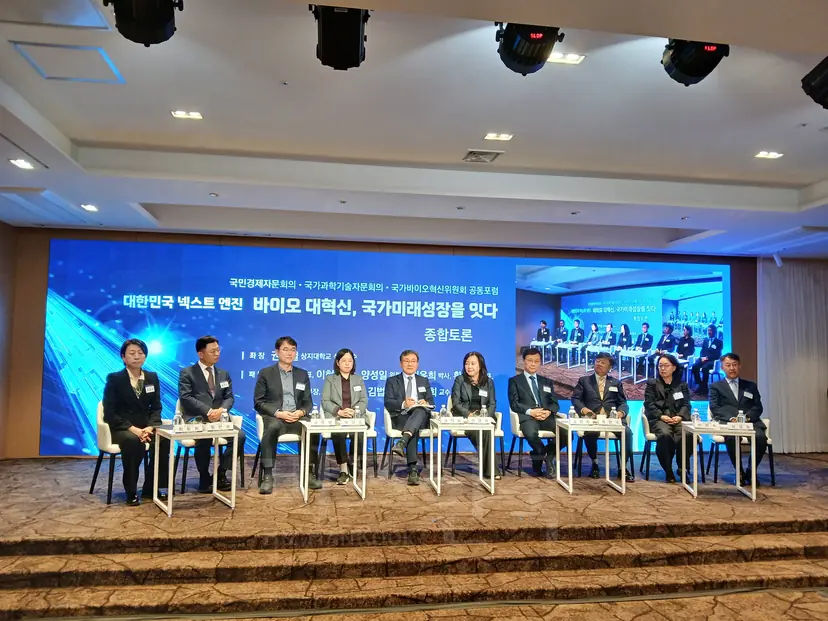
The issue with the government's R&D support system was also raised by other experts. Choi Yoon-hee, a senior research fellow at the Science and Technology Policy Institute, pointed out at the ‘Korea’s Next Engine: Bio Innovation, Connecting National Future Growth’ joint forum held at the Koreana Hotel in Seoul on the 5th that strengthening the linkage between R&D stages is essential to enhancing the competitiveness of the domestic bio-industry.
"The keywords I want to emphasize are system competitiveness and connection," Choi said, noting that while the government has invested in the domestic bio-industry for over 30 years, project continuity has not been guaranteed whenever administrations changed, and performance evaluations have remained centered on papers and patents. She further emphasized that the investment gap in Phase 2 and 3 clinical trials must be bridged and cooperation between large corporations and bio-ventures must be strengthened so that basic research results can lead to follow-up clinical trials and commercialization.
Han also emphasized that to increase the competitiveness of the domestic new drug development industry, an environment must be created where development experience and expertise are accumulated within the industry, regardless of success or failure. "What matters is that even if we fail, we learn from it, change our systems and culture step-by-step, and accumulate the know-how of experts," he pointed out. "Ensuring that knowledge and experience remain intact with the people is the only path we should strive for."