

[비즈한국] Former Samsung Electronics IP Center Head (Vice President) Ahn Seung-ho, who was sentenced to three years in prison in the first trial for leaking internal Samsung patent documents, has directly challenged the "trade secret" status of the disputed "Tekia Status Report" during his appellate trial. His legal team argues that while the act of obtaining and using the report was inappropriate, whether the data constitutes a trade secret protected under the Unfair Competition Prevention Act is a separate legal matter.
"Does Not Provide an Unfair Advantage to the Counterparty," Counsel Argues
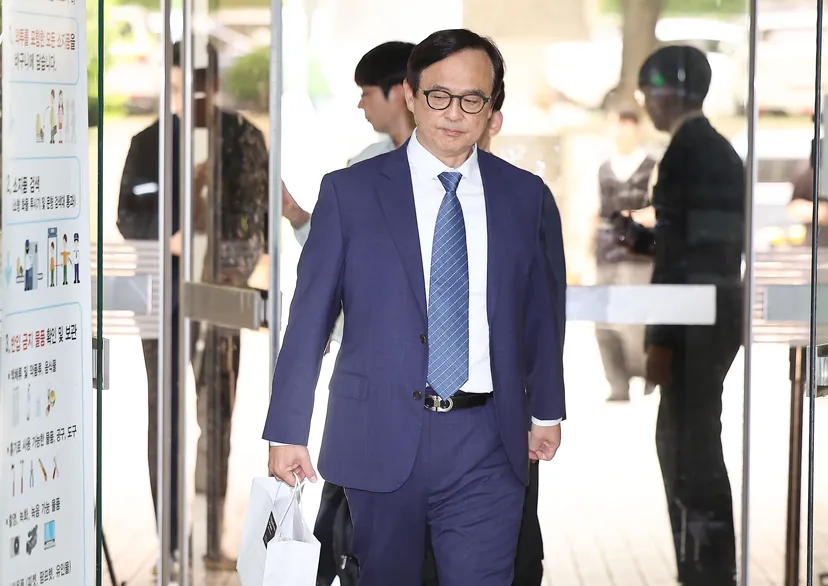
During the final arguments at the appellate trial held on the 1st at the Seoul High Court (Criminal Division 3, Presiding Judge Lee Seung-han), Ahn’s legal team claimed that the report did not meet the legal requirements of a trade secret, citing the nature of the document, the accessibility of the information, and the relationship between Samsung Electronics and Synergy IP.
The crux of the issue is the scope of information protected as a trade secret. The defense argued that interpreting the "technical or management information useful for business activities" protected by the Unfair Competition Prevention Act too broadly could excessively expand the scope of criminal punishment. They also noted that while patents grant exclusive rights for a certain period in exchange for disclosure, trade secrets are protected without separate registration or examination based on their non-disclosure.
The defense stated, "The Unfair Competition Prevention Act must be reasonably interpreted to protect only information that is core to a company's competitiveness—having technical or management value comparable to inventions under the Patent Act—to ensure harmony and balance within the overall technology protection system."
Ahn served as the first head of Samsung Electronics' IP Center from 2010 to 2019, overseeing all patent-related tasks before retiring to establish Synergy IP, a Non-Practicing Entity (NPE). An NPE is a company that specializes in patent management, generating revenue by holding, purchasing, exercising, licensing, or selling patents.
While running Synergy IP, Ahn represented the U.S. audio company "Staton Tekia LLC" (Tekia) in patent license negotiations with Samsung Electronics. He is accused of receiving the "Tekia Status Report" from an employee named Lee, formerly of the Samsung Electronics IP Center, during these negotiations. The two parties failed to reach an agreement, and in November 2021, Tekia filed a patent infringement lawsuit against Samsung Electronics seeking approximately $90 million in damages.
Tekia has been expanding its patent business by holding audio-related patents and asserting them against other companies. It is known that Tekia had previously proposed its patents to Samsung, and that Ahn was involved in the patent review process at Samsung at that time.
The "Tekia Status Report" in question is an internal document containing Samsung's review of the potential infringement and validity of 18 Tekia patents, as well as strategies for negotiations and litigation. It includes content comparing public patent and product information with prior art.
Under the Unfair Competition Prevention Act, trade secrets must satisfy requirements including non-public nature, economic value, and confidentiality management. The first trial court recognized the trade secret status of the Tekia report, stating that it was prepared with significant effort and cost by Samsung’s IP Center technical analysis and legal teams, and that providing it to the counterparty would give them an advantageous position in patent negotiations and litigation, leading to the three-year prison sentence for Ahn.
Ahn’s team countered this premise. They argue that the patent review results are merely legal assessments analyzing relevance, potential infringement, and validity based on public patents and product data, and that the suggested strategies were simply options that any company would typically consider.
The defense stated, "Looking at the patent review results, this is merely a legal evaluation act that analyzes patent validity and infringement using public information." They added, "Even if Samsung’s patent review assessment results were leaked to a competitor in the same industry, there is no room for them to gain a competitive edge over Samsung Electronics using this information."
They also denied that Synergy IP and Samsung were competitors, arguing that Synergy IP was a party asserting legal rights in a patent dispute rather than a market competitor, and therefore it could not be said that Samsung lost any competitive advantage due to the leak.
Public Information Analysis vs. Trade Secret... Court Reviews Legal Grounds
The "non-public" nature of the report was also a point of contention. The defense claimed the information could be typically analyzed by professionals in the intellectual property field using publicly available patent specifications, product information, and prior literature.
During this process, the court verified the grounds for the argument that "trade secrets should be viewed as core information of corporate competitiveness comparable to patent inventions." When asked if there were relevant scholars, precedents, or foreign cases supporting this, the defense replied, "I stated this based on logic, and I am searching for papers on this subject if possible before the sentencing date." When the court asked if this was an independent opinion, the defense confirmed it.
While arguing for acquittal on legal grounds, Ahn’s side acknowledged that the acquisition and use of the report were inappropriate. In his final statement, Ahn said, "I discovered that I was careless, as I should have acted more cautiously and prudently regarding matters related to Samsung Electronics." He also reiterated that he terminated his contract with Tekia and forfeited his economic interests.
The defense for Ahn and co-defendant Cho Sung-il, a former in-house patent lawyer at Samsung Electronics, concluded on this day. Two other defendants, including Lee Dong-ho, a former head of the display application group at Samsung Display, will present their final arguments on the 22nd of this month. Lee was indicted for leaking internal Samsung Display information and was sentenced to three years in prison and a forfeiture of 536.12 million won in the first trial. The sentencing for all five former Samsung Electronics IP Center employees is scheduled for October 27 at 10 a.m.