

[비즈한국] Acuon Capital and Acuon Savings Bank, currently in merger and acquisition negotiations with Hanwha Life Insurance, have taken steps toward management stability by simultaneously reappointing their existing CEOs. On July 30, Acuon Capital announced the reappointment of CEO Lee Joong-mo, whose term ended on the 31st of last month. Similarly, Acuon Savings Bank announced the reappointment of CEO Kim Hee-sang, whose term also ended on the 31st of last month, on the 11th. Both leaders began their new one-year terms on the 1st.
As they prepare to welcome new ownership, Acuon Savings Bank is expected to focus on recovering profitability, while Acuon Capital is tasked with managing asset soundness. With Hanwha Life pursuing a series of M&A deals, market attention is focused on whether these moves will expand its financial portfolio and strengthen its capital procurement capabilities.
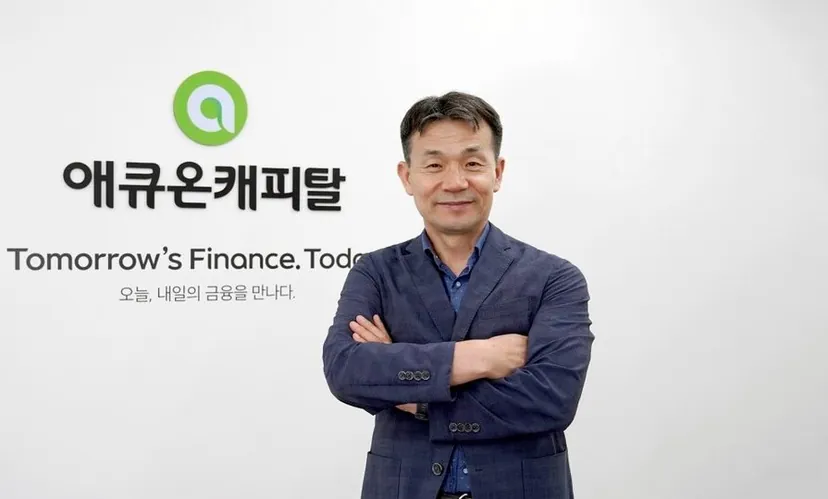
Acuon opted for stability over leadership changes due to the impending sale. On June 30, Acuon Capital stated, “Our largest shareholder is pursuing a sale of its stake,” adding, “The lead manager for the sale has selected Hanwha Life Insurance as the preferred bidder.” Hanwha Life also confirmed the acquisition plans through a disclosure on the same day. Because Acuon Capital holds a 100% stake in Acuon Savings Bank, the acquisition of the capital firm would include the savings bank as well.
At the pinnacle of Acuon’s governance structure is the global private equity firm EQT Partners. Acuon Capital’s largest shareholder is Agora L.P., a special purpose company (SPC) that holds a 96.06% stake. The largest shareholder of Agora L.P. is another SPC, Agora Aggregator L.P., which was established by BPEA (Baring Private Equity Asia), a Hong Kong-based private equity firm. BPEA acquired Acuon Capital from the U.S.-based private equity firm J.C. Flowers in 2019, and EQT Partners ultimately acquired Acuon after purchasing BPEA in 2022.
Acuon Capital, which started as KT Capital in 2006, has undergone several changes in ownership among foreign private equity firms. J.C. Flowers, which bought KT Capital in August 2015, acquired HK Savings Bank the following year and rebranded them as Acuon Capital and Acuon Savings Bank, respectively. The savings bank acquisition served as a catalyst for Acuon's growth. Currently, Acuon Savings Bank, with assets around 5 trillion won, is ranked fifth in the domestic savings bank market, following SBI, OK, Korea Investment, and Welcome Savings Banks. The sale price for Acuon Capital is estimated to be around 1 trillion won.
If EQT Partners successfully completes the sale, Acuon will be incorporated into the Hanwha Group's financial division. Transitioning from a private equity firm aimed at exiting to a large business group could provide a more stable governance structure. This has drawn attention to the current state of Acuon Savings Bank and Acuon Capital, as they must maintain management stability ahead of the sale.
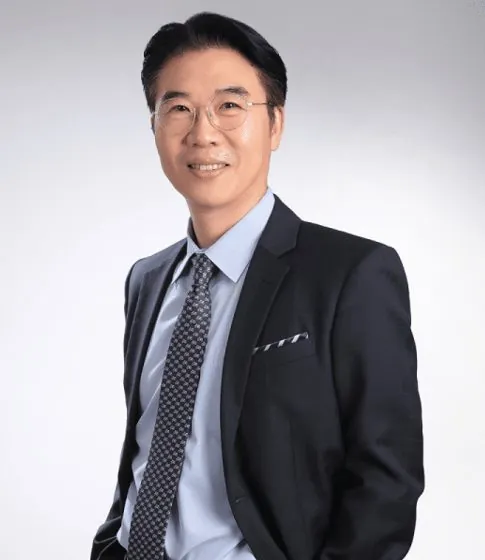
In particular, the burden on Acuon Savings Bank CEO Kim Hee-sang is significant. A retail finance expert, Kim first took office in June 2025 to improve the bank's soundness. Indeed, Acuon Savings Bank's non-performing loan (NPL) ratio (a measure of soundness) improved from 6.78% in 2024 to 6.01% in 2025, and the delinquency rate decreased from 5.36% to 4.52% during the same period. In the first quarter of 2026, the NPL and delinquency rates rose slightly to 6.03% and 4.93%, respectively, but remained low compared to the savings bank industry average.
The issue is profitability. Acuon Savings Bank recorded a net loss of 5.9 billion won in 2025, swinging from a 37 billion won profit in 2024. It was the only one among the top five savings banks to post a loss. Although it returned to a profit of 2 billion won in the first quarter of this year, this represents a 57% decrease compared to the same period last year (4.7 billion won).
Acuon Capital shows solid performance but faces the challenge of managing asset soundness. Acuon Capital's separate net profit for 2025 was 45.6 billion won, a 17% increase from the previous year (39 billion won). In the first quarter, it recorded a net profit of 12.6 billion won, up 46% from the same period last year, thanks to the expansion of its business, centered on corporate finance and alternative investment funds.
However, concerns about deteriorating soundness centered on real estate project financing (PF) are emerging. In the first quarter, Acuon Capital's real estate PF NPL ratio was 7.1%, and the balance of distressed PF loans stood at 34.4 billion won. Lee Jae-woo, a senior analyst at Korea Investors Service, noted, “Despite proactive efforts to improve soundness, there is a risk of deteriorating corporate finance soundness due to the burden of real estate PF loan losses and deepening economic polarization.”
Meanwhile, Hanwha Life's expansion of its financial portfolio following the Acuon acquisition is also drawing attention. Hanwha Life is actively engaging in financial M&As, participating not only in the acquisition of Acuon but also in the final bid for KDB Life Insurance. If these M&As are successful, it could leap into a comprehensive financial group. Furthermore, its capital procurement capabilities are expected to be strengthened.
Although Hanwha Life already has a savings bank subsidiary, Hanwha Savings Bank is a small-to-medium-sized institution with assets of around 1.4 trillion won, ranking in the late 20s in the industry. Therefore, acquiring Acuon Savings Bank, the fifth-largest player, would allow it to rapidly expand its market presence. Additionally, because Hanwha Savings Bank's business territory is in the Gyeonggi region (Incheon/Gyeonggi) and Acuon Savings Bank covers Seoul and the Gyeongnam region (Busan/Ulsan), expansion of business reach is also possible.
The expansion into the capital market is also noteworthy. Since the group does not have a capital firm, it can expand its new portfolio; moreover, capital firms have the advantage of being more free from regulations compared to general banks, which is beneficial for capital procurement and generating profitability. An official from the insurance industry said, “As the domestic financial market itself is saturated, generating returns from investments is the key. Unlike in the past, as the view grows that capital firms are advantageous for fund sourcing and funding, they are considered attractive assets. As growth in the insurance industry remains stagnant, a breakthrough is needed.”