

[비즈한국] Due to unresolved issues with building a payment gateway, the reopening schedule for Tmon continues to be postponed indefinitely. Oasis, which acquired Tmon to expand its scale, has failed to see any acquisition benefits for a year. As expectations grow that Tmon's normalization will be difficult in the short term, Oasis is now faced with the task of finding growth breakthroughs in its core business rather than through Tmon.
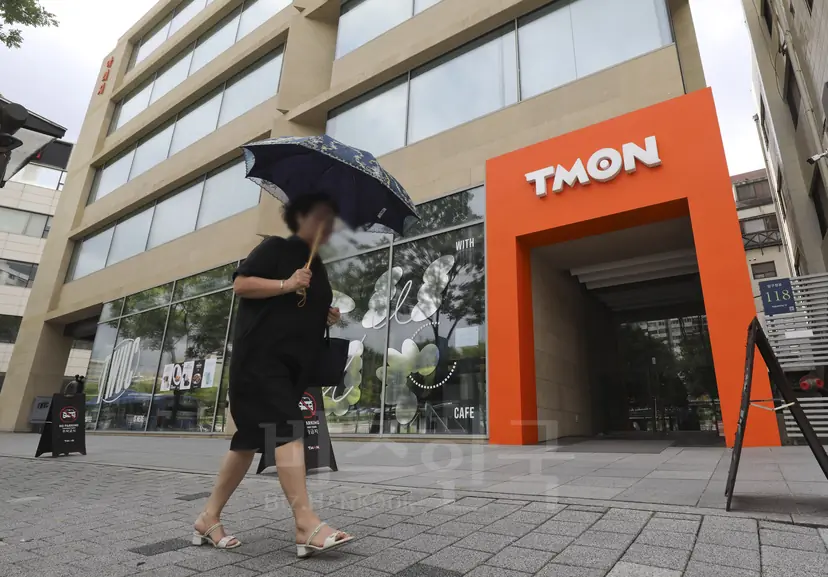
When will the acquisition benefits arrive… Reopening delayed by blocked payment gateway
When the rumor of Oasis 'acquiring Tmon' first emerged last year, the industry's reaction was skeptical. Many believed there was no reason for Oasis, which has consistently been profitable, to acquire Tmon after it suffered a massive non-settlement crisis. However, contrary to expectations, Oasis confirmed the acquisition of Tmon in June of last year.
At the time, Oasis expressed strong confidence in normalizing Tmon. Immediately after the acquisition, it accelerated preparations for restarting the platform, such as recruiting sellers for a relaunch. However, one year after the acquisition, the situation is unfolding differently than expected. With the construction of a payment gateway through a Payment Gateway (PG) company blocked, the schedule for Tmon's reopening has still not been finalized.
Beyond building a payment network, restoring consumer trust remains a hurdle for Tmon's reopening. While users who made installment payments related to the recent 'Timep' (Tmon-WeMakePrice) crisis are going through credit card payment cancellation procedures via installment protest rights, lump-sum payment users are excluded from this, leading to ongoing lawsuits for refunds. As the perception among victims remains that the Timep crisis is not yet resolved, there is speculation that even if Tmon resumes services, it could take a considerable amount of time to attract consumers back.
With the reopening of Tmon delayed, Oasis's concerns are also growing. Oasis changed Tmon's corporate name to 'Ago' in January, and then to 'May Oasis' in March. The company explains that the name change was to broadly explore ways to utilize the corporation as the payment network construction is being delayed.
Some are focusing on the fact that both the new name of the Tmon corporation and the name of the AI assistant Oasis is preparing are 'May Oasis.' Interpretations have arisen that they might be trying to use the corporation for new businesses, such as AI commerce, amid the delays in Tmon's reopening. Regarding this, Oasis explained, "It is just a coincidence that the names are the same; we are not planning any AI business projects," adding, "We are currently considering various businesses from multiple angles."
The reason the utilization of the corporation is drawing attention is that May Oasis still holds a significant amount of capital. May Oasis currently holds approximately 46 billion won in assets. A substantial portion of this is cash-equivalent assets formed through capital increases for Tmon's normalization. Oasis additionally injected 50 billion won into the then-Tmon corporation via capital increase last year for normalization. However, as the platform has not normalized, the funds cannot be used as planned.
May Oasis recorded only 1.06 million won in sales last year, and sales for the first quarter of this year remained at the level of 9.83 million won. This scale makes it difficult to view it as a functioning commerce business. While net profit turned from a deficit of 1.053 billion won at the end of last year to a profit of 1.367 billion won in the first quarter of this year, this is also difficult to see as performance improvement. An Oasis official explained, "We filed a request for correction regarding some taxes that Tmon paid incorrectly in the past, and we reflected the resulting tax refund."
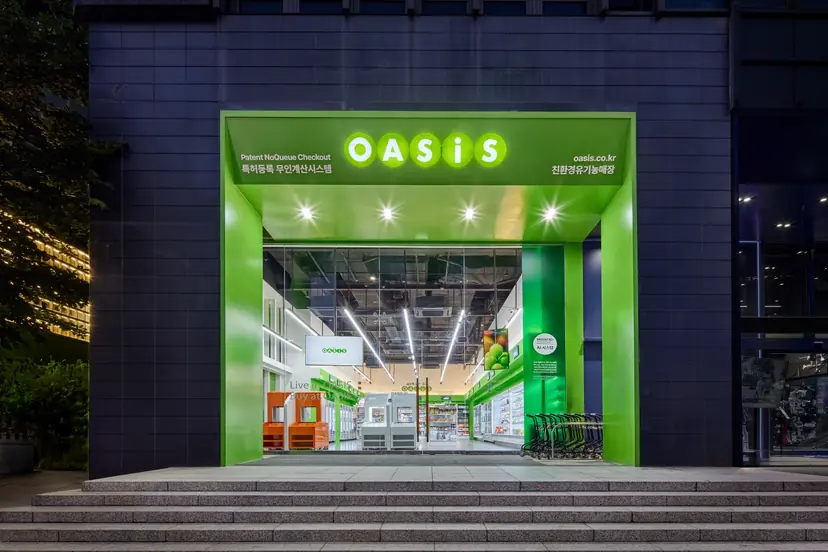
Launch of 2,000 won-per-month 'Club Oasis'
As the schedule for Tmon's normalization has become opaque, Oasis appears to be finding growth momentum in its core business. Oasis has been considered the only company in the early-morning delivery industry to maintain a profitable trend, but it has been pointed out that there are limits to its outward growth. The acquisition of Tmon was interpreted as a card to overcome these limits, but as the reopening has been delayed, the expansion effect initially expected has not yet appeared.
An Oasis official said, "Excluding the payment network, preparations for Tmon's reopening are complete. There is nothing left for the company to do, so at this point, we have no choice but to wait," adding, "Since the fourth quarter of last year, we have been moving with a policy of refocusing on our core business."
In the midst of this trend, Oasis launched its first online subscription service, 'Club Oasis,' last month. It is a service that provides 20-30% of the order amount in points for a monthly subscription fee of 2,000 won. An Oasis official explained, "It is a structure where the entire subscription fee is returned to the customer in points, so we are not using the paid membership itself as a profit model," adding, "It was introduced to strengthen customer benefits."
Club Oasis is interpreted as a strategy to expand the customer base of its core business and induce repeat purchases while the outward expansion through Tmon is delayed. In fact, since the introduction of the membership, the influx of new customers has been increasing rapidly. Oasis stated, "Since the launch of the membership, the number of daily new subscribers has increased by up to 30 times."
However, considering that platform accumulation rates are typically in the single digits, a 20-30% accumulation rate is considered a fairly aggressive benefit. While it can be seen as a strategy to secure new customers quickly, the burden of accumulated points could increase as the number of subscribers grows.
Some are raising concerns that the benefits were increased excessively to expand the subscriber base, and that profitability management could emerge as a new task in the future. Regarding this, Oasis said, "Oasis is a company that has been profitable for 15 years. We are proceeding with this because we judged that there is no problem with profitability regarding the accumulation rate."