

[비즈한국] An application for an injunction filed by the Urban Asset Management consortium to preserve its status as the preferred bidder for the Korea Freedom Federation's Freedom Center site development project has been dismissed. The court determined that being a preferred bidder does not grant the right to force the conclusion of a contract. However, the court did acknowledge that some of the demands made by the Korea Freedom Federation during the negotiation process, such as increasing the security deposit and requesting donations to a development fund, appeared inappropriate.
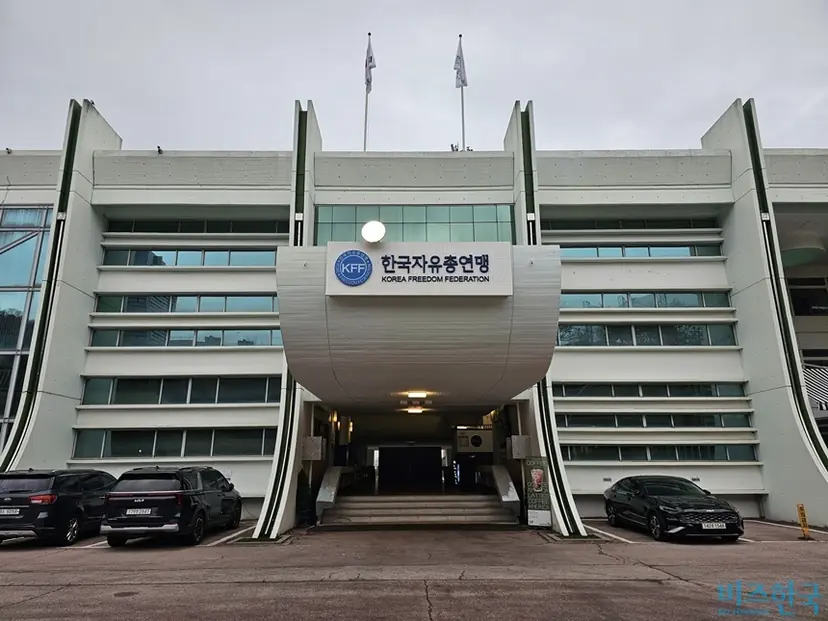
According to Bizhankook's investigation, the 50th Civil Division of the Seoul Central District Court (Presiding Judge Lee Sang-hoon) dismissed the application for an injunction to preserve the status of preferred bidder for the 'Freedom Center Site Development and Operation Project' filed by Urban Asset Management against the Korea Freedom Federation on May 29. The court ruled that "it is difficult to conclude that the petitioner's rights to be preserved and the necessity for preservation have been sufficiently demonstrated based solely on Urban Asset Management's claims and submitted documents."
The dispute between the two parties began during the process of selecting a developer for the Freedom Center site. In August 2024, the Korea Freedom Federation called for bids to develop and operate the area around the Freedom Center, its headquarters located in Jangchung-dong, Jung-gu, Seoul. The structure involved the project executor leasing the site for 50 years to develop and operate facilities, which would then be transferred to the Korea Freedom Federation free of charge upon the expiration of the lease. The Federation intended to secure long-term rental income to strengthen its financial self-reliance.
The Urban Asset Management consortium was selected as the preferred bidder in this competition in December 2024. At the time, Urban proposed an annual land usage fee of 4 billion won and a 1.0 billion won security deposit. The minimum annual land usage fee required by the request for proposals (RFP) was 3 billion won. The Korea Freedom Federation selected Urban out of four participating companies. Subsequently, the two parties held four rounds of negotiations until March 2025 to conclude a final agreement.
In June of last year, the Korea Freedom Federation notified the Urban Asset Management consortium of the cancellation of its preferred bidder status. The reasons cited included doubts regarding the adequacy of the business plan, such as the rental plan, profitability projections, and project cost estimation, as well as insufficient business execution capabilities, including the feasibility of the financing plan. According to the RFP, the Federation may cancel the selection of a preferred bidder if objective grounds are discovered that cast doubt on the company's ability to execute the project.
Urban Asset Management filed for an injunction last July in protest of the cancellation, requesting that the court recognize its status as the preferred bidder and halt any re-bidding procedures. Urban claimed that after its selection, the Korea Freedom Federation demanded conditions different from the initial RFP during negotiations, and that the selection was canceled only after Urban refused to accept these unreasonable demands.
The court did find some of the demands made by the Korea Freedom Federation during the negotiations to be inappropriate. The court noted that after selecting the preferred bidder, the Federation demanded that Urban Asset Management: increase the security deposit to 20 billion won; increase land usage fees; guarantee the Federation's revenue during the construction period; and donate 50 billion won to a development fund. Regarding these, the court pointed out that "some of these items appear quite inappropriate in themselves."
However, the court ruled that the problems raised during the negotiation process and the legality of the cancellation were separate issues. It noted that there were negative evaluations of Urban Asset Management's financial structure and profitability forecasts from the initial proposal evaluation stage, and since the Federation had requested data related to profitability analysis, project cost estimation, facility leasing plans, and financing plans during the negotiations, it was difficult to conclude that there were no grounds to doubt Urban's business execution capabilities.
In particular, the court clarified the limitations of the preferred bidder status. According to the RFP, the Korea Freedom Federation could request additional proposals and data until the final agreement was signed. Furthermore, given that the two parties held four rounds of negotiations, the court determined it could not be said that Urban Asset Management was deprived of the opportunity to negotiate. It also concluded that since the status of a preferred bidder is not a guaranteed contract but merely the right to negotiate first, any damages incurred should be pursued through a separate damages lawsuit.
Urban Asset Management filed an appeal against the dismissal on the 18th of last month. Bizhankook requested comments from Urban Asset Management and its legal counsel, but did not receive a response. In response, the Korea Freedom Federation stated, "We sufficiently guaranteed negotiation opportunities to Urban Asset Management. It has been reaffirmed that it is appropriate to consider the opponent's status as a preferred bidder lost, as the negotiations fell through due to a failure to reach a mutual agreement," adding, "We will continue to respond confidently and firmly to all future legal proceedings."
Meanwhile, the Ministry of the Interior and Safety took issue with the preferred bidder selection process twice. According to Bizhankook, the Ministry confirmed that bidding regulations were not properly applied during the selection of the Urban Asset Management consortium and requested disciplinary action against those involved last April. Subsequently, the Ministry requested a police investigation into the individuals involved, citing evidence that the Federation may have re-evaluated a lower-ranked bidder and signed an MOU using a method different from the existing guidelines.