

[비즈한국] We are now in an era where hit songs are created on short-form platforms before music charts. When repetitive beats, catchy hooks that stick within seconds, and easy-to-follow point choreography spread across Reels and TikTok, not only new songs but also past releases find their way back up the charts. Dance challenges are no longer just a supplementary promotional tool; they have become the starting point of music consumption and a core engine for manufacturing hit songs.
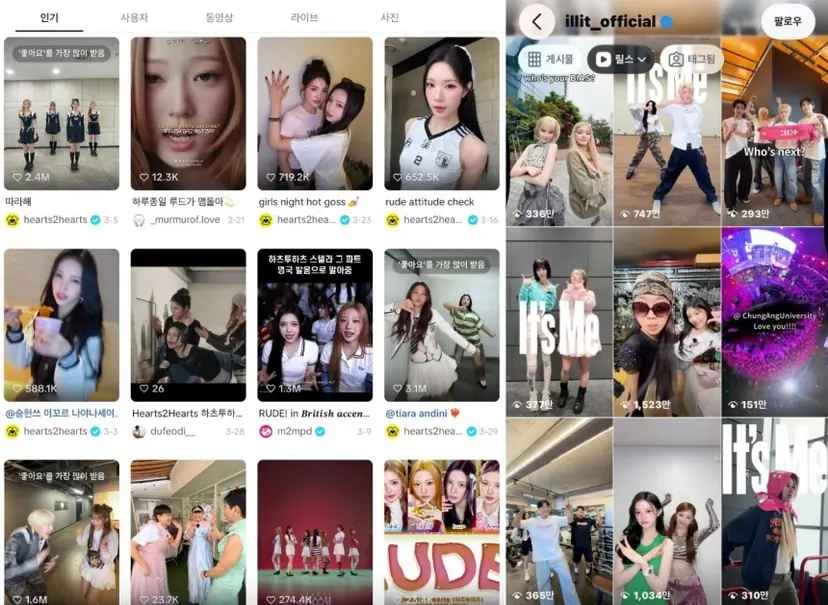
ILLIT’s “It's Me” gained popularity on Reels and TikTok by leveraging its repetitive beat and short point choreography. As the segments highlighting the repetitive nature of the techno genre were consumed in alignment with short-form videos, the challenge videos became a pathway that drove success beyond being a primary promotional tool. Similarly, Hearts to Hearts' “Rude!” saw long-term success as the rap part by member Stella gained more traction among fans than the official challenge segment.
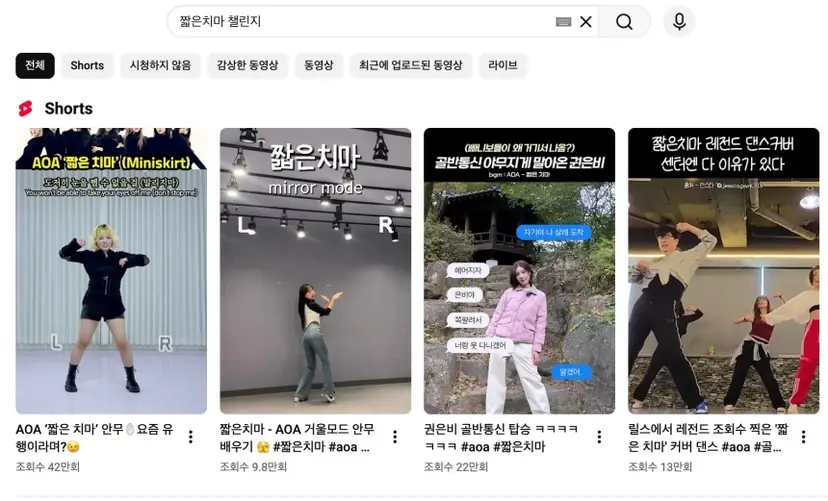
Songs released long ago are also receiving renewed attention through short-form platforms. AOA’s “Miniskirt” became a hot topic after being combined with the "pelvis dance" meme. As the motion of shaking the pelvis to specific segments of the song spread like a meme, a song over 10 years old returned to the public’s playlists.
Music used in challenge videos, settled by rights holders
A “dance challenge” is content where users dance to the chorus or point choreography of a specific song and upload it as a short-form video. These are usually produced as short clips around 30 seconds long, spreading as users follow the choreography officially released by the artist or showcase their own variations. In the case of new idol tracks, agencies often plan specific challenge segments and choreography around the time of release.
So, who gets the revenue if a challenge video records high views? First, for the music used in the video, the settlement path is divided by rights holders such as copyright holders, performers, and producers. The Korea Music Copyright Association (KOMCA) distributes music usage fees to owners of copyright, such as songwriters, composers, and arrangers. Performers like singers and musicians receive settlements through the Federation of Korean Music Performers (FKMP). Record producers—those who plan and produce the sound source and hold rights to the recording—receive fees through neighboring rights organizations such as the Recording Industry Association of Korea (RIAK).
When a platform provides music usage logs from challenge videos to these rights organizations, the organizations distribute the fees to the respective copyright holders. The higher the number of views and the longer the usage time, the greater the copyright fees returned to the rights holders.
However, the criteria for calculating music usage fees vary by service type. This is because the standards applied to music streaming, performances, broadcasts, and online video services are all different. Within the same type of service, settlements are based on usage logs submitted by the platform, but specific criteria differ depending on the regulations of each rights organization and the contract structure of each platform.
A KOMCA official stated, “YouTube creator revenue is not something the association is involved in; it is handled by the platform,” adding, “The association collects and distributes fees based on music usage logs submitted by platforms, in accordance with collection regulations approved by the Ministry of Culture, Sports and Tourism.”
Music usage fees and platform revenue are separate… Differences based on platform policy
When a general user uploads a video of themselves dancing to a specific song, the creator may receive revenue according to platform policies if the video meets the platform’s monetization requirements. However, the specific distribution method varies by platform contracts and policies.
YouTube has relatively specific regulations on revenue sharing for Shorts videos containing music. If one music track is used in a video uploaded by a monetizing creator, half of the revenue associated with the views is allocated to the creator pool, and the other half is allocated to music licensing costs. If two tracks are used, one-third goes to the creator pool and two-thirds to music licensing. The creator pool is then distributed based on the share of valid views per country, with the creator receiving 45% of the allocated amount.
TikTok requires criteria such as having over 10,000 followers for monetization participation, and a TikTok official stated regarding challenge video revenue sharing that “it is difficult to answer whether revenue goes to the creator.”
From the perspective of challenge participants, one can expect not only direct revenue but also exposure effects. Videos using trending music and choreography are highly likely to spread through platform algorithms, which can lead to increased views and followers. While the actual revenue scale depends on platform monetization conditions and video performance, this is why challenges are used as a means for creator account growth.
Entertainment industry focuses on 'diffusion effect' rather than revenue
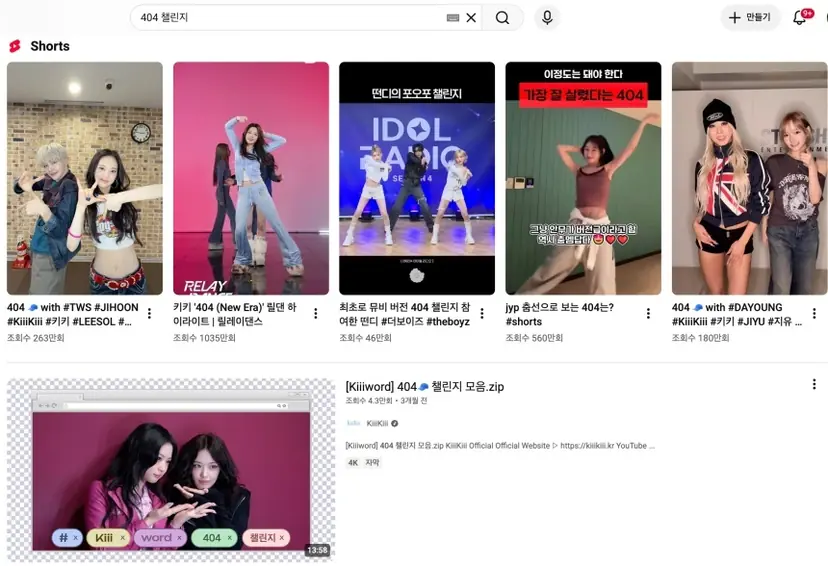
The entertainment industry views dance challenges as a primary means of promoting new songs. If short choreography and hooks suitable for repetitive playback spread through short-form platform algorithms, it can boost the recognition of both the song and the artist without spending additional advertising costs. The fact that fans can participate voluntarily and that it can spread to overseas users without language barriers is also considered an advantage.
An entertainment industry official said, “Rather than aiming for direct revenue generation, dance challenges are often used as a marketing strategy to naturally spread music and performances and to induce voluntary participation from the general public as well as fans.”
Agencies usually plan challenge content when releasing a new song. They either release content using preview tracks before the official release or create challenges centered on the core hook of the song and easy-to-follow point choreography. It has also become common for artists to film challenges with other singers or influencers.
The industry believes that dance challenges are highly likely to continue as a core means of new song marketing. This is because music consumption through short-form platforms has become routine, and the structure where user participation leads to content diffusion is strengthening.
Another music industry official added, “When a challenge becomes a hot topic, music streaming often increases, and interest in music videos or related content also rises simultaneously,” adding, “Through this, one can expect the influx of new users and fan bases, not just existing fans.”
They also added, “Beyond the challenges planned by the company, there are cases where new challenges are created voluntarily by fans and the public after release,” noting, “Agencies monitor such reactions and incorporate them into additional content production or follow-up activities.”