

[비즈한국] In an era where brands are remembered beyond mere products—through senses, experiences, and attitudes—people now place more importance on what they are drawn to and which experiences they remember rather than what they buy. Bizhankook, in partnership with the brand community BeMyB, introduces the ‘Brand of the Month’ every month. We share the new senses and trends of brands captured by BeMyB and delve into the context behind why these brands are receiving attention today.
Moving past the era where brands sell experiences beyond products, we have entered an era where brands translate their unique worldviews into reality. Good brands no longer explain their philosophy at length. Instead, they create spaces, develop content, and encourage participation, allowing people to naturally experience the values the brand pursues. Consumers do not just buy products; they step into the brand's narrative, spend time, create memories, and build relationships.
The brands that gained attention in June 2026 reflect this same trend. Genesis proved its identity as a ‘technology-driven brand that embraces challenges’ beyond just ‘luxury’ by completing the 24 Hours of Le Mans. Hermès transformed its 180-plus year history into play through an escape room game, turning its heritage into an experience. Centre Pompidou Hanwha000880 expanded the art museum into a complex cultural space where art, culture, gastronomy, and relaxation coexist. Original Beer Company expanded its brand experience by linking beer with ‘memorable moments.’ Scrub Daddy also infused a character-based worldview into ordinary sponges, turning household chores into a form of play.
The common thread is clear. All five brands designed their philosophy, technical prowess, heritage, and characters to be experienced directly by people, rather than putting their products or services at the forefront. They made people play, stay, and participate within the brand narrative rather than just reading about it.
The brand community BeMyB has selected Genesis, Hermès, Original Beer Company, Centre Pompidou Hanwha, and Scrub Daddy as the ‘Brands of the Month’ for June 2026. The selected categories are ‘Using,’ ‘Wearing,’ ‘Eating,’ ‘Staying,’ and ‘Enjoying,’ respectively. Every month, BeMyB selects notable examples based on criteria such as identity, timeliness, differentiation, communication, and buzzworthiness among brands in daily life.
The keyword that runs through these selected brands is ‘the realization of a worldview.’ They share the commonality of not letting their history, technology, philosophy, and characters remain in product descriptions, but instead embodying them through spaces, content, and events for consumers to experience firsthand. Brands are now competing on their ability to make people spend time within the brand, rather than just explaining themselves.
Wearing: ‘Hermès’, Turning Luxury Heritage into a Game
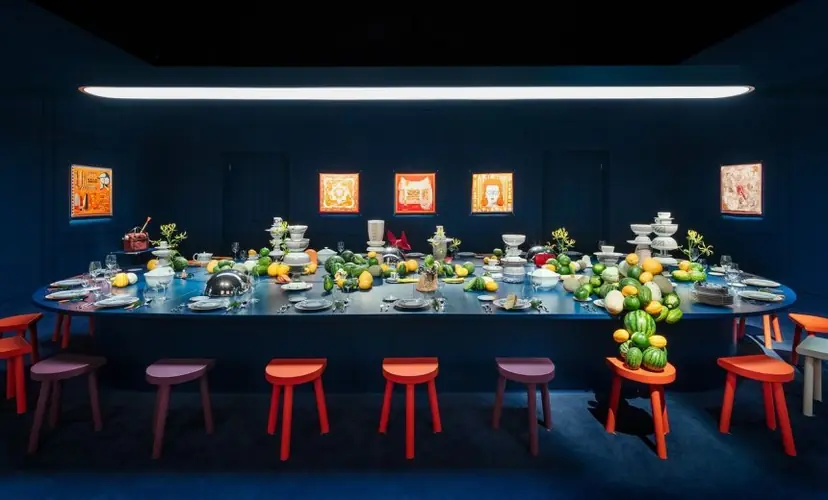
Hermès, selected in the ‘Wearing’ category, has taken the way luxury brands meet customers to the next level. The experiential exhibition ‘Mystery at the Grooms,’ held last June at the DDP Art Hall in Seoul, garnered significant attention as a ‘Hermès escape room.’
Visitors become detectives against the backdrop of a groom’s mansion, moving through six rooms to find clues and complete missions involving the iconic horse motif of Hermès. With acting by performers in riding gear and immersive storytelling, it provided an experience that felt more like participating in a play than just visiting an exhibition.
Interestingly, the brand did not put its products at the forefront anywhere in the exhibition. Leather, silk, tableware, and other Hermès products were naturally placed like props in the mansion. Visitors discovered the brand's symbols and heritage for themselves while solving the puzzles. It effectively communicated the history of a brand that started in a saddlery workshop in 1837 through experience, without long explanations.
This exhibition arrived in Seoul after stops in Shanghai, New York, and Tokyo. Unlike previous exhibitions that showcased the craftsmanship of artisans, this one turned the brand's history itself into a form of play. In that it is an experience design that makes people enter the brand rather than just admiring products, Hermès demonstrated a new way for high-end brands to communicate with consumers.
Eating: ‘Original Beer Company’, Selling ‘Memorable Moments’ Rather Than Beer
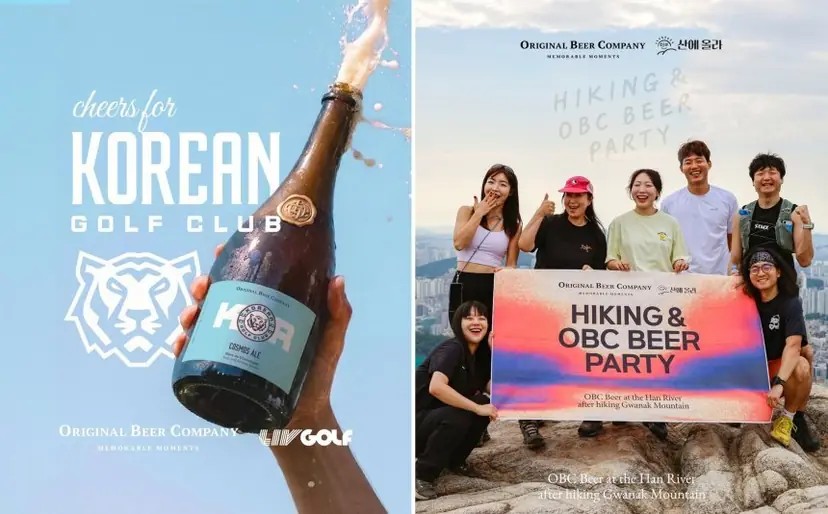
Original Beer Company (OBC), selected in the ‘Eating’ category, did not stop at being a brand that simply makes good beer. It built its own identity by connecting the experience the brand pursues with its products.
Recently, NVIDIA CEO Jensen Huang was spotted enjoying a beer at Jamsil Baseball Stadium, and the beer in his hand was an OBC product. Since entering Jamsil Baseball Stadium last year as the first craft beer brand, its brand awareness has been rising rapidly.
Launched in 2019, OBC adheres to a strategy of using top-tier ingredients and prioritizing quality over costs. Its quality has been recognized through multiple awards at prestigious global beer competitions like the European Beer Star and World Beer Awards, and the unique packaging resembling a champagne bottle is also a choice for maintaining optimal beer condition.
However, what differentiates OBC is its brand message rather than the beer itself. Under the slogan ‘Memorable Moments,’ it introduced anniversary gift sets and custom bottle services, and it continued this philosophy in sports settings as well. By sponsoring golf tournaments, hosting after-parties, and organizing beer parties after mountain hiking, it has established itself as a brand that shares special moments with people.
Recently, it expanded its consumer touchpoints by launching canned beer. While maintaining its insistence on quality, it lowered the barrier so that more people can experience the brand in their daily lives. OBC’s progress is particularly noteworthy in that it aims to be a brand that creates good memories, going one step further than just making good beer.
Staying: ‘Centre Pompidou Hanwha’, Becoming a Cultural Space to Spend the Day
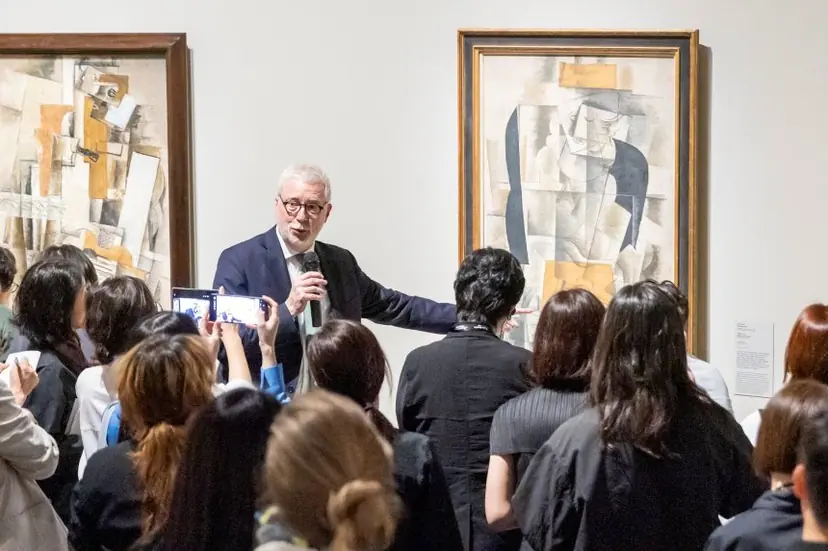
Centre Pompidou Hanwha, selected in the ‘Staying’ category, redefined the role of an art museum. It created a new experience by proposing a complex cultural space where culture, food and beverage, and relaxation are interconnected, rather than just a space to view exhibitions.
Centre Pompidou Hanwha, introduced through a partnership between the Hanwha Cultural Foundation and the Centre Pompidou in France, was built by completely remodeling the annex of the 63 Building. It began full-scale operations with the inaugural exhibition ‘Cubists: Visionary Revolutionaries.’
The space composition is also different from existing art museums. It connects not only large exhibition halls but also an auditorium, educational spaces, a café, a restaurant, an outdoor garden, and a resting area overlooking the Han River into a single circulation path. It also naturally flows into the underground commercial space, ‘63 Culture and Gourmet Street,’ allowing visitors to enjoy dining and shopping in the same location after viewing the exhibition.
Ultimately, what Centre Pompidou Hanwha has created is not an art museum, but a ‘staying experience.’ In an era where the boundaries between culture and commerce are blurring, it is worth evaluating as a case that shows the future direction of complex cultural spaces, designed as a place where one wants to spend the whole day rather than just a place to consume exhibitions.
Enjoying: ‘Scrub Daddy’, Infusing Worldview into Household Chores
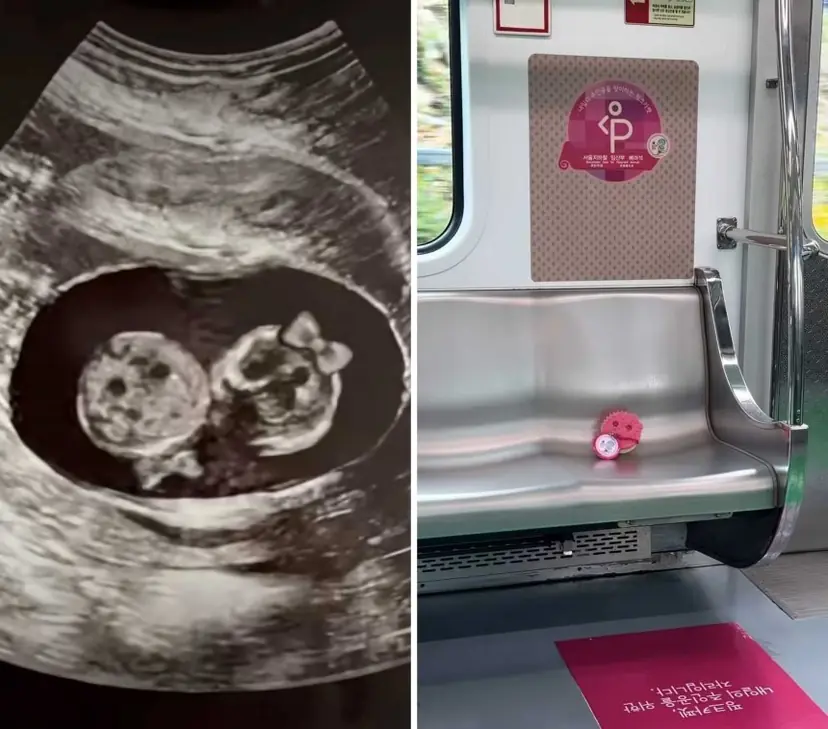
Scrub Daddy, selected in the ‘Enjoying’ category, showed once again that ordinary household goods can become a brand. It didn't stop at selling a single sponge; it imbued it with characters and a story, making it a brand that consumers want to enjoy.
Scrub Daddy is a global cleaning supplies brand that grew through the American entrepreneurial audition program ‘Shark Tank.’ While well known for its smiley-face sponge, its brand content has recently been garnering more attention than its products. In particular, the new product ‘Scrub Baby,’ developed by reflecting the opinions of Korean consumers, was a story from the very launch process. The brand introduced the new product naturally by telling the story on social media that the existing products, Scrub Daddy and Scrub Mommy, were getting pregnant and giving birth.
The recent pop-up store at Jamsil Lotte World Mall, ‘Scrub Daddy Dream House,’ follows the same trend. Instead of just displaying products, the brand realized the house where the Scrub Family lives. It made visitors discover products while looking around the living room, kitchen, and children's room, allowing consumers to experience the brand’s worldview rather than just shopping.
Limited edition products in collaboration with Disney and pet-themed items were also naturally integrated into this space. Household goods are a category that can easily become competitive based on function alone. However, Scrub Daddy is selling the feeling that ‘household chores can be fun’ by adding characters and narrative to the brand. It is even more impressive in that it is growing into an IP rather than just a simple sponge.
Using: ‘Genesis’, Proving the Brand Through Technical Prowess
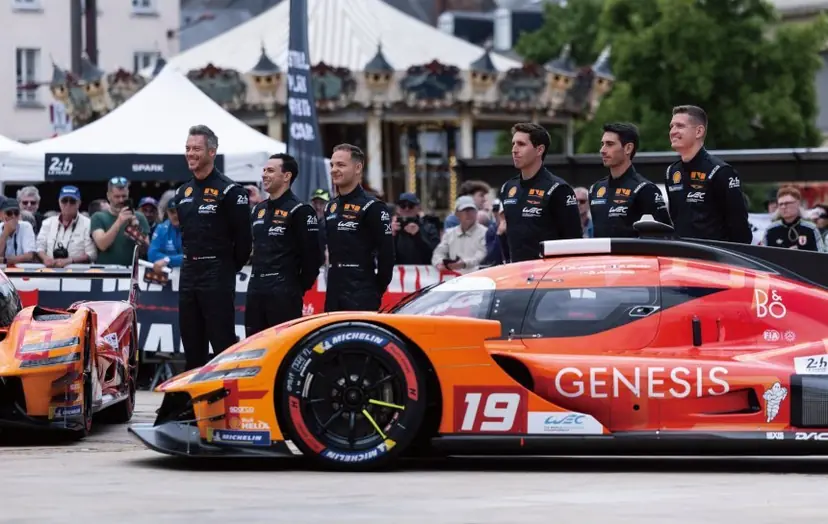
Genesis, selected in the ‘Using’ category, proved the values the brand pursues in the most dramatic way possible. By successfully completing the 24 Hours of Le Mans, the world's most prestigious endurance race, it turned its vision of leaping beyond a luxury brand to a high-performance brand into reality.
The 24 Hours of Le Mans is an extreme motorsport stage that tests the durability and technical prowess of vehicles as they race non-stop for 24 hours. In a competition where completing the race itself is considered a meaningful achievement, Genesis competed against traditional powerhouses such as Toyota, Ferrari, and Porsche, crossing the finish line in 13th place in the Hypercar class. Given that it was a newcomer team, the results were beyond expectations.
Since its launch as Hyundai Motor Company’s premium brand in 2015, Genesis has built its brand image around design, ride comfort, and quietness. However, with the launch of ‘Genesis Magma Racing’ last year, it presented a new direction. It was a declaration that it would add the identity of high performance and motorsport to the image of luxury.
This completion of Le Mans showed that the declaration was not just marketing. Hyundai Motor Group has announced plans to actively utilize the data secured from the race in future mass-production vehicle development. It made it clear that racing is a process of technical development, not just an event.
It is easy for luxury brands to talk about emotions. However, Genesis is creating its own differentiation by adding technical prowess to its emotion. The challenge to prove itself on the world stage is now becoming the brand’s most powerful asset.
The Brand of the Month: ‘Genesis’
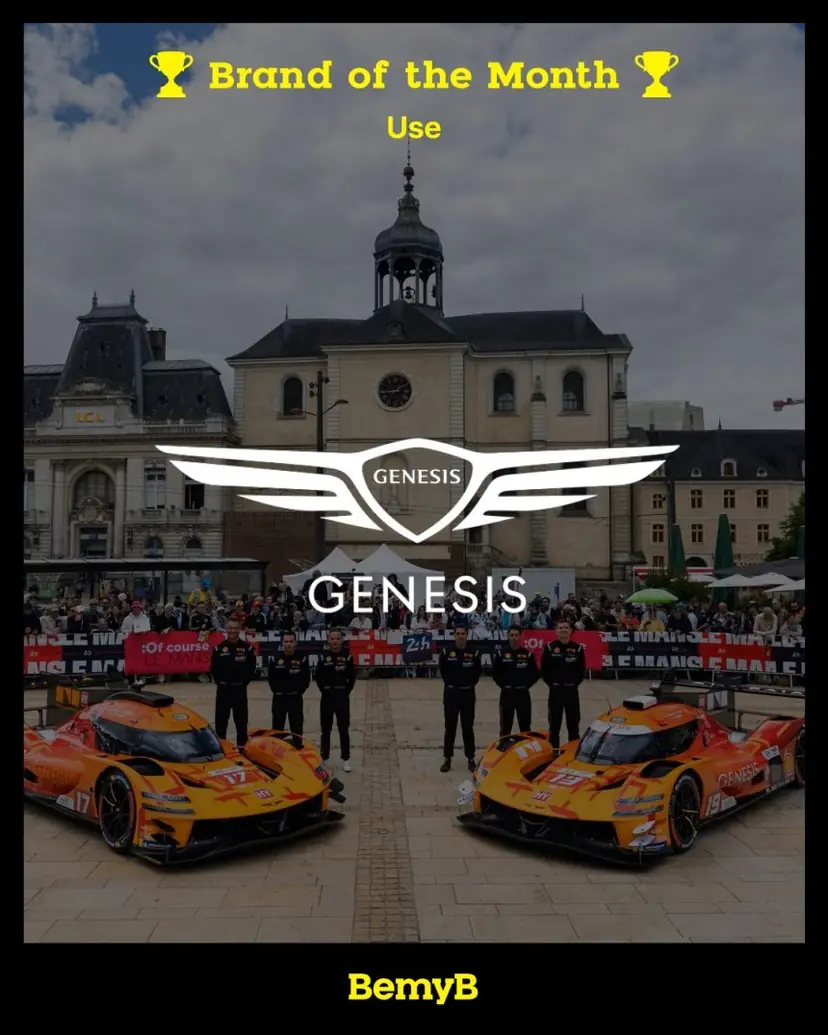
The reason BeMyB selected Genesis as the brand of the month for June is not just because it completed the 24 Hours of Le Mans. This challenge was the event that most clearly demonstrated what kind of brand Genesis wants to become in the future.
Genesis has built a premium image for a long time centered on luxury sedans and SUVs. However, in order to be recognized for true competitiveness in the premium market, design and convenience features alone are not enough. It must be supported by technical prowess, performance, and the challenge of the brand itself to overcome its own limits.
The 24 Hours of Le Mans was the stage where all those factors could be proven most dramatically. In a competition where completion itself signifies technical capability, Genesis overcame the limitations of being a new brand and made its presence felt in the global automotive industry. At the same time, it clarified the brand’s future direction by releasing plans to apply the technology accumulated through racing to mass-production vehicles.
The power of a brand ultimately comes from what image consumers think of. Through this Le Mans finish, Genesis gained a new image as a ‘technology-driven brand that embraces challenges,’ moving beyond just being a ‘luxury car.’ There are many brands that talk about luxury, but not many that have proven their skills directly on the world's highest stage. In that it showed its brand philosophy through results rather than words, Genesis was enough to be selected as the representative brand for June.
![[Brand of the Month] 'The Man Who Lives with the King': Participatory Branding That Attracted 15 Million Viewers](https://s.bizhankook.com/attachments_thumb/2026/05/98009_thumb.webp)
![[Brand of the Month] New Balance: Speaking to the Essence of the Running Craze](https://s.bizhankook.com/attachments_thumb/2026/05/98504_thumb.webp)
![[Brand of the Month] 'Pokémon' is Neither a Trend Nor a Memory, It Is a 'Lifestyle'](https://s.bizhankook.com/attachments_thumb/2026/06/106521_thumb_3a1e00d0.webp)
![[Brand of the Month] Genesis, The Value of Luxury Crafted Through Results, Not Words](https://s.bizhankook.com/attachments/2026/07/afa62c3382c3_34504ee7.jpg)
![[Brand of the Month] 80% of Re:Scene’s Growth Comes from Consistency](https://s.bizhankook.com/attachments_webp_no_wm/2026/07/135001_no_wm_cbbb04c3.webp)