

[비즈한국] "I use an average of 5 flats of eggs a day. A year ago, a flat cost in the 6,000-won range, but now it's in the 9,000-won range."
On June 30, at a kimbap specialty shop in Jongno-gu, Seoul, thin egg omelet strips intended for kimbap fillings were stacked up. The shop owner explained that as egg prices rose, the burden on production costs increased. He said, "As prices have risen, our net profit has taken a hit."
Self-employed business owners are growing increasingly concerned as the burden of high egg prices continues for the second month. According to livestock distribution information from the Korea Institute for Animal Products Quality Evaluation, the monthly average consumer price for 30 standard eggs rose from 6,561 won in February to 7,404 won in May and 7,496 won in June. The average price in June was 7.0% higher than the same month last year. Egg prices, which had temporarily dropped to the 6,000-won range due to the supply of imported fresh eggs and discount support, are hovering in the 7,000-won range once again.
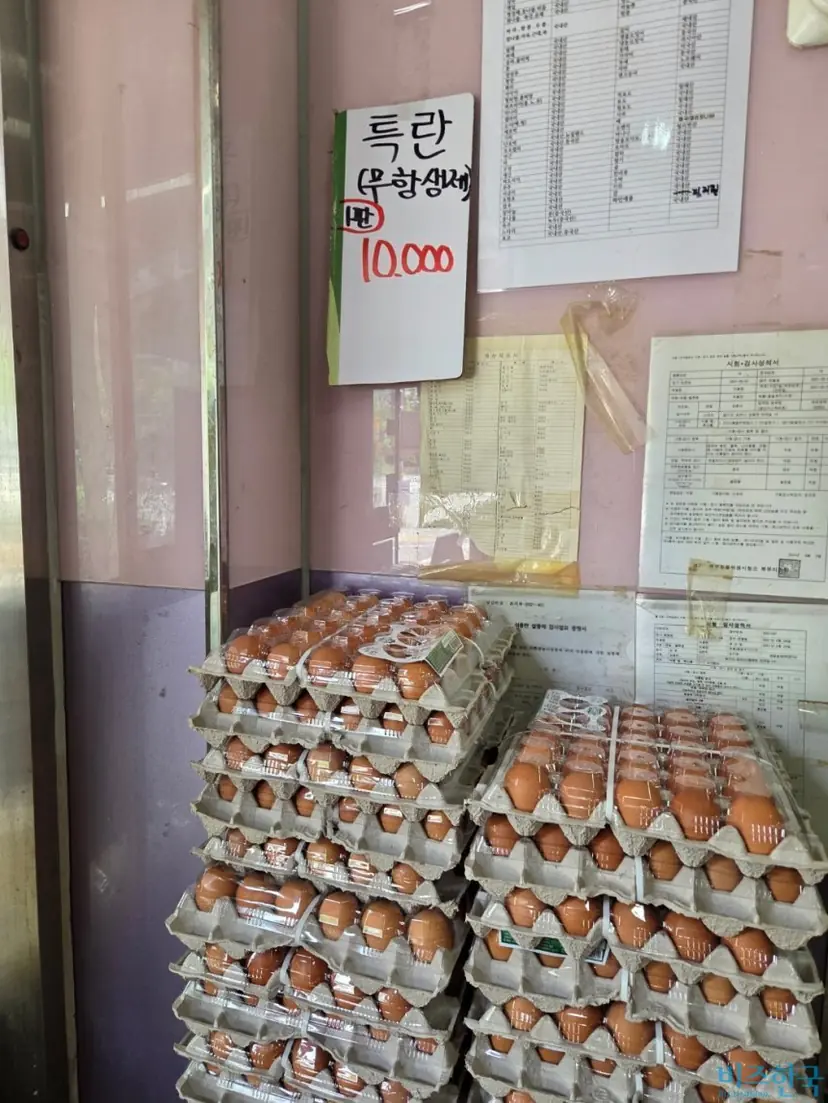
The impact of highly pathogenic avian influenza (AI) that occurred last winter is a major factor in maintaining high egg prices. Due to the AI outbreak, 11.34 million laying hens were culled, reducing the daily egg production as of June to 47.05 million, down 3.3% from the previous year. Factors such as consumptive diseases and the burden of feed and logistics costs are also cited as reasons for the slow price stabilization.
In online communities for the self-employed, posts complaining about the burden of egg prices are easy to find. There have been posts about worrying over securing volume because they cannot find eggs, or searching for cheaper suppliers and wholesalers. Some self-employed people have even stated that they removed egg-based menu items because they could not handle the costs.
The burden was even greater for businesses where cutting costs is difficult. Another kimbap shop owner said, "Eggs are an indispensable ingredient in kimbap," and added, "Even so, it's not easy to raise prices because of the image the menu 'kimbap' carries."

Bakeries are in a similar situation. Since eggs are used in bread and sandwiches, they cannot help but feel the price increase. A shop owner running a bakery in Seochon, Jongno-gu, said, "It seems like the price of eggs has risen by about 3,000 to 4,000 won compared to a year ago. Since I bake the bread myself, I can't help but feel the impact significantly." He added, "This area is a tourist spot, so even if I raise prices, consumers accept it to some extent, but a friend who runs a bakery in a neighborhood commercial area near a residential area is having a hard time because they can't raise prices."
A shop owner in his 60s who runs a bakery at a traditional market in Nowon-gu, Seoul, also complained about the difficulty of raising prices. Sandwiches containing eggs were placed on the display shelf. The owner complained, "I use a lot of eggs, but it's hard to raise prices because of the image of a traditional market. Since I can't reflect it in the selling price, my margins are gradually decreasing."

The large bakery franchise industry is also examining the impact of rising egg prices on product costs. As eggs are a raw material widely used in bread and cakes, the industry is sensitive to price fluctuations. An industry official said, "We are closely monitoring the situation as rising egg prices are an issue that generally affects product prices."
The burden has extended to consumers as well. On June 30, at the egg shelf of a Lotte Mart in Yongsan-gu, Seoul, consumers who hesitated to purchase after checking the price tags were noticeable. A man in his 50s stared at the price tag for about 10 minutes before finally turning away empty-handed. On this day, the price of 15 eggs displayed in the store was in the 7,000-to-9,000-won range depending on the brand and certification status. Among the 30-egg products, some were over 10,000 won.
A man in his 20s named A, whom we met on-site, said, "Egg prices are expensive, so I hesitate to buy them. Decent products cost up to 9,000 won, so I think it would be better to buy something else to eat." A man in his 20s named C, who lives alone, said, "If I buy a small package, the cost-effectiveness drops, and if I buy a full flat, it's difficult to handle. Once, I had so many left over after sharing with friends that I ended up eating only egg dishes for three consecutive days."
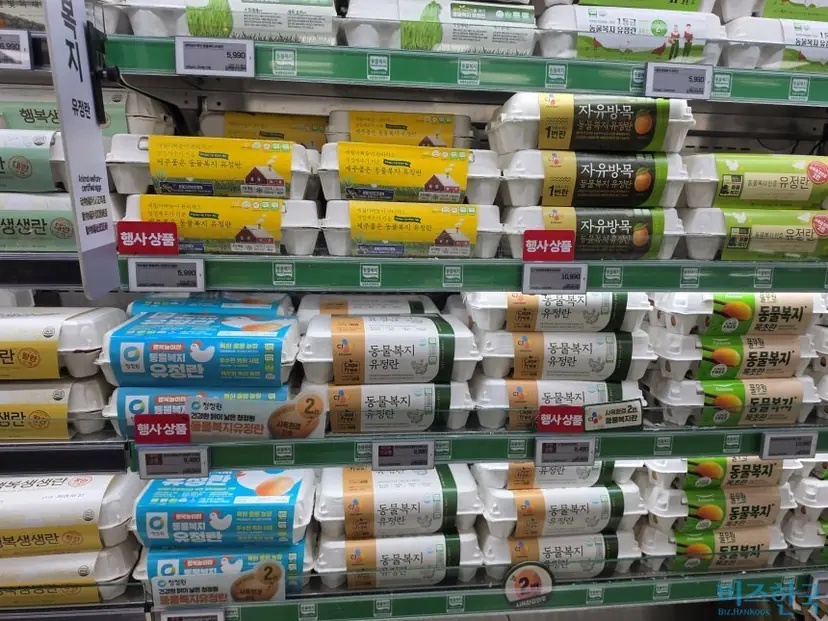
The government is expanding imports and discount support to stabilize the supply and demand of eggs. The Ministry of Agriculture, Food and Rural Affairs decided to import fresh eggs from countries like the US and Thailand and expand the tariff-rate quota for egg processed products, such as liquid eggs, to 8,000 tons by the end of this year. The countermeasures for public livelihood prices announced on June 26 also included a policy to import an additional 200 million fresh eggs. The government expects that egg supply and demand will gradually stabilize after the end of July.
Experts say that to stabilize egg prices, one must look at both the restoration of the domestic production base as well as imports and discount support. They note that while short-term supply expansion can help reduce the consumer burden, the recovery rate of the domestic laying hen population and production volume could also affect price trends.
Lee Eun-hee, a professor of consumer science at Inha University, said, "Eggs are a widely consumed source of protein and are used extensively in other foods such as bread, making them a symbolic item for price stability. In a situation of supply shortage, measures to reduce consumer burden through increased imports and discount support are necessary." She added, "However, since the impact of increased imports on domestic farms must also be considered, it is important to find a balance between farmers and consumers."