

[비즈한국] While the venture investment market is showing signs of recovery after a long period of stagnation, investors' expectations have actually risen. Capital is flowing toward companies that possess independent technological prowess and market validation potential rather than simple growth prospects. In this context, Postech Holdings, a university technology holding company, is drawing attention as it expands its presence by focusing on pre-seed investments in deep tech. Their approach centers on prioritizing technological differentiation—often called an "edge"—over one's alma mater, while managing direct fund contributions and facilitating follow-up investments. We met with Ko Byung-chul, CEO of Postech Holdings, to hear his strategies on deep tech investment and the direction in which the university startup ecosystem should head.
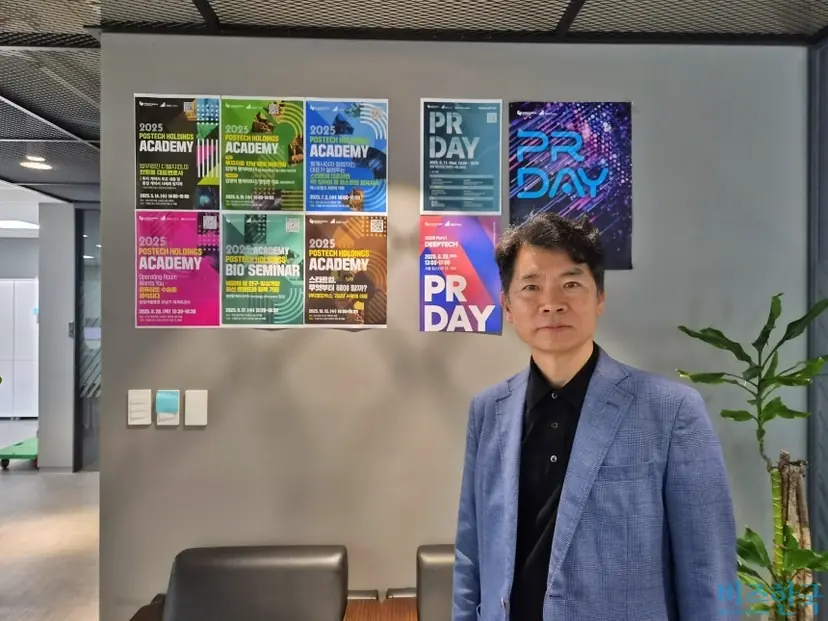
15% Responsible Investment via Direct Fund Contribution… “Selling Partial Stakes Upon 10x Growth”
Postech Holdings’ Assets Under Management (AUM) stand at approximately 84 billion won. While this differs from large VCs managing trillions of won, it is a significant scale among university technology holding companies, and it is recognized as one of the leading firms specialized in early-stage technical startup investments. CEO Ko Byung-chul explained, "We have invested in 177 companies so far," adding, "We mainly invest in early-stage companies that are less than 3 years old, or at most, under 5 years."
Postech Holdings’ investment philosophy focuses on the "edge," which refers to technological differentiation, rather than chasing fleeting trends. CEO Ko emphasized, "Since we mostly do seed investments, we prefer 'edgy' companies with distinct strengths. Especially as a university technology holding company, we prioritize technology-based firms like deep tech over typical platforms or services."
Unlike typical university technology holding companies that focus their investments on startups launched by their own faculty or the commercialization of internal patents, Postech Holdings maintains a 50/50 split between Postech-affiliated startups and external companies. This is because having an "edge" is their primary investment criterion, regardless of school or status. CEO Ko explained, "If they have technology that isn't available at Postech, we actively invest in companies founded by professors from other universities, and in fact, it has led to good results."
The investment ratio in bio-healthcare ventures is also high. CEO Ko shared, "We have invested in 20 to 30 bio-ventures, which account for more than 20% of our total portfolio." He also pointed out the realistic challenges of the domestic bio market. He analyzed, "Because the domestic medical field prefers globally verified products rather than automatically choosing domestic ones, it is not easy for domestic products to make an initial entry. It's difficult for domestic bio companies because they need to be used extensively and have their functions verified and improved, but that isn't happening."
Postech Holdings maintains a principle of responsible investment, contributing about 15% of each fund with its own capital to align the interests of the management company and the investors. Furthermore, they are actively securing fund liquidity. CEO Ko stated, "It takes a long time for deep tech companies to reach an IPO, so waiting blindly until then is not desirable for fund management," adding, "We realize profits by selling a portion of our stakes once the company's value increases by about 10 times after our investment."
Representative success stories include H&G, a materials, parts, and equipment (Sogeubojang) company from which they retrieved approximately 4.5 billion won after selling about three-quarters of their equity based on principal after an initial 200 million won investment, and Payhere, a table-order solution startup from which they sold their entire stake after its value jumped 10-fold in three years.
A Startup Hub Reducing Trial and Error, Dreaming of a 'Korean Silicon Valley'
Postech Holdings functions as a hub that collects and assets the trial-and-error data that professor-entrepreneurs experience in their respective laboratories. This is because, no matter how brilliant a researcher may be, becoming a great business leader is no simple task.
Postech Holdings conducts close-proximity consulting, regularly visiting labs even during the semester. CEO Ko emphasized, "There cannot be a perfect 'dream team' for a startup from the very beginning," adding, "The process of building your own dream team is what entrepreneurship is all about."
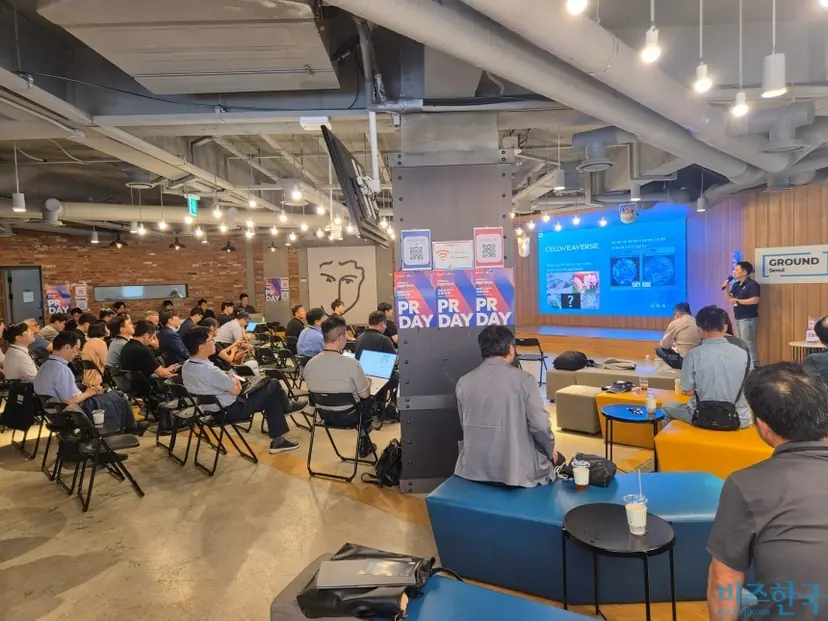
They also act as an active bridge between labs and the outside world. On the 29th of last month, they held a demo day at TIPS Town in Gangnam-gu, Seoul, introducing eight promising portfolio companies, including Narma, which possesses drone technology, and CellWeVerse, a raw material production company based on cell culture technology, to external investors. CEO Ko’s philosophy is that the role of a technology holding company is to widen the gap between startups and the market by reducing the entrepreneur's trial and error while serving as a catalyst for subsequent investment. CEO Ko said, "It is a venue to connect investors with our portfolio companies," adding, "We help them receive financial support not only through direct investment from our holding company but also by connecting them with other investment firms."
Postech Holdings also takes on the role of a bridge connecting large corporations and startups. CEO Ko stated, "We act as a stepping stone so that open innovation teams at large corporations can smoothly discover promising startups or research projects by professors," adding, "Especially since B2B companies make up a large portion of our investment portfolio, we actively arrange meetings so they can conduct practical Proof of Concepts (PoC) with large and mid-sized companies."
What is the ultimate blueprint CEO Ko envisions for Postech Holdings? It is to build a virtuous cycle of investment based on vast internal financial resources, similar to Stanford University in the United States. CEO Ko explained, "Famous private universities in the US manage tens of trillions of won in assets, which is possible because Silicon Valley achieved technology commercialization and startup development centered around Stanford University." He continued, "Postech Holdings must also become the largest donor and dividend provider for POSTECH (Pohang University of Science and Technology)," emphasizing, "It is time for engineering universities to prove for themselves how much they can contribute to the real market."