

[비즈한국] There is a good reason why the SBS034120 drama 'General Manager Kim' is being called a K-Taken. It's because the concept is similar to the 2008 film 'Taken' starring Liam Neeson. Both follow a storyline where a protagonist struggles to save their daughter; however, while the daughter is kidnapped by an international human trafficking organization in 'Taken', in the drama 'General Manager Kim', she is entangled in school violence and a related murder case. Crucially, the protagonist—a father who is a 'hidden badass'—is what sets it apart. So, what exactly is a 'hidden badass' (him-sum-jjin)?
The term 'hidden badass' originally emerged as a character archetype in 2010s web novels. It stands for 'a loser who hides their power,' and it wasn't meant as a compliment. It was initially used to mock the cliché of a character who looks mediocre at first glance but actually hides immense ability. However, as protagonists with this narrative arc gained widespread popularity, the meaning expanded to represent a true hero who merely hides their power.

In the movie 'Taken', the father doesn't actually hide his power. It's implied from the start that his skills are formidable, and his background as a former CIA agent is revealed early on. In that sense, he differs from the Korean 'hidden badass' character. In the drama 'General Manager Kim', the protagonist hides his past completely. The father works at an ordinary company, and his daily life as an employee and a father is nothing out of the ordinary. He even appears timid and pathetic. He endures being hit or insulted when he gets into arguments with local thugs. Even when his daughter suffers from school violence and is framed as the perpetrator, he kneels before the other students' parents to plead for leniency. His decision to simply transfer his daughter to another school makes him appear powerless. To any observer, he seems pathetic, and his relationship with his daughter becomes strained.
However, he is actually a former North Korean operative and assassin. He had to keep it a secret because if his identity were exposed, not only he but especially his daughter would be in danger. A similar setup appeared in the 2010 film 'The Man from Nowhere'. Cha Tae-sik (Won Bin), a former special operations agent, lost his wife and child due to a failed operation and lived in seclusion, running a pawnshop out of guilt. He then struggles to rescue So-mi, a girl he knows well, when she becomes entangled with a drug and illegal organ harvesting ring.
In 'The Man from Nowhere', the person being rescued was a neighbor's child, not his own daughter, whereas in 'General Manager Kim', the setup that the wife passed away after giving birth makes the paternal love even more dramatic. In short, it makes the depth of his struggle and his special bond with his daughter more tangible. In a way, it's like the 'neighbor uncle' from the movie has returned as a father. Above all, the fact that the father is a 'hidden badass' in his middle age is a major feature. So, why are people so enthusiastic about this type of character?
First, there is the sense of exhilaration. Despite appearing weak or pathetic, he solves problems with immense ability. It is the cathartic effect of a plot twist. It is essential, particularly in scenes where he punishes those who underestimated and mistreated him. These antagonists are usually wicked or evil. The need for retribution is emphasized in setups where arrogant or rude people torment the weak.
These antagonists are also reminiscent of people who may have tormented the viewers at some point in their lives. This leads the viewers to identify and empathize with the protagonist. Reflecting on times they were unfairly mistreated, they feel a sense of vicarious satisfaction watching the protagonist punish the mean-spirited or the perpetrators, as if the hero were acting on their behalf. On one hand, there is also a desire to be recognized for one's own hidden potential, which is projected onto the protagonist. The 'underdog effect' is also at play. Viewers find dramatic pleasure in the moment of reversal, cheering for the underdog who is cornered but turns the situation around.
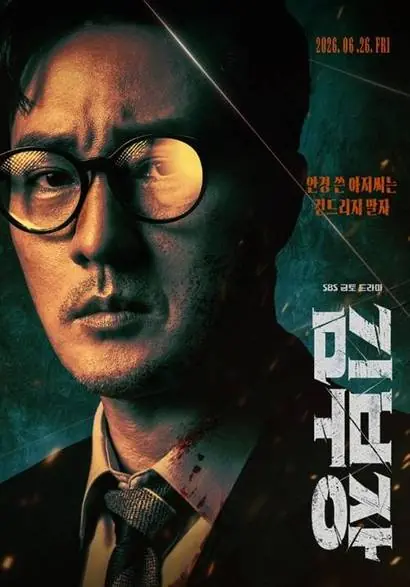
Furthermore, this drama subverts the image of the middle-aged father. You won't find the typical father who is helpless in the outside world and only raises his voice at home. Because in a reality where fists are closer than the law, he has outstanding ability to personally save his daughter in crisis. One cannot help but feel drawn to the way he endures all sorts of humiliation and shame to hide his abilities, and the final explosion of that repressed energy feels justified and highly relatable. In fact, middle-aged parents might imagine how great it would be if they were capable of self-help when their children are in danger, and they can indulge in such fantasies while watching this content.
Of course, there is also the 'So Ji-sub effect'. The initial ratings were high because old fans flocked to see him return to the small screen, as he is a charming and charismatic actor. However, the father character in 'General Manager Kim' is part of a lineage that follows the 2012 film 'A Company Man' and the 2025 Netflix series 'The Square'. While the protagonist in 'The Square' seeks revenge for his brother, the target of revenge in 'General Manager Kim' are those who harmed his daughter. The scale here is also larger, as he searches for his daughter amidst triple-threats of assassination attempts from a former gangster turned construction company chairman, North Korean agents, and the South Korean intelligence agency. It is clear that the atmosphere will heighten through this 'hidden badass' narrative, the 'Taken' motif, and the complex crises. Since the inter-Korean division situation is also mixed in, it can truly be called a Korean-style 'Taken'.
However, unlike a film, it is not easy to maintain immersion in the storyline because it requires a long breath. What lies at the end of this narrative? Is it simply about protecting family, or can it evoke empathy for broader social messages? In this regard, if it leaves a lasting impression and resonance, global 'N-th' viewings and even a second season are possible. It has long been the era of global OTT platforms where being consistently talked about is more important than initial viewership ratings. The fact that the drama cannot simply remain at the level of private revenge for school violence is because the Netflix drama 'True Education' has already raised the bar, and there is pressure to go even further than that.
The author, Kim Heon-sik, has been walking through or clearing paths in the forest of pop culture phenomena since his 20s, with the expectation that there is a way to make the world a better place through culture. He continues on that same path with the same belief in the 21st century, where artificial intelligence and quantum computers are active.