

[비즈한국] SK Gas018670 is building the 'Seoul Future Institute' near Gyeonghuigung Palace in Jongno-gu, Seoul, to serve as an in-house think tank. This move marks the establishment of a separate strategic hub in downtown Seoul for SK Gas, which has previously operated primarily from its headquarters in Pangyo. The initiative is interpreted as a move to strengthen business strategy and collaboration as the company expands its reach from its core liquefied petroleum gas (LPG) business to liquefied natural gas (LNG)-based power generation.
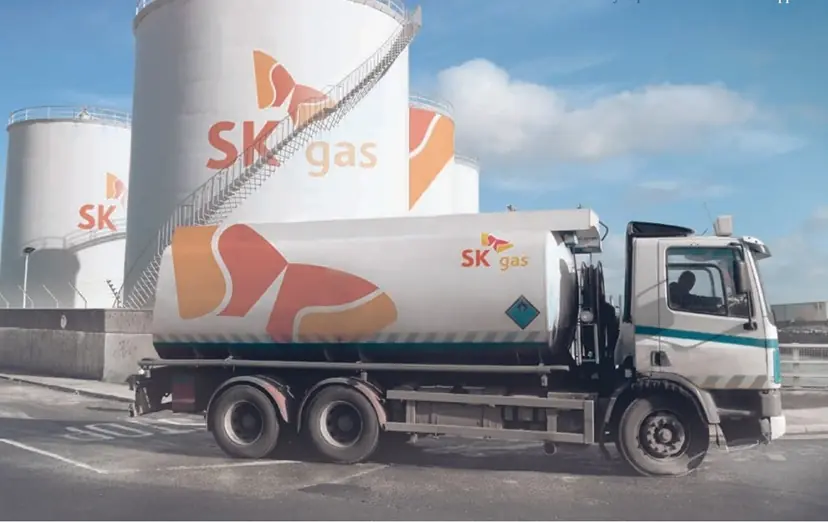
According to industry sources, SK Gas has selected a site in Sinmun-ro 2-ga, Jongno-gu, Seoul, for the Seoul Future Institute and is currently in the process of purchasing the land. The site identified so far spans approximately 1,000㎡, with a transaction value of around 20 billion won. After the board of directors approved the construction of the Seoul Future Institute in September last year, SK Gas began formal land acquisition procedures in December of the same year.
The Seoul Future Institute is expected to function as an in-house think tank for SK Gas. It is being designed as a space to research company growth, business strategies, and changes in work methodologies. It will also serve as a mobile office and a venue for discussions and lectures. Rather than being a daily office space, it is closer to a separate hub dedicated to discussing strategic tasks and internal collaboration. The currently identified facility includes office space, lecture halls, and parking, and is scheduled for completion in 2028.
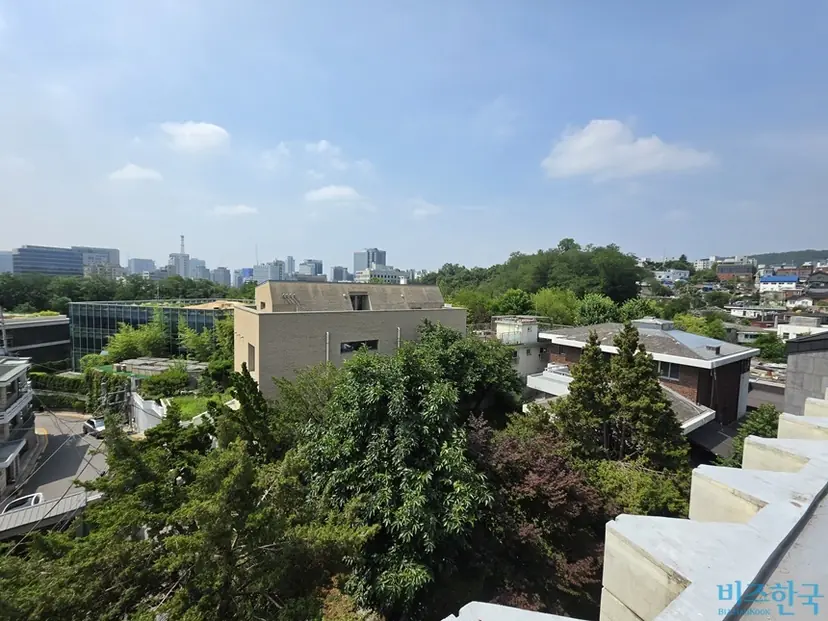
The Gyeonghuigung area is considered a high-end residential neighborhood with excellent accessibility to downtown Seoul. While it is close to Gwanghwamun, City Hall, and the Government Complex Seoul, it is also subject to certain restrictions on construction and building height due to its location within the historical and cultural environment preservation zone surrounding the Gyeonghuigung site. The area is home to corporate and policy institutions such as the Pony Chung Foundation building—which houses the HDC012630 Group headquarters—and the Asan Institute for Policy Studies Seoul office, as well as high-end detached houses, including the private residence of former Prime Minister Han Duck-soo.
The Seoul Future Institute is also seen as a hub for the business transformation of SK Gas. SK Gas is an energy company that imports, stores, and sells LPG. Recently, it has been expanding into the LNG and power generation sectors. In 2025, while approximately 90% of its total revenue of 7.6763 trillion won came from LPG, its profit structure has been shifting, with about 36% of its 442.8 billion won in operating profit being generated from the non-LPG power generation sector.
At the center of the power generation business is Ulsan GPS. Ulsan GPS, a gas-combined cycle power plant that uses both LNG and LPG, began commercial operations in December 2024, recording 760.1 billion won in power generation revenue and 159.9 billion won in operating profit in 2025. The Korea Energy Terminal (KET), a private LNG terminal, has completed the commercial operation of its first and second tanks and is preparing for transmission from the third tank. In the hydrogen sector, the Lotte SK Eneroot hydrogen fuel cell power plant began commercial operations in April of this year.
The Seoul Future Institute also represents the first Seoul-based hub established by SK Gas in about a decade. SK Gas currently has its headquarters at the SK Discovery006120 Complex in Pangyo Techno Valley, Gyeonggi-do. In Seoul, it has reportedly been using shared offices such as those at the SK Ecoplant building in Jongno-gu. In the past, SK Gas had its headquarters in buildings such as the 63 Building, SK Seorin Building, and SK G.Plant before relocating to Pangyo Techno Valley in December 2014.
An SK Gas official stated, "The site is being purchased for the purpose of building the Seoul Future Institute," adding, "At this stage, it is difficult to confirm the specific usage or scale of the building."
SK Gas is an energy company under the SK Discovery affiliate group. It was established in 1985 for the rationalization of the LPG import industry. Since then, it has grown by importing, storing, and selling LPG. Based on the storage and trading capabilities accumulated through domestic LPG import and distribution, it has expanded into infrastructure businesses such as power generation and terminals. The largest shareholder of SK Gas is currently SK Discovery, which holds a 72.08% stake. SK Discovery is an intermediate holding company within the SK Group, where Vice Chairman Chey Chang-won is the largest shareholder.