

[비즈한국] "We need a 'speed war'." "We will transform South Korea from a country that consumes AI into a country that exports intelligence."
Samsung Electronics Chairman Lee Jae-yong005930 and SK Group Chairman Chey Tae-won unveiled large-scale investment plans at the 'National Report Meeting on the 3 Major Mega-Projects for Korea's Great Leap,' held at the Blue House Guest House on the 29th. Samsung proposed Gwangju as a candidate site for a next-generation semiconductor production hub and announced a nationwide investment plan, while SK unveiled a long-term investment plan totaling 2,100 trillion won, combining AI data centers and semiconductors. President Lee Jae-myung expressed the government's intent to actively support private investment and emphasized a national strategy centered on AI data centers, semiconductors, and physical AI.
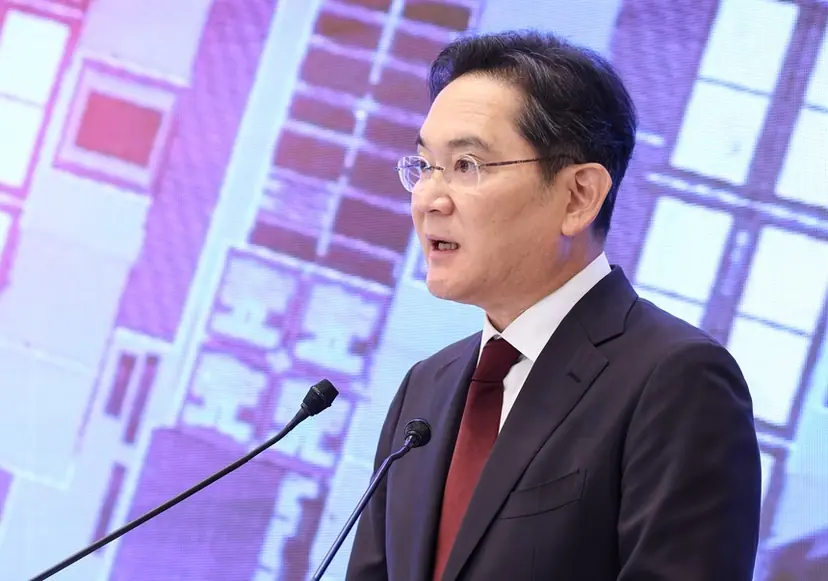
Samsung in 'Gwangju', SK in 'Southwest Region'… What is the AI Investment Map?
The report meeting proceeded with the government presenting the direction for the '3 Major Mega-Projects' and Samsung and SK disclosing their aligned investment plans. Subsequently, each ministry detailed infrastructure support measures, including power, water, and permits, to concretize the roles of the government and the private sector.
Chairman Lee Jae-yong, who spoke first, stated that semiconductor demand is rising faster than expected due to the spread of AI, and announced his intention to increase the speed of investment. Chairman Lee said, "Following Giheung, Hwaseong, and Pyeongtaek, the investment schedule for the Yongin national industrial complex has been accelerated significantly, and the timing to prepare new complexes has also been brought forward," adding, "As the President said, it is currently a speed war."
Samsung announced that it is reviewing Gwangju as a candidate site for a next-generation semiconductor production base. Chairman Lee explained that they comprehensively considered factors such as power and water supply conditions, human resource availability, and infrastructure support from central and local governments.
The company also unveiled its investment plan for semiconductor back-end processes. Advanced packaging processes, which are essential for the production of High Bandwidth Memory (HBM)—the core of AI semiconductors—will be concentrated in the Chungcheong region (Cheonan and Onyang), while physical AI such as humanoid robots and the group's internal AI data centers will be fostered with a focus on Gumi, North Gyeongsang Province. Samsung SDI006400 will continue its investment in next-generation all-solid-state batteries and Energy Storage Systems (BESS) in Ulsan, while Samsung Heavy Industries010140 will focus investments in Geoje, Samsung Electro-Mechanics009150 in Busan, and the bio business in Songdo, Incheon.
Chairman Lee stated, "I am confident that if companies, the government, and local municipalities join forces, we can create an irreplaceable South Korea," adding, "We will continue to maintain world-class competitiveness based on technological innovation and talent cultivation."
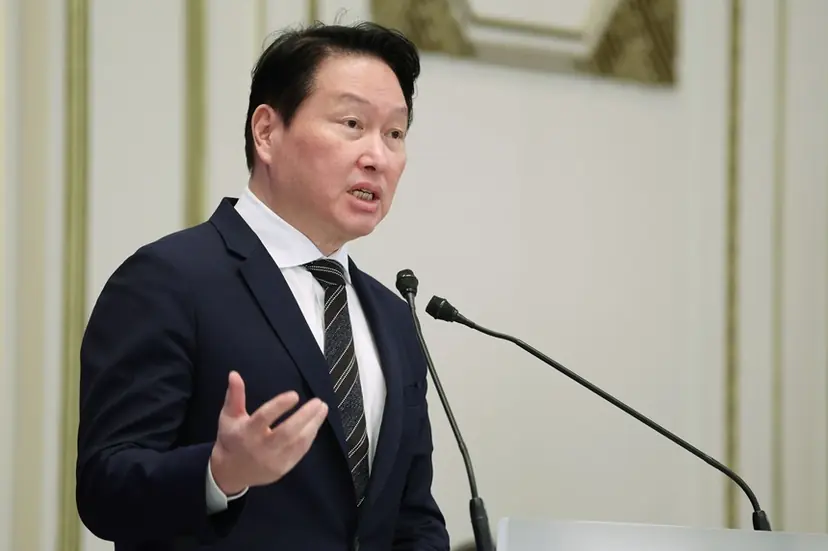
While Samsung put forward a nationwide investment vision, SK led with a massive investment plan targeting the AI era. Chairman Chey Tae-won defined AI data centers as 'AI Factories,' stating, "The key to the AI era is not storing data, but producing intelligence." He added, "South Korea must become a country that exports intelligence, not one that just consumes AI," emphasizing that AI infrastructure must be cultivated as the foundation of national competitiveness.
SK plans to build AI data centers with a total capacity of 15 gigawatts (GW) by 2035. It first proposed creating a 5-gigawatt capacity in key locations across the country in stages, followed by an additional 10-gigawatt expansion considering power, water, and land conditions. An investment plan of approximately 1,000 trillion won for the AI data center business was also mentioned.
Specific semiconductor investment plans were also disclosed at the meeting. SK Hynix000660 decided to accelerate the construction of the Yongin Semiconductor Cluster, originally planned for completion in 2045, by up to 12 years. The plan involves the early execution of approximately 600 trillion won in Yongin to expand DRAM production, approximately 100 trillion won in Cheongju for NAND flash, and an investment of approximately 400 trillion won in the Southwest region to establish a new production base to address subsequent memory supply shortages.
Chairman Chey said, "Over the next 10 years, SK will continue to invest over 100 trillion won annually in Korea," adding, "Through the 1,000 trillion won investment in AI data centers and 1,100 trillion won for semiconductor supply expansion, we will contribute to enhancing South Korea's AI industry competitiveness."
In the subsequent Q&A session, demands for institutional improvements to enhance the execution of large-scale investments were raised. Kwak Noh-jung, CEO of SK Hynix, suggested expanding the scope of the Special Act on Semiconductors and improving education and living conditions in local industrial complexes, while Samsung Electronics Vice Chairman Jun Young-hyun requested swift permit processes and the establishment of stable power and water supply systems.
"Government to Prepare Foundations for Corporate Investment"… Package Support Including Power, Water, and Cities
The government presented semiconductors, AI data centers, and physical AI as the three core pillars of the mega-projects, stating that it would accelerate the maintenance of infrastructure and systems to support private investment.
In his opening remarks, President Lee Jae-myung defined semiconductors, AI data centers, and physical AI as the "triangular axis for a great leap," and said, "We must pool all the capabilities of the government and the private sector to integrate these and build a Korean-style AI ecosystem with a sense of speed."
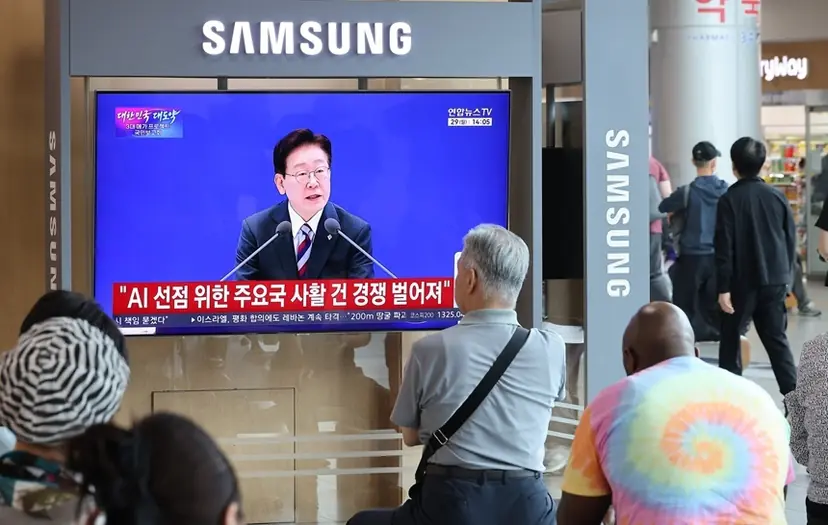
The government decided to prepare a national-level support system that organically connects semiconductor production bases, AI data centers, and the physical AI industry. The plan is to secure balanced national development and industrial competitiveness simultaneously by maintaining the high-tech industrial base concentrated in the metropolitan area while fostering the Southwest region as a new growth hub.
Minister of Trade, Industry and Energy Kim Jung-kwan announced that a nationwide semiconductor ecosystem would be built by expanding production capacity centered on the metropolitan and Southwest regions, while fostering the Chungcheong region as a hub for advanced packaging, and the Southeast and Daegu-Gyeongbuk regions as hubs for materials, parts, and equipment. To this end, 30 trillion won will be invested in next-generation semiconductor R&D over the next 15 years, along with plans to strengthen the competitiveness of materials, parts, and equipment while expanding production facilities.
Minister of Science and ICT Bae Kyung-hoon presented AI data centers and physical AI as key infrastructure for future national competitiveness. The government plans to build 8.4 gigawatts (approx. 550 trillion won) of AI data center capacity by 2029 and add another 10 gigawatts by 2035, investing a cumulative total of over 1,000 trillion won. Furthermore, it will push for public data opening, AI model development, and the creation of verification environments to foster physical AI industries such as robots, autonomous driving, and manufacturing AI.
Support for infrastructure necessary for the creation of large-scale industrial complexes will also be expanded. Minister of Climate, Energy and Environment Kim Sung-hwan announced that he would stably supply electricity and water to the Southwest semiconductor cluster and the Yongin national industrial complex, and push for the introduction of dedicated pricing for AI data centers and regional electricity rates. Minister of Land, Infrastructure and Transport Kim Yun-duk explained that a corporate-centered city development model would be prepared to create industrial complexes alongside residential, educational, and cultural facilities in line with corporate investment.
During the Q&A session, the issue of securing water for the creation of the Southwest semiconductor cluster was raised again. Yoon Seok-dae, CEO of K-water, stated, "Among the dams secured in the Southwest, we have about 400,000 to 500,000 tons available considering current surplus and some adjustments. If we utilize dams owned by local governments, power generation dams, and agricultural dams, it is sufficiently possible to utilize more than 300,000 tons," adding, "K-water will take full responsibility to ensure there are no setbacks in water supply for the Southwest region."
Suggestions regarding investment conditions for companies and the expansion of infrastructure followed. In response, President Lee Jae-myung said, "I will take personal responsibility for swift one-stop administrative procedures," and announced that a dedicated organization for mega-projects would be established in the Blue House to directly oversee permits and regulatory improvements. He continued, "Building a factory is not the goal; creating a city where people gather and live is more important," and emphasized that he would support firms and talent in settling in regions by providing living conditions such as education, medical care, and culture.
Presidential Chief of Staff Kang Hoon-sik explained subsequent schedules and the government's implementation system in a background briefing immediately after the report meeting.
Chief of Staff Kang said, "When the Special Act on Semiconductors takes effect on August 11, the Special Committee on Strengthening Semiconductor Industrial Competitiveness, chaired by the President, will also be launched. We plan to create task forces including all relevant ministries for each corporate project and place dedicated officials within the Blue House to support them using all available means."
He added, "Starting tomorrow, relay national report meetings are scheduled in the Honam, Chungcheong, and Yeongnam regions, and each company is expected to announce investment plans for those respective regions," and said, "With this investment, the so-called 'semiconductor southern limit line' has collapsed, and it has been proven that large-scale high-tech industries are possible in local areas as well. We hope to see additional investments in other regions as well."