

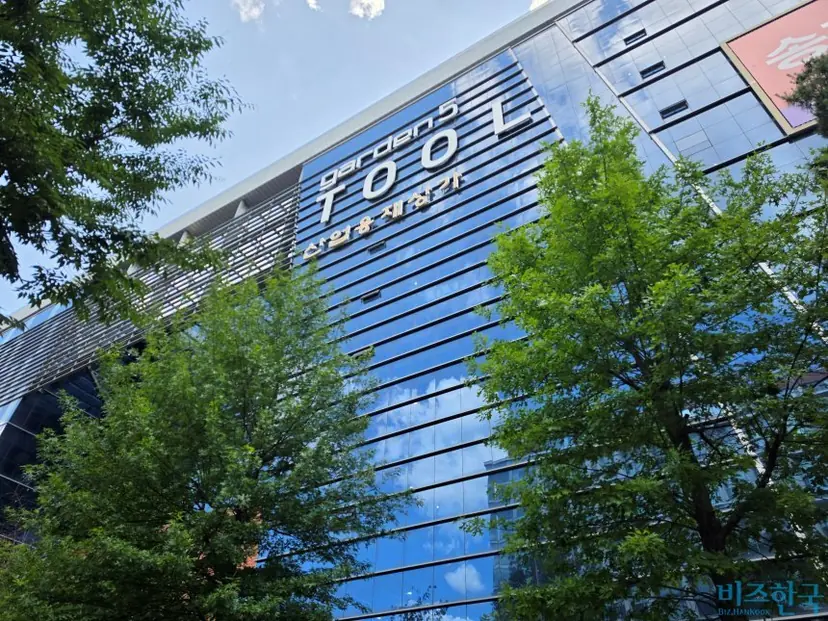
[비즈한국] On June 26, the first-floor hallway of the Garden Five Tool building in Munjeong-dong, Songpa-gu, Seoul, was quiet. Most shops along the corridor, designated for industrial tools, were either dark or empty. While a few stores remained open for business, visitors were rare. Several vacant units were clearly visible through their glass doors.
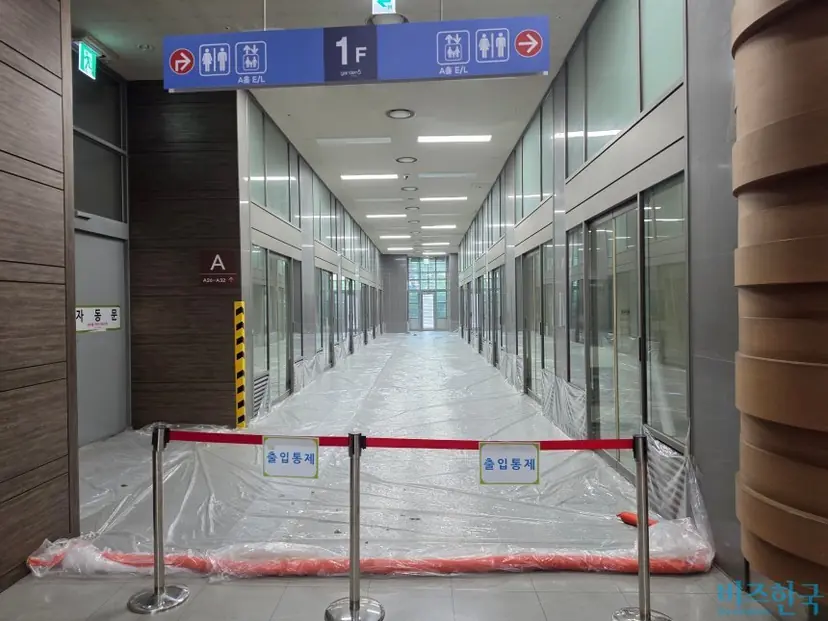
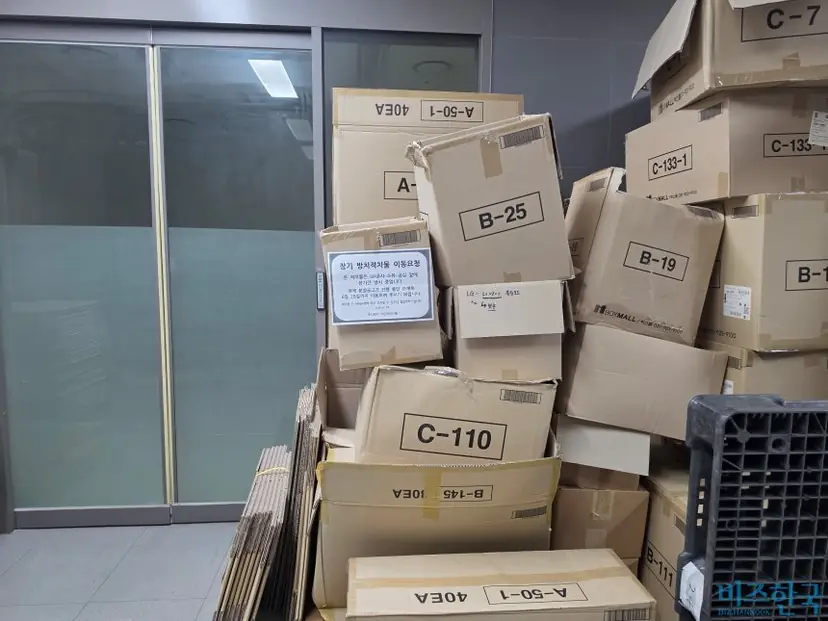
There were more occupied stores on the second floor and above compared to the first, yet vacant units remained in every section on the upper floors. Some sections were completely deserted. Empty boxes were piled up in some hallways, and notices were attached to boxes left in front of shops, requesting the removal of items that had been abandoned for a long time.
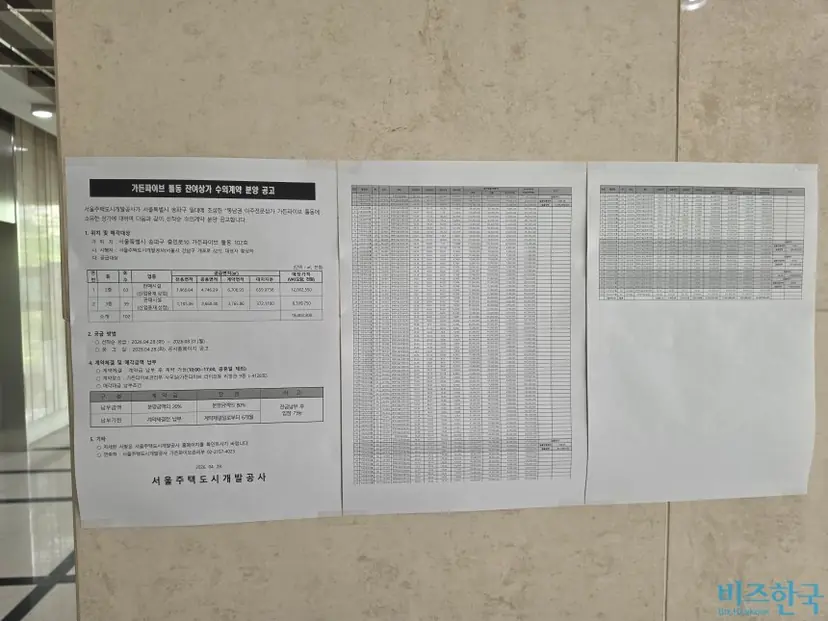
It has been two months since the remaining units in the Garden Five Tool building were put back on the market via private contracts, yet vacant spaces persist throughout the building. Merchants met that day hoped to see the number of vacant units decrease. A merchant surnamed A, who operates a tool shop in the building, said, "It would be welcome for those of us doing business here if the empty shops were filled," adding, "I hope facilities that can attract people's attention move in."
There are also concerns about the negative image associated with the Tool building. Another shop owner, B, noted, "I know people outside refer to this place as a 'ghost house'," adding, "Because of this negative image, I don't think even people who might want to open a shop here would come."
Seoul Housing & Communities Corporation (SH) issued sales notices for unsold units on the basement second floor and the second and third floors of the Tool building twice, in January and March of this year. Remaining units that failed to find buyers were transitioned to a private contract method in April, which allows for sales without a separate bidding process. These procedures were intended to dispose of the long-term unsold units. According to SH, the current vacancy rate for the Tool building is between 13% and 14%. The commercial complex, built as a relocation site for merchants from Cheonggyecheon, is still struggling to find new owners or tenants. A real estate agent in the area remarked, "There are some shops that have been empty for 18 years."
Garden Five was established to provide a relocation site for merchants who had to leave their business bases due to the Cheonggyecheon restoration project. The Tool building was intended as a space for tool and industrial equipment merchants. During public hearings for the relocation, the Seoul Metropolitan Government offered Cheonggyecheon merchants the priority to purchase 23㎡ units for 70 million won. However, by the time of the actual sale in 2007, the price had soared to between 150 million and 210 million won. As the financial burden increased, many merchants gave up on moving in.
The high sale prices led to a failure in early settlement, and the complex failed to build sufficient drawing power as a specialized tool and industrial equipment hub. The limited types of businesses permitted also exacerbated long-term vacancies. Even when empty shops were put back on the market, the business base that new buyers or tenants could expect remained limited.
Long-term vacancies have turned into a public burden. During the 2024 Seoul Metropolitan Council administrative audit, it was pointed out that SH had spent 58.6 billion won on management fees for vacant Garden Five units between 2009 and September 2024. This raised concerns regarding the fiscal burden on public corporations, as SH had to cover the management fees for units that remained unsold for long periods. However, in an interview with Bizhankook on the 29th, SH explained, "This is an accumulated amount since the period when there were many initial vacancies, and it does not necessarily reflect the current level of burden."
SH has pursued various measures to reduce vacant units. They have periodically issued sales notices and have continuously attempted to sell units, particularly on the first floor, as they believe these vacancies have a significant impact on the overall atmosphere of the commercial district. In 2020, they discussed the entry of IKEA Korea to the first floor. In 2021, they converted the fifth floor of the Tool building from a retail facility to an office facility before selling it off. Despite these attempts, empty shops remain in the Tool building.
Another reason it is difficult to reduce vacant shops is the strata ownership structure. The Tool building was sold in small units of approximately 7 to 10 pyeong. To attract large tenants or change the usage, the interests of existing owners and individual buyers must be reconciled. An SH official stated, "It is not easy to obtain consent to change the usage or pursue other methods in a building with a strata ownership structure."
SH plans to focus on reducing vacancies through priority sales and will consider partial leasing if necessary. However, they explained that conversion to leasing is difficult due to opposition from existing owners. SH also stated, "We plan to promote a bulk supply of the first floor of the Tool building in early July," adding, "We believe that if the first-floor supply is successful, it will also help resolve vacancies on the second and third floors."
Experts point out that repeating the sales process alone is unlikely to resolve long-term vacancies. They argue that repeatedly offering vacant units for sale while maintaining the initial sales method and strata ownership structure is unlikely to lead to actual demand.
Yoo Sun-jong, a professor of real estate at Konkuk University, said, "From the beginning, this type of commercial complex should have been leased, not sold," adding, "Because it was sold, the individual buyers have their own conflicting interests, creating a structure where it is difficult to reach a consensus for new development or usage changes."
Professor Yoo believes that there are limits to only selling the remaining units. He stated, "To normalize a commercial building where interests have already become complicated, there needs to be a capable entity to take charge and manage it." He suggested that SH should set up a special budget and a separate operating framework to pursue a practical normalization plan.
Shin Bo-yeon, a professor at Sejong University's Department of Real Estate AI Convergence, suggested that it is necessary to move away from the existing tool-focused utilization and rethink the building's usage and operation. Professor Shin stated, "It is necessary to bring in facilities that can attract people more effectively than tool shops."
Professor Shin suggested that it is necessary to consider options such as attracting large-scale stores or repurposing the space for complex retail or office facilities. She added, "There are limits to a method where individual buyers operate their own units separately. One could also consider finding an entity to operate specific zones in bulk through a master lease method." Master leasing is a method where an operator leases the space in bulk and manages sub-leasing and operations. However, Professor Shin added, "Looking at other shopping mall cases, the overall environment for commercial facility operation is not easy, so this method would also be practically difficult."