

[비즈한국] Apple has raised the prices of almost all its products, including MacBooks and iPads. In fact, everything except the iPhone has seen a price increase. The suddenness of the hike is quite startling, and the scale of the increases is significant.
The MacBook Air, centered on being the entry-level model, has jumped from 990,000 won to 1,190,000 won, a 200,000 won increase, while the base model of the M5 MacBook Air has gone from 1,790,000 won to 2,190,000 won. That is a massive hike of 400,000 won all at once. The reason for this price increase clearly lies in memory costs. While one might feel that more expensive models have increased more, they have not risen proportionally to the actual product price, but rather exactly by the amount of the increased memory cost. It appears that Apple is raising prices by approximately 200,000 won per 8GB of memory.
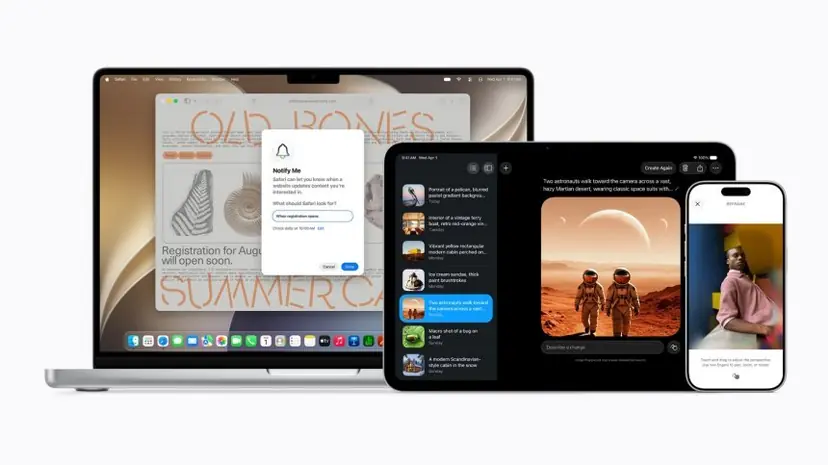
The most surprising case is the Apple TV. The 64GB base model, which was 219,000 won, is now 359,000 won—a whopping 140,000 won or 64% increase, and the 128GB Ethernet model went from 249,000 won to 449,000 won. It is truly staggering. That is an 80% hike. This is quite extreme considering it uses DDR4 memory and has a smaller capacity. This likely happened because DDR4 memory production has almost come to a halt. Samsung, SK Hynix, and Micron have all stopped producing DDR4, leading to a lack of inventory and compounding the supply crisis.
We are living in a truly strange world. The best strategy right now is to buy at the launch price whenever anything comes out. You cannot even blame Apple for this. Even though it was sudden, it wasn't without warning. Just last week, CEO Tim Cook gave a message that Apple had no choice but to raise product prices due to memory costs.
I thought it might be reflected in the next new product launch and was taking it easy, but if Apple went as far as to warn about price hikes, it meant that supply costs had already hit the ceiling. CEO Tim Cook is originally an expert in SCM (Supply Chain Management). He knows more about optimal suppliers, production volumes, and cost fluctuations for necessary components than anyone else, and he is arguably the best person on Earth at adjusting these factors to secure a stable supply.
Yet even CEO Tim Cook stated that in his 40-year career, he had never seen anything like this. He noted that it is the first time component prices have risen so unpredictably. I have also watched the entire growth process of the PC industry, and while there have been times when memory or processor prices skyrocketed, this is the first time I have seen them rise so sharply in such a short period, with no end in sight.
Apple likely anticipated this to some extent and made preparations, but in the meantime, Micron also ceased production of PC memory. This is not something that will be resolved this year or next; it is a "barley hump" (a difficult period) that we will have to endure for several years, and it is possible that prices may never fall below this level again. Memory price hikes must be reflected quickly, and this price increase should be viewed as securing stability not just for today, but for the next few years. Being the person who knows best that constantly adjusting prices is fatal to corporate and product trust, he is acting now.
This is why CEO Tim Cook seems to be closing the chapter. Incoming CEO John Ternus will take over in the fall, and raising prices immediately upon his appointment would inevitably invite criticism from the market regardless of the current situation. Instead, having supply chain expert CEO Tim Cook explain the situation may win the market's understanding and greatly ease the burden on the next CEO. The market is also closer to saying "it was bound to happen" rather than blaming Apple for this price hike. They actually held out for a long time.
The problem is that this is not something that will end in the short term. It stems from a complete supply shortage, and because the world has already chosen AI as the next platform, there is no looking back. A war that no one can stop has begun, and the winner will be the side that possesses the most GPUs and memory. Memory supply contracts are already signed through next year, and even 2028 does not guarantee a breather. We have reached a situation where we must accept this as the new normal.
Two perspectives overlap here. From the viewpoint of shareholders of Samsung Electronics005930 and SK Hynix, they would hope that this supply shortage crisis does not end. The surprising performance of both companies right now is not due to increased production or revolutionary products, but simply because the market price of DRAM itself has risen. Just until early last year, theories about a memory crisis were rampant, and both companies were struggling to deal with oversupply. Even the new semiconductor clusters in Pyeongtaek and Yongin, which are attracting so much attention now, had recently slowed down construction and even halted it in 2023 and 2024.
However, as the trend of companies building their own AI data centers—rather than relying on OpenAI, Google, or Anthropic—took hold, demand for memory exploded. Not just companies, but countries are also stepping forward to secure the independence of their artificial intelligence technology through so-called "Sovereign AI." Yet, the supply of HBM is already fixed. Micron is starting to supply it, but that is merely a drop in the ocean.
New factories will start churning out products gradually from the second half of next year, and production capacity will increase by 2028. But memory is the most sensitive area in terms of supply and demand, so prices won't drop sharply anytime soon, and it is unclear how much of that capacity will be allocated to consumer-grade memory. Success in mass-producing DDR5 memory by Chinese companies that failed to enter the global HBM market is being touted as almost the only solution right now.
From a shareholder's perspective, this precarious situation where the super-cycle continues is a good thing as it leads to profit. In fact, the whole country is proud of the record-breaking achievements of these two companies and is cheering them on. It is certainly a good thing that Korean companies are occupying the most important axis of the AI market. There must be many who have achieved great results in the stock market as well.
However, from another perspective, only a very few benefit from these memory gains. Above all, since this performance stems from a total supply shortage, it is shaking up prices across the existing ecosystem. Sony has already raised the price of the PlayStation 5 countless times, and recently increased the scale of those hikes. Microsoft has also raised the price of its Xbox game console, which wasn't selling well anyway. PC and smartphone prices are reflecting memory prices that have already risen more than fivefold in real-time. Because this is linked to the operating costs of not just AI but also general data centers, subscription fees and other service prices are also following suit. Since there is no device that doesn't use memory, the impact will soon spread to cars, home appliances, and even construction.
Apple's price hike is a sign that no one can hold out anymore. In fact, we now have to think seriously. The convenience and innovation of AI are welcome, and the growth of our companies within it is gratifying. But on the other hand, we are facing a regression in performance for the first time in the 50-year history of the PC. This ecosystem, which has always grown based on faster processors, more memory, and more storage, is experiencing a massive wall for the first time.
We have entered an era where it is difficult to predict how many more years we will have to hold onto the smartphones in our hands, the PCs on our desks, and the game consoles in our living rooms. If you need something, buying it now is the cheapest it will ever be. New product launches will shrink further, and consumers may have to look back at the abundance of the past as a memory.
The growth of Samsung Electronics and SK Hynix is not a simple celebration. It is an achievement made at the cost of the daily lives of people all over the world. While we should not blame them, there are mixed opinions on how to accept this unfamiliar trend. Every company at the center of this must realize that this is a path of heavy growth that carries responsibility.
Like all resources in the world, all computing resources in the world are limited. Perhaps the computing power we can create with our current technology does not yet meet the ideals of AI. Ultimately, we have funneled resources in one direction, and we are trading the convenience of AI for our daily digital experiences. The affluent IT era that everyone enjoyed as a matter of course is over. The receipts are arriving one by one.