

[비즈한국] An interesting personnel shift has emerged in the European startup ecosystem. Judith Dada, a former General Partner at the German venture capital firm Visionaries, has joined the Berlin-based AI startup Langdock as a co-CEO. Langdock is an enterprise AI operations platform that helps companies utilize multiple AI models—such as OpenAI, Anthropic, Google Gemini, and Mistral—within a single platform.

This news has garnered attention in the European startup scene not simply because a famous investor moved to a startup. As Dada becomes co-CEO of Langdock, she will also retain her role as a Senior Partner at Visionaries. In other words, she has not fully transitioned from an investor to a startup operator, but rather stands on the boundary between venture capitalist and startup CEO.
VC Mobility in Europe = A Strategic Agenda for Europe
In Europe, the movement of venture capital investors into startup operational roles has been gradually increasing. However, it is still rare for an active investor to take on a top leadership role at a company in their own portfolio while maintaining their relationship with the venture capital firm. Thus, Dada's move is interpreted less as a simple career change and more as a symbolic event indicating the direction of European venture capital in the era of AI.
A similar case has already occurred in Germany. Uwe Horstmann, co-founder of the German VC firm Project A, became the CEO of German defense startup STARK in 2025. STARK develops drones and unmanned defense systems and has received funding from Sequoia Capital, the NATO Innovation Fund, In-Q-Tel, and Project A. Horstmann is a former German reserve officer and is known as a leading figure in European defense startup investment. His appointment as CEO of STARK was a case where an investor moved beyond the role of a mere capital provider and entered directly into the grand agenda of European security and technological sovereignty.
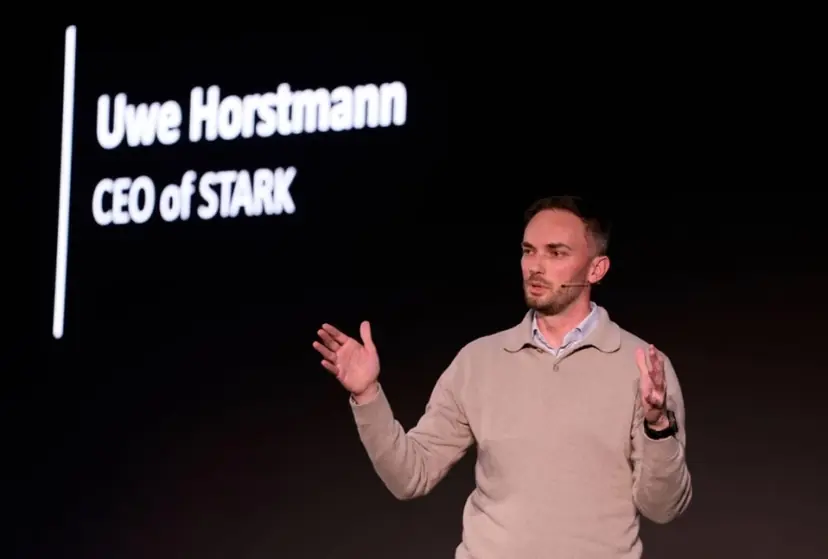
Dada and Horstmann's cases share a commonality. Both did not move to simple consumer apps or general enterprise software companies, but rather into fields tied to Europe's strategic agenda: one is AI, and the other is defense. In both fields, technology alone is not enough. Customer trust, government relations, understanding of regulations, capital procurement, and industry narratives are all required. In such sectors, a good investor can act as more than just an advisor; they can directly represent the company and persuade the market.
Active Movement Between VCs and Startups
In fact, over the past year or two, cases of people moving from venture capital to startup operations have notably increased in Europe. Sifted, a European startup media outlet, reported in 2025 that "European venture capital investors are leaving the boardroom to join startups." According to the article, many young investors are leaving VC firms to move into AI startups, developer platforms, growth teams, strategy/finance teams, and chief-of-staff roles. Examples include a senior investment manager from Lakestar moving to the AI tutoring startup Praktika, an investor from White Star joining the growth team of the AI data startup Encord, and an investor from Hedosophia becoming a chief of staff at the developer platform Gitpod.
There are several reasons for this phenomenon. First, the European VC ecosystem itself has entered a stage of maturity. In 2021, amid a startup investment boom, venture capital was one of the most attractive career paths. However, as interest rates rose, startup valuations were adjusted, and fund formation became difficult, the pace of the VC industry slowed down. Especially for early-career investors, spending years reviewing investment opportunities, attending meetings, and writing investment memos began to seem less appealing than the experience of actually building a company.
Second, AI is accelerating this trend. AI is not just a new industrial sector; it is changing product development, sales, organizational operations, cost structures, and how customers adopt technology. The investment formulas of the past SaaS era do not necessarily apply in the AI era. It is no longer enough for an investor to analyze a company from the outside. The "field sense" of actually creating a product, deploying it, observing customer reactions, and repeating experiments on a weekly basis has become important. Therefore, some investors have chosen to become "creators" rather than "watchers."
Third, the discourse on European technological sovereignty is growing. There is an increasing awareness that Europe should not be overly dependent on the U.S. or China in areas like AI, defense, energy, semiconductors, and quantum technology. Startups in these fields are difficult to grow by simply making a good product. Relationships with government, large corporations, research institutions, regulatory bodies, and defense/industrial clients are crucial. Here, an investor with a network and a narrative taking on the role of CEO or co-CEO can send a strong signal to the market.
What about the Korean startup scene?
In Korea, there was a case in 2025 that sparked debate when an investor became a startup founder. This was the case of Ryu Joong-hee, CEO of FuturePlay, who stepped down from his position to found RLWRLD, a robotics foundation model startup. RLWRLD launched in 2025 with a 21 billion KRW seed investment and has since been noted as a leading startup in the field of physical AI, raising additional funds centered on strategic investors.
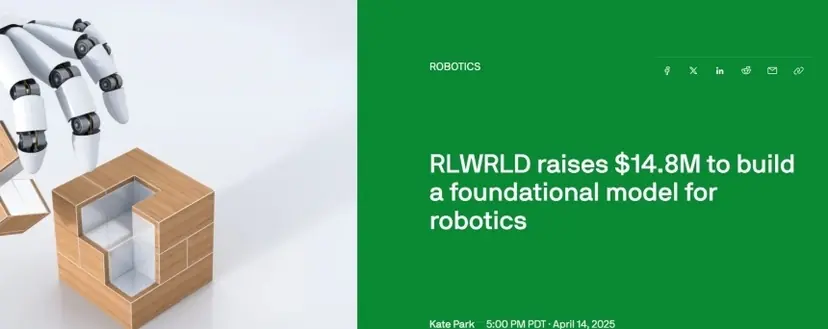
The cases of Ryu Joong-hee and Judith Dada seem similar but have an important difference. CEO Ryu resigned from his VC firm to become a founder again. In contrast, Dada is in a structure where an active VC partner becomes the co-CEO of a portfolio company while maintaining ties to her investment firm. Therefore, from the perspective of conflicts of interest, the Dada case is actually more complex.
One might ask if a VC investor becoming the CEO of a specific portfolio company would lead to the investor's time and network being concentrated on a single firm. Fund LPs might ask how the change in the role of a key manager affects fund operations. In follow-up investment rounds, controversies could arise regarding valuation, pro-rata rights, existing investor participation, and investment in competitors.
Nevertheless, this trend cannot be viewed solely in a negative light. Rather, it poses important questions to the Korean startup ecosystem. In fields with fast technological transition speeds like AI and robotics, should investors always remain outside as mere evaluators? Is it harmful to the ecosystem for an investor with founding experience to become a founder again, or is it a natural cycle to solve bigger problems?
For a long time, the Korean startup scene has relatively clearly distinguished the roles of "founder," "venture capital (VC)," "accelerator (AC)," and "corporate venture capital (CVC)." However, in the era of deep tech and AI, these boundaries are highly likely to blur. Good founders becoming investors, good investors becoming founders again, successful startup operators creating new funds, and VCs intervening deeply in the establishment and growth of companies in specific tech areas may become more common. This could be a sign of a maturing ecosystem.
However, the premise is clear. The more the boundaries blur, the sharper governance must be. It is possible for an investor to become a founder, become the CEO of a portfolio company, or maintain relations with an existing investment firm. But in that process, the notification to LPs, key-man clauses, conflict of interest management, competition with existing portfolios, scope of fund resource usage, and adjustments to decision-making authority must be clear. These are not issues that can be dismissed simply with the justification of a "good vision" or a "major technological transition period."
Dada’s joining of Langdock has sent a strong message to the European AI ecosystem. The message is that if you want to talk about European AI sovereignty, investors can no longer remain mere observers. The move of Project A's Horstmann to STARK can also be interpreted in the same context. The trend of European VC investors entering the startup field is not just a career fad, but a signal that the role of the investor is changing during a period of technological transition.
Similar movements will likely increase in Korea as well. This is especially true in fields like AI, robotics, defense, energy, bio, and semiconductors, where capital, technology, industrial clients, and policy networks are all required simultaneously. What is important is not to rigidly divide who is a VC and who is a founder, but whether responsibilities shift accordingly when roles change, and whether that change is managed in a way that enhances the ecosystem's trust.
Ultimately, the question converges into one: Is an investor someone who evaluates companies, or someone who builds them? In Europe, that answer is changing little by little. That change will soon arrive in the Korean startup scene.
The author Lee Eun-seo majored in law in Korea and studied theater in Berlin. She is based in Berlin, a city of art and a European startup hub, and leads 123Factory, which connects the startup ecosystems of Korea and Germany by growing alongside the city.