

[비즈한국] The Samsung Biologics207940 Sangsaeng (Mutual Growth) Labor Union is withdrawing from the Samsung Group's supra-enterprise union to pursue an independent path. A total of 2,479 out of 4,005 union members eligible to vote participated in the withdrawal ballot, with 96.5% of participants voting in favor.
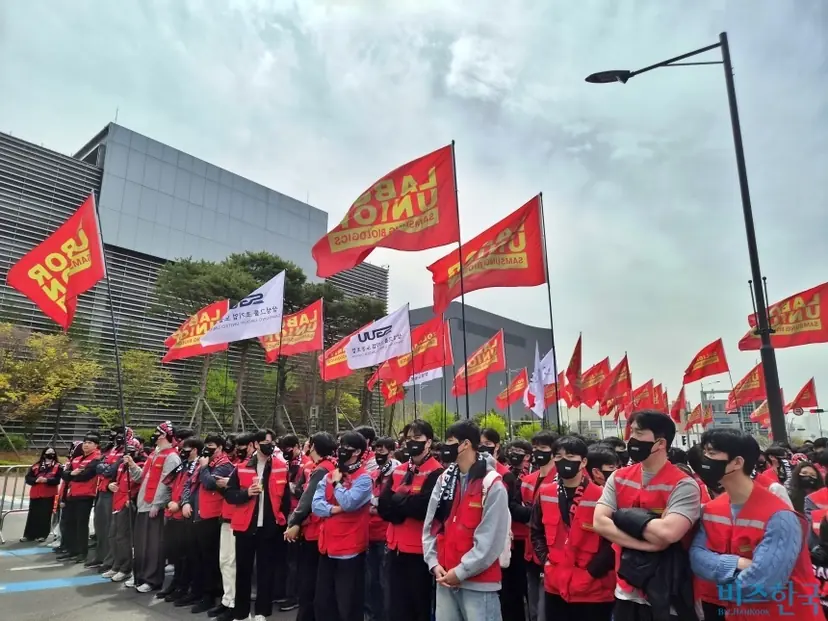
Union Chairman Park Jae-sung stated in an interview with this publication on the 28th that the primary motivation for the withdrawal was to secure an independent agenda specific to Samsung Biologics. Despite previously leading efforts to expand the influence of the Samsung Group's supra-enterprise union, such as arranging meetings with the Samsung Electronics005930 branch and the SK Hynix000660 union, the leadership concluded that these efforts hindered negotiations for Samsung Biologics specifically.
Chairman Park explained, "The management pressured us during negotiations by using the settlement levels of other affiliates as a benchmark, asking why Samsung Biologics couldn't reach a deal when other supra-enterprise union affiliates had." He added, "We ultimately decided that drawing a line to emphasize that we are clearly different from other affiliates and that we require our own independent agenda is more advantageous for persuading our internal members and pressuring the management." Based on the achievement of exceeding 2 trillion won in operating profit for the first time in company history last year, the union is demanding a compensation system reflecting the unique nature of the business, such as abolishing the cap on OPI (Overall Profit Incentive), establishing a job allowance, and improving working conditions for shift workers.
Regarding rumors of conflict with other affiliate unions, he drew a firm line. Chairman Park emphasized, "There were no major conflicts with other union members; this is merely a strategic choice to effectively push through our own specific demands."
He also addressed concerns that leaving the supra-enterprise union signaled a shift toward a hardline stance. Chairman Park stated, "Having already fully demonstrated the union's impact through the first general strike, we are not considering a second one. Our position remains that resolving issues through amicable dialogue is best, and we will diligently participate in the negotiations scheduled with management for the 1st and 2nd of next month."
While both labor and management have not let go of the negotiation process, an immediate turnaround seems unlikely. The key variable is expected to be the court's ruling on the injunction to prohibit industrial action, which is anticipated in mid-July. This ongoing injunction, filed by the management on the grounds that the union's work-to-rule campaign and strikes are causing production setbacks, will determine whether the union's actions infringe upon management rights and maintenance obligations of production lines, or if they constitute a legitimate exercise of labor rights.
Chairman Park also noted, "I suspect negotiations will continue until the court's injunction ruling is issued," adding, "There may be changes in our subsequent actions depending on the court's decision," signaling that the union also views the court's ruling as a turning point for the future of labor-management relations.