

[비즈한국] Artificial Intelligence (AI) is transforming not only industries and daily life but also national administration and the oversight system. The National Police Agency, the Supreme Prosecutors' Office, and the National Tax Service have recently established or expanded AI-dedicated organizations and have begun building systems to incorporate AI into investigations, audits, and civil affairs. While the goal is to increase efficiency and accuracy, the weight of adopting AI is significant given that the information and authority handled by these institutions are directly linked to the basic rights of citizens. BizHankook examines the current status of AI transformation among the three major supervisory agencies—the police, prosecution, and tax authorities—and the challenges remaining in the process.
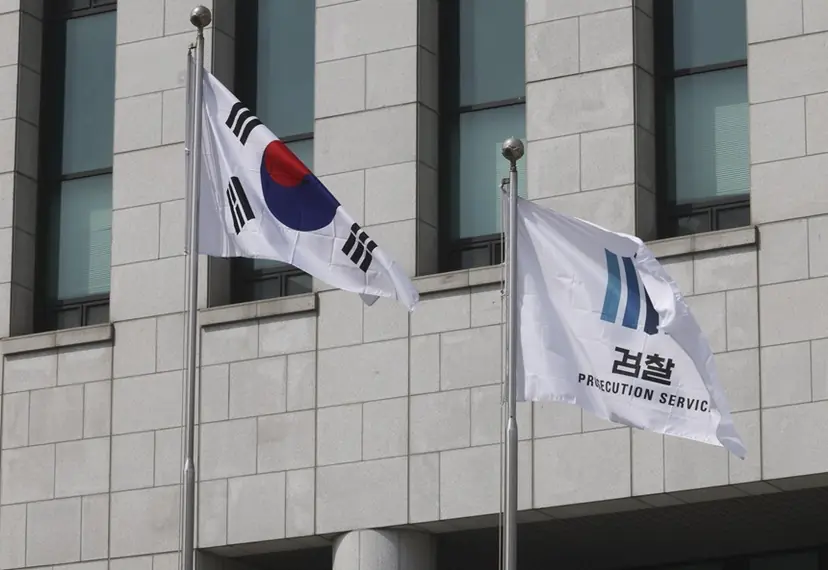
The prosecution, facing reorganization into a Prosecution Service and a Serious Crimes Investigation Agency (SCIA), is introducing generative AI for digital evidence analysis. It has commenced the construction of a national digital investigation support system where AI automatically classifies, analyzes, and summarizes digital evidence obtained from mobile phones, PCs, and other devices. Even amidst the abolition and restructuring of the Prosecutors' Office, the construction of next-generation digital investigation infrastructure—essential for investigations and maintaining public prosecution—appears to be accelerating.
AI Reads Digital Evidence… Full-Scale Design of Investigation Support System Begins
According to BizHankook's findings, the Digital Investigation Division of the Supreme Prosecutors' Office recently signed a contract and is currently proceeding with the "AI-based National Digital Investigation Support System Concept Verification (PoC) and Information Strategy Planning (ISMP)" project. Initiated after a re-bidding process following the project's launch earlier this year, the core of this project is to automate digital evidence analysis by applying Large Language Models (LLM), Retrieval-Augmented Generation (RAG), and AI agents to the existing national digital investigation support system (iDEAS_Cloud).
The Supreme Prosecutors' Office determined that the current system had limitations in responding to new criminal methods, as it relied on manual analysis of unstructured data and was centered on simple keyword searches. Consequently, the plan is to fully upgrade the system to extract key information from vast amounts of digital evidence using AI and enhance analytical efficiency. It is reported that the prosecution views this project as a preliminary verification stage to decide whether to push forward with the main project next year.
This is significant in that it is the first step toward integrating generative AI into the actual digital investigation framework. While previously, analysts had to manually classify and search through massive volumes of digital evidence, the new structure could allow AI to extract key evidence and summarize and analyze it on a case-by-case basis. The Supreme Prosecutors' Office stated, "We have currently begun research and development, and we are aiming to complete it by January 2027."
The AI projects being pursued by the Supreme Prosecutors' Office this year are divided into two main pillars: upgrading investigation technology—including digital forensics, which encompasses the improvement of the national digital investigation support system—and building generative AI to support prosecutors' case-handling tasks. In the past six months, the prosecution has issued a series of AI-related contracts to establish a mid-to-long-term roadmap.

The construction of generative AI to support prosecutors' work is being conducted in parallel. The Information and Communications Division of the Supreme Prosecutors' Office is separately pursuing an ISP (Information Strategy Planning) to build a generative AI-based Criminal Justice Information System (KICS). This project involves designing an AI model exclusive to the prosecution that supports legal and precedent research, case record summaries, and the analysis of statements from involved parties. The plan is to build an AI model specialized for prosecutorial work by utilizing existing criminal case data and digitized criminal procedure documents. This is a response aimed at reducing workloads, given that the average processing time for criminal cases has increased from 126.8 days in 2018 to 312.7 days last year.
Efforts to expand the scope of AI application to the entirety of digital forensics are also underway. It is understood that the prosecution is concurrently working to secure next-generation forensic technology based on AI through research and development projects aimed at upgrading AI-based forensic science technology, as well as integrating deep learning-based analysis technology for forged or altered videos into the field. Research on securing deep learning technology, such as deepfake detection models, has moved into follow-up studies to supplement the initial research. The agency also plans to introduce new "AI-based video analysis equipment" for real-time identification of deepfake videos, with an investment of approximately 210 million won.
Who Will Operate AI After Reorganization? Can Prosecution Functions Be Entrusted to AI?
The prosecution's AI projects are also intertwined with organizational restructuring. The government is pushing for a reform that would split the Prosecutors' Office into a Prosecution Service and a Serious Crimes Investigation Agency (SCIA) this coming October. The Prosecution Service will be responsible for indictment and maintaining public prosecutions, while the SCIA will be reorganized to specialize in investigations into the six major serious crimes: corruption, economy, defense industry, narcotics, insurrection/foreign aggression, and cybercrimes. Following the amendment of the Government Organization Act, the prosecutor's authority to initiate investigations and command Special Judicial Police Officers (SJPOs) will be abolished.

It remains unclear which of the two agencies will inherit the AI systems promoted by the Digital Investigation Division and the Information and Communications Division. Even the key issue of whether prosecutors will retain supplementary investigation authority—a major point of contention in the revision of the Criminal Procedure Act—has been postponed until after the June 3 local elections. Furthermore, the legislative notice for the SCIA enforcement decree, issued by the Ministry of the Interior and Safety on the 22nd of last month, omits key details such as organizational size and the number of investigators.
While it is speculated that the digital forensics system for investigative support may be transferred to the SCIA, the possibility of operating systems closely tied to maintaining public prosecution—such as the Criminal Justice Information System and the prosecution's AI assistants—separately by function is also being raised. As the government has not yet disclosed detailed organizational and informatization structures, the operating entity has not been confirmed.
The Prosecutors' Office remains silent regarding related organizational restructuring, including the direction of AI system transfers.
Concerns persist. Experts cite data bias and the opacity of algorithms as primary risk factors. They also point out that due to the opacity of AI verification, defendants may find it difficult to respond to unreasonable punishments or indictments, and that it is unclear who bears responsibility when errors occur. Kim Il-woo, a senior researcher at the Sogang University Institute for Legal Studies, mentioned in a related paper, "The reason stakeholders cannot take clear legal action against AI systems stems from the opacity of data and algorithms," adding, "AI operators' reluctance to disclose specific algorithmic information citing trade secrets is directly linked to the infringement of the right to know."
In the legal community, it is argued that AI cannot mechanically replace the prosecution's core authority: the power to decide on indictment/non-indictment and the discretion of prosecution. Kang Hyun-seok, a military prosecutor at the Army Prosecutors' Group, analyzed, "Article 4 of the Prosecutors' Office Act defines a prosecutor as a representative of the public interest," adding, "To examine the feasibility of substitution by artificial intelligence, technical research must be conducted first on how artificial intelligence can guarantee the moral and ethical status of a prosecutor."
![[Law Enforcement AI Report] ① Is a Competent and Fair 'AI Cop' Possible?](https://s.bizhankook.com/attachments/2026/07/7985a02444ff_3f2b5028.jpg)
![[AI Report on Supervisory Agencies] ② [Exclusive] Prosecution to Introduce Generative AI for Digital Evidence Analysis](https://s.bizhankook.com/attachments/2026/07/2c4f2e1d1d74_e7fcd687.jpg)
![[Administrative Agency AI Report] ③ “Convenient Tax Payment, Fair Collection”: The National Tax Service’s AI Great Transformation Takes Off](https://s.bizhankook.com/attachments_webp_no_wm/2026/07/134365_no_wm_e3e2934a.webp)