

[비즈한국] Although the construction of data centers, an essential infrastructure in the AI era, is being pursued one after another in Korea, critics point out that the transparency of water resource usage is significantly lacking because information on data center water consumption is extremely limited. Given the nature of AI data centers that process astronomical computational tasks, cooling water is essential to dissipate the heat generated by servers. For this reason, the management of massive water resources consumed by data centers and the issue of transparency in water usage are emerging as key topics of discussion overseas.
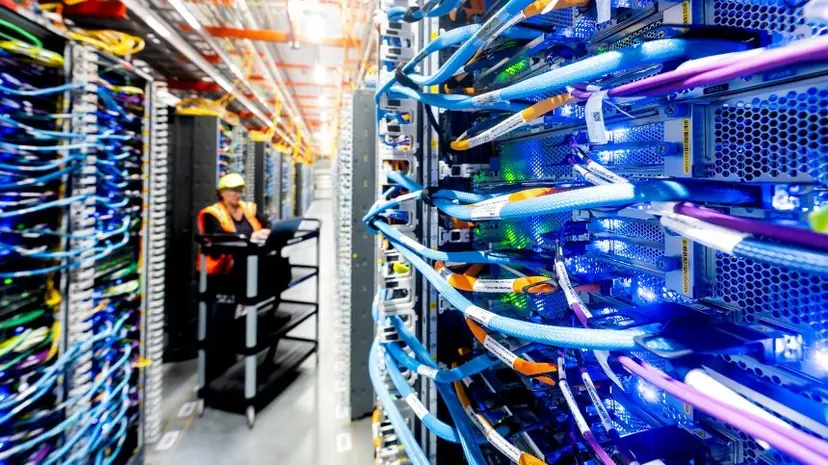
According to construction contract statistics for the first quarter of 2026 released by the Ministry of Land, Infrastructure and Transport, private sector infrastructure investment in Korea has recorded explosive growth. Total construction contracts in the first quarter of this year reached 74.1 trillion won, a 23.4% increase compared to 60.1 trillion won in the same period last year. It was the private sector that drove this growth. The Ministry of Land, Infrastructure and Transport analyzed that the increase in contract amounts was led by large-scale projects, such as large-scale semiconductor production facilities and new industry investments like data centers in the private sector. This is supported by the fact that industrial facility contracts within the civil engineering sector surged by 159.0% year-on-year to 11 trillion won, and the building construction sector increased by 16.6% to 45.1 trillion won due to the expansion of private factories.
Large-scale investments by conglomerates are also becoming tangible. GS078930 Group has selected the AI data center business as its future growth engine and is reportedly discussing the specific scale of the projects with the government, with Dangjin in South Chungcheong Province and Donghae in Gangwon Province being considered as strong candidate sites. The projects being discussed are ultra-large AI data centers, each with a capacity of 1.2GW (gigawatts). The plan is to build a data center value chain based on a stable power supply system, as Dangjin has a liquefied natural gas (LNG) combined-cycle power plant run by GS EPS, and Donghae has the power generation infrastructure of GS Donghae Electric Power.
As Resident Opposition Mounts, Global Big Tech Companies Start Water Restoration Efforts
While ultra-large data centers are springing up overseas, public sentiment toward them is becoming increasingly cold. One of the core reasons is the environmental burden and water shortage issues resulting from massive water consumption. According to an opinion poll conducted by global research firm Gallup in March this year, 71% of Americans strongly opposed the entry of an AI data center into their local area. This result reflects concerns that, along with power grid overloading, data centers could monopolize local freshwater supplies.
As public opinion worsened, representative global big tech companies such as Google, Amazon, Microsoft (MS), and Nvidia have recently rushed to announce high-intensity water management projects and innovative technologies.
Google, which was the first to take action, declared a 'Water Positive' goal back in 2021, aiming to replenish 120% of the freshwater it consumes back into local communities and watersheds. Not stopping there, Google announced on June 3rd an enhanced commitment to invest over $500 million (690 billion won) to improve public water infrastructure, while operating 165 water management projects across 97 watersheds globally.
Amazon Web Services (AWS) is also being proactive. Amazon announced a global commitment in 2022 to become 'Water Positive' by 2030, and stated on March 31st that it had achieved 75% of its goal as of 2025. In particular, it is accelerating water restoration projects, such as investing a staggering $235 million (360 billion won) in the Oregon community alone for replacing worn-out public infrastructure and groundwater conservation.
Microsoft is attempting a paradigm shift in the cooling process. Based on a new data center design for AI workload optimization introduced in 2024, Microsoft officially announced on the 24th the introduction and expansion of 'evaporation-free cooling and chip-level cooling systems' that do not evaporate water at all. Microsoft emphasized that this would save over 125 million liters of water per facility annually and that it had already achieved a water restoration milestone in fiscal year 2025, replenishing more water than its total water withdrawal across all global operations.
Nvidia, which is at the center of the data center frenzy due to the supply of large-scale AI chips, has also joined in. On June 22nd and 23rd, Nvidia unveiled high-temperature liquid cooling technology that can drastically reduce water consumption inside data centers. Through this method, which constantly recirculates warm coolant up to 45°C within a closed-loop system, Nvidia presented a blueprint to virtually eliminate water usage for internal data center operations, thereby preemptively blocking concerns about resource depletion.
The international community has also begun a joint institutional response. The 'Global Urban Data Centres Pact' was officially launched on June 24th at 'London Climate Action Week' in the UK to control the environmental impact of data centers at the city level.
Led by the C40 Cities Climate Leadership Group and joined by over 40 cities, including London, Phoenix, and Melbourne, this pact aims to establish standards to reduce the excessive burden the data center industry places on urban power grids, water resources, and local communities, and to promote eco-friendly and sustainable development.
At the event, UN Secretary-General António Guterres sent a warning to global AI companies, stating, "We must be honest about the hidden environmental costs behind the AI revolution." Guterres pointed out that "by 2030, the amount of water used by AI data centers could be equivalent to the annual basic living water for 1.3 billion people in sub-Saharan Africa," and urged for transparent measurement and public disclosure of carbon emissions and water usage resulting from data center operations.
Korean Data Centers Are 'In the Dark': Standards and Disclosure Needed
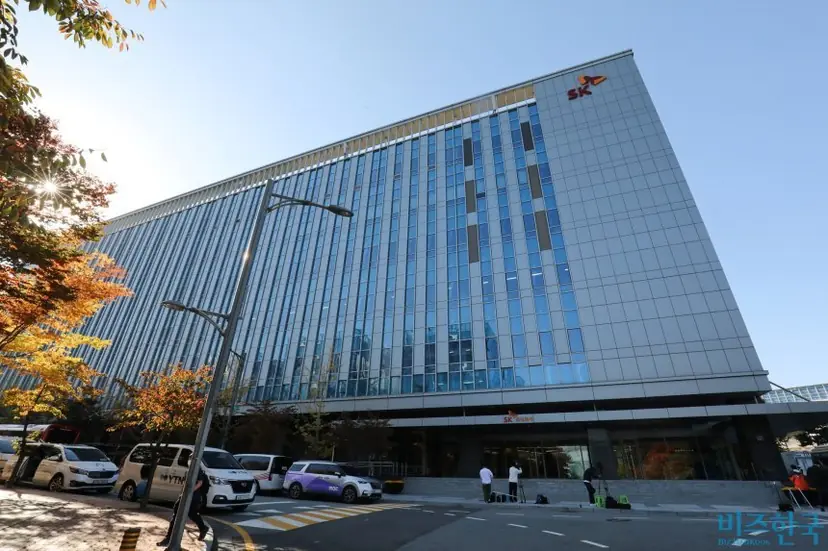
Unlike the global market, which is putting its life on the line to strengthen water accountability and transparency for data centers, Korea is still in its infancy. There is no proper compilation of information on exactly how much water data centers built in Korea or those scheduled for future construction consume, or how the hot water or wastewater discharged after cooling is managed.
Currently, Korea lacks a system to clearly regulate and classify AI data centers. Even the number of data centers varies depending on the ministry or agency conducting the count. Integrated management regarding the annual water consumption of data centers and their operating entities is essentially a void, and even the government fails to grasp the total water consumption properly.
At present, the water usage of domestic companies is only partially confirmed through 'sustainability reports' or ESG disclosures published autonomously by each company. Even then, if it is not included in the disclosure items, there is no way for third parties to verify it. The problem is that most disclosures are announced as a 'company-wide' total rather than at the data center level. In cases where there are multiple data centers, it is nearly impossible to grasp the specific impact and actual conditions a particular local data center has on its regional water resources.
Major overseas countries such as the European Union (EU) and Germany legally mandate that data center operators report their total water input and Water Usage Effectiveness (WUE) metrics to the government annually. In contrast, Korea lacks sufficient related regulations. There is also no disclosure system that allows residents to check the cooling water usage of massive facilities in real-time. It is a time when the introduction of related systems is urgently required, along with the government-level establishment of measurement standards, to ensure companies transparently disclose water usage in line with global trends.