

[비즈한국] It has been confirmed that Indonesia has completed the payment of its joint development contribution for the Korean KF-21 fighter jet. With the long-standing dispute over the contribution between South Korea and Indonesia effectively resolved, this is expected to have a positive impact on future negotiations for Indonesia's potential purchase of 48 KF-21 units.
As of the 26th, combining information from local Indonesian sources and domestic reporting, Indonesia recently paid the final balance of 63.6 billion KRW out of the joint development contribution owed to Korea Aerospace Industries047810 (KAI). With this, Indonesia has fully paid the adjusted contribution of approximately 600 billion KRW agreed upon with the South Korean government.
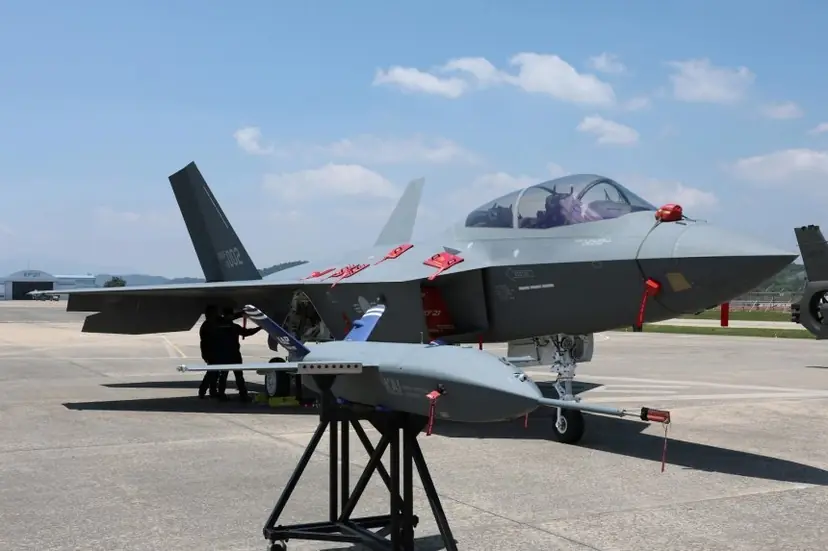
The Korean KF-21 fighter jet project began over 20 years ago under the name KF-X. However, it faced multiple assessments during its initial feasibility studies suggesting a lack of economic viability. This was because it was South Korea’s first attempt to develop a fighter jet, and the potential for securing an export market was uncertain. Consequently, state-run research institutes such as the Korea Institute for Defense Analyses (KIDA) recommended pursuing the KF-X through an international joint development model.
Relevant agencies, including the Defense Acquisition Program Administration (DAPA), engaged in discussions with Turkey, Indonesia, and others for international joint development. However, negotiations with Turkey fell through due to disagreements over terms, such as intellectual property rights. Subsequently, South Korea signed a 'KF-X Joint Development Basic Agreement' with Indonesia in January 2016, officially launching the KF-21 development project.
According to the original agreement, Indonesia was to cover approximately 20% of the total development cost of 8.1 trillion KRW, amounting to 1.6 trillion KRW. In exchange, Indonesia was to receive production-related technology for the KF-21, one prototype aircraft, and have about 10 of its engineers participate in the development process.
However, Indonesia delayed its contribution payments citing domestic budget constraints. By 2019, only 132 billion KRW had been paid, and the unpaid balance became a major risk factor for the KF-21 project. Tensions grew further in February 2024 following allegations that Indonesian technicians were involved in a classified document leak. That case was eventually closed without indictment after a lengthy investigation.
Following this, in August 2024, the Defense Acquisition Program Administration reached an agreement with the Indonesian government to adjust the total contribution to approximately 600 billion KRW, while also reducing the scope of technology to be transferred. This final payment brings the joint development contribution issue to a close and resolves a significant portion of the uncertainty surrounding the KF-21 project.
The remaining steps involve technology transfer and the provision of physical assets. According to reports, approximately 350 billion KRW of the 600 billion KRW contribution paid by Indonesia will be applied toward providing the 5th KF-21 prototype to Indonesia. The remaining 250 billion KRW will be valued based on technology transfers and the provision of development data. The specific scope of the technology and data to be provided to Indonesia is reportedly still under discussion.
The fact that the joint development agreement remained intact despite payment delays and security leak controversies is rooted in the project's origin as an international joint development venture. While the KF-21 is South Korea's first independently developed fighter, competitors like the U.S., France, and Sweden have already accumulated decades of experience and global sales networks. This logic necessitated securing a potential buyer as a joint development partner from the start.
However, considering the current status of K-Defense, some feel it is unfortunate that South Korea's defense industry capabilities and export potential at the time were evaluated too conservatively. Ultimately, while the joint development with Indonesia brought the burden of cost and security concerns, it also functioned as a gateway for the first potential overseas adoption of the KF-21.
With the completion of the contribution payments, attention is shifting toward Indonesia’s purchase contract for the KF-21. Indonesia is reportedly reviewing a plan to acquire 48 KF-21 units in three batches of 16. Negotiations for the first 16 units for the Indonesian Air Force are currently prioritized.
Combining information from local sources and domestic reporting, a significant level of consensus has reportedly been reached regarding the purchase price and delivery schedule. However, budget coordination within the Indonesian government remains. The Indonesian Ministry of Defense, Ministry of Finance, and the Ministry of National Development Planning (Bappenas) are said to be discussing funding strategies for the KF-21 purchase. A variable in the process is that Indonesia’s defense acquisition projects often require a mix of foreign loans and domestic budget allocation.
If inter-departmental cooperation proceeds quickly, there is a possibility that the KF-21 procurement budget could be finalized by the third quarter. However, the approval timeline could be delayed depending on the funding method and the results of government coordination. Nevertheless, with the joint development contributions paid in full, the negotiations for Indonesia’s purchase of the KF-21 are considered to have entered a more advanced phase.
![[Military Commentary] Can Merging Military Academies Alone Prevent a Repeat of 'Insurrection'?](https://s.bizhankook.com/attachments_webp_no_wm/2026/07/134815_no_wm_d0a713af.webp)
![[Military Tales] LIG's 'Secret Weapon' Anti-Drone Missile: Could it Shoot Down a North Korean Version of the Shahed?](https://s.bizhankook.com/attachments_webp_no_wm/2026/07/134404_no_wm_67d0cb50.webp)
![[Defense Story] Why Canada Submarine Bid Failure Proves Need for New Presidential Secretary for Defense Industry](https://s.bizhankook.com/attachments_webp_no_wm/2026/07/134454_no_wm_eee848e4.webp)
![[Military Story] [Exclusive] Indonesia Completes Final Payment of KF-21 Adjusted Contribution](https://s.bizhankook.com/attachments/2026/07/e8e440c2ed1c_17a7336a.jpg)
![[Mil-Duck Telling] The Root Cause of the 'Rubber Mallet Incident' That Caused Cracks in LAH-1 Engines](https://s.bizhankook.com/attachments/2026/07/50b076aac26a_6fa9356d.jpg)
![[Military Talk] Hanwha Unveils 'Drone-Blocking Command Armored Vehicle' N-MCV for the First Time](https://s.bizhankook.com/attachments/2026/07/096f15b33ac1_a76e4ddb.jpg)