

[비즈한국] "Do not assume that only the major shareholders' capital contributed to the company's growth. Are you not disparaging the value of other shareholders?"
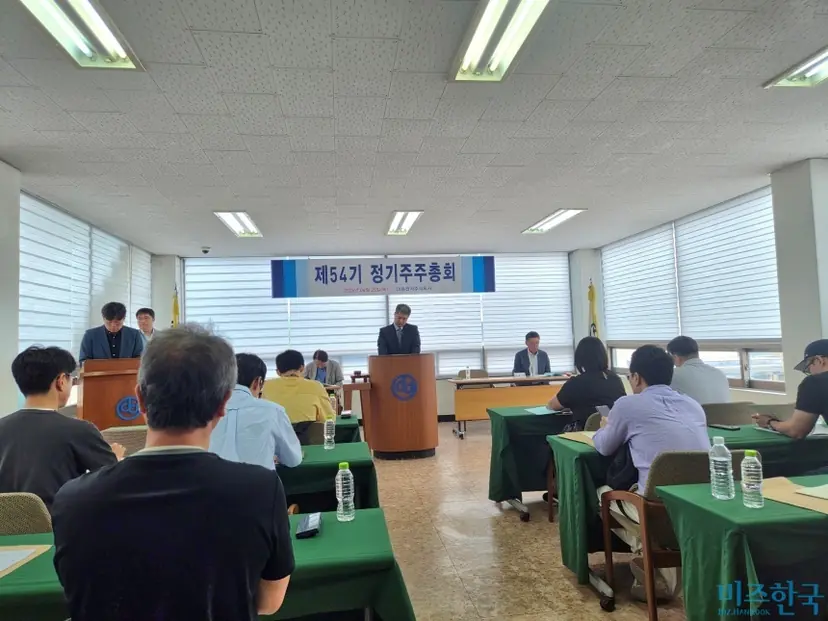
On the 25th, at the 54th Annual General Meeting of Shareholders held at the Daedong Electronics008110 headquarters in Gasan-dong, Geumcheon-gu, Seoul, the room was filled with the rage of minority shareholders who suffered massive losses throughout the liquidation and delisting process. About a dozen shareholders present launched sharp criticisms toward the management, who had allowed the company to be relegated from a listed firm to an unlisted one by neglecting qualified audit opinions for four consecutive years.
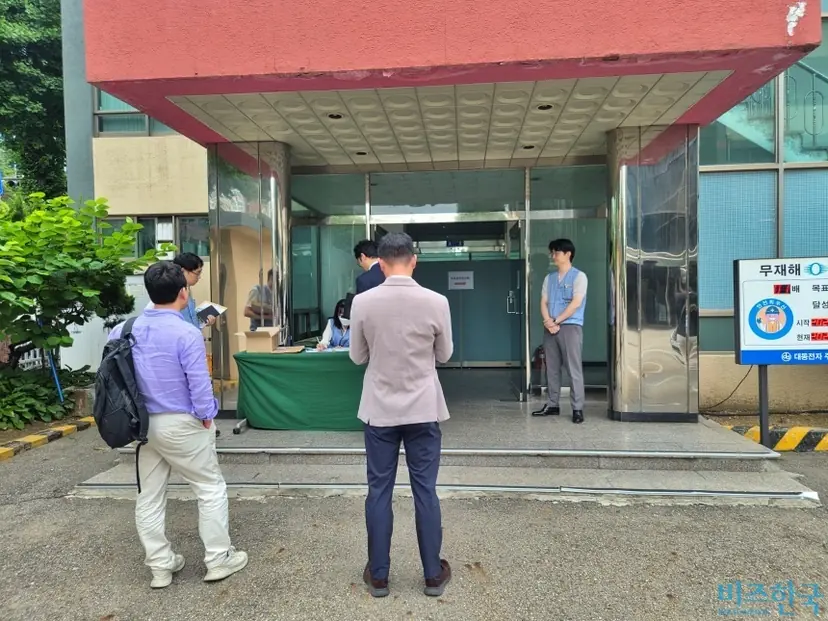
The main topic of the day was undoubtedly the reason behind the 'qualified audit opinion.' Since 2023, Daedong Electronics has received qualified opinions due to the lack of transparency regarding transactions and relationships with its Hong Kong-based affiliate, ZEGNA DAIDONG LTD. This served as grounds for a substantive review of listing eligibility, and Daedong Electronics was delisted from the KOSPI (Korea Composite Stock Price Index) on March 30th of this year.
According to the audit report disclosed at the meeting, a new qualification reason was added on top of existing ones: the failure to submit a debt valuation report regarding the put option for the Hong Kong affiliate, 'ZEGNA DAIDONG LTD,' sparking a sharp debate with shareholders.
Lee Kyung-sik, Chairman of the Audit Committee at Daedong Electronics, explained, "We did not receive a request from the designated external audit firm to provide those materials," adding, "If there had been a reasonable explanation or a specific request for data beforehand, we could have certainly submitted them." He further added, "We will meet with the accounting firm in early July."
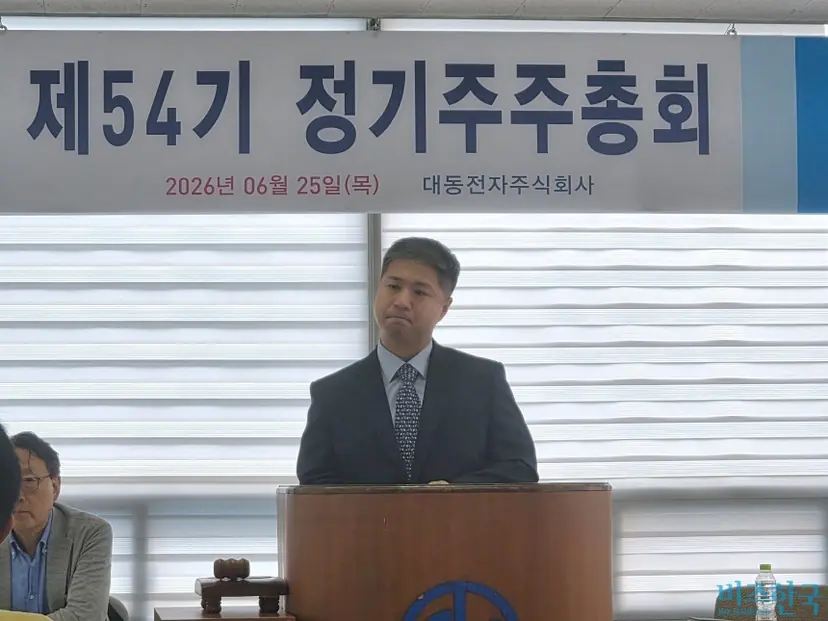
One minority shareholder questioned, "Isn't the largest shareholder of ZEGNA DAIDONG LTD the same person as the largest shareholder of Daedong Electronics? How can you justify failing to resolve the qualification issues for four years just because you couldn't get a single piece of paper together?" In response, CEO Lee Kwan-woo countered, "It is difficult to grasp the details due to the peculiarities of trade between China and Hong Kong. Despite our efforts to consult with the accounting firm and prepare the documentation, we absolutely lacked the physical time to respond within the audit deadline." However, the minority shareholders raised their voices, stating, "Claiming you couldn't submit data from a subsidiary effectively controlled by the same person is just an excuse and nothing more than wordplay. Aren't you being too complacent?"
The adequacy of the tender offer price proposed by the major shareholder ahead of the delisting was also a focal point of controversy. In the name of protecting minority shareholders, the company conducted an off-market purchase of shares at 15,040 KRW per share from April 20th to May 19th. During this period, 301,334 shares were contracted out of the 653,714 shares held by minority shareholders. The shareholders argued that the purchase price was excessively low, considering the net asset value, including the real estate held by the company.
To this, CEO Lee Kwan-woo maintained the position that "it was a decision made at the discretion of the major shareholder based on market transaction prices."
Another shareholder, expressing deep disillusionment, appealed, "The reason Daedong Electronics was able to grow for over 50 years was because of the capital invested not just by the major shareholders, but by the countless shareholders who trusted and waited for the company for a long time. Please do not disparage the value of the company that we, the minority shareholders, helped build with just a number like the tender offer price."
The meeting also devolved into a farce, dubbed a 'blind vote.' Essential materials that should have been provided to shareholders regarding agenda items such as 'Approval of the Statement of Appropriation of Retained Earnings' and 'Approval of Director Remuneration Limits' were not distributed until just before the vote. Some shareholders, resigned to the reality that they could not change the results through their own power, gave up on voting and left the meeting.
The situation regarding domestic business is even more severe. Revenue (4.6 billion KRW) has been nearly halved compared to the same period last year (8.7 billion KRW), and the operating loss has increased by 2.1 billion KRW (114%) to 3.9 billion KRW. The four-story factory is only operating in a portion of the first floor. The number of employees is also shrinking, showing a downward trend from 43 at the end of September last year to 40 at the end of December, and down to 34 by the end of March this year.
Conversely, the total remuneration paid to the five registered executives was 1.3 billion KRW, an increase of over 68% compared to 770 million KRW in the same period last year. Furthermore, the company has been under a tax audit by Investigation Bureau 4 of the Seoul Regional Tax Office since last May, raising the possibility of additional tax assessments.
A minority shareholder asked, "In a situation where domestic sales have plummeted by about 40% and losses are consistently occurring, with staff even being laid off, it is logically hard to understand how the management, instead of sharing the pain, ended up taking such large sums of money. Shouldn't the management also join in the hardship?"
CEO Lee explained, "This includes one-time costs such as a 1 billion KRW special bonus paid to the former CEO in consideration of their hard work during their tenure. It was paid within the legal director remuneration limits following a board resolution based on internal calculation grounds. This cost will not recur annually."
By the end of the shareholders' meeting, the gap between the management and the minority shareholders remained unbridged. The minority shareholders could not hide their disappointment and bitterness at the management's explanations. One shareholder, as they left, expressed their helplessness: "I came to the meeting hoping to hear a clear explanation regarding the articles circulating and the various allegations raised, but the company only offered excuses. I am leaving with a heavy heart, frustrated and saddened that not a single one of the concerns was resolved."