

[비즈한국] The Korea Fair Trade Commission (KFTC) has finalized a 3-billion-won consent decree regarding Coupang's private brand (PB) case. This decision stands in contrast to the delivery app cases of Baedal Minjok (Baemin) and Coupang Eats, whose consent decree applications were rejected despite proposing a 360-billion-won mutual growth plan. As allegations of unfair trade practices in delivery apps failed to pass the KFTC's threshold despite record-breaking support proposals, the industry is suggesting that Coupang Eats and Baemin may have lacked a genuine commitment to fundamentally improving the disputed business practices.
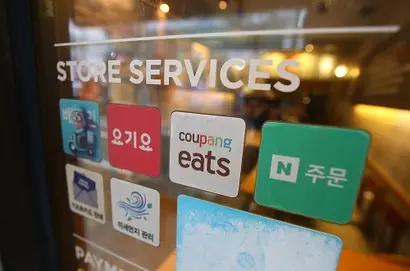
Coupang PB Consent Decree Confirmed, Delivery Apps Rejected… Divergent Judgments by KFTC
On the 23rd, the KFTC announced that it had finalized a 3-billion-won consent decree regarding allegations that Coupang and its PB subsidiary, CPLB, violated the Subcontracting Act. Coupang had been under investigation by the KFTC for allegedly providing written documents that lacked mandatory legal disclosures or official seals during the process of commissioning PB product manufacturing.
A consent decree is a system where the KFTC terminates sanction procedures if a business suspected of violating fair trade laws proposes voluntary corrective measures. Once confirmed, the business can settle the case without a final ruling on whether the law was violated, avoiding sanctions such as fines or referral to the prosecution.
According to the consent decree, Coupang and CPLB will improve their written ordering system and formalize the minimum production quantities and lead times in agreements before launching PB products. Furthermore, they will contribute a 3-billion-won mutual growth fund to support subcontracting firms in product development, promotions, consulting, and overseas market expansion.
This decision is garnering further attention as it comes shortly after the rejection of consent decree applications by Baedal Minjok and Coupang Eats. On the 18th, the KFTC did not accept the request to initiate consent decree procedures filed by Coupang and Woowa Brothers. Both companies had been under investigation for allegedly requiring 'most-favored-customer' conditions from restaurant owners and sought consent decrees to quickly settle the sanction procedures, but were ultimately unsuccessful.
The scale of the support plans is particularly notable. Coupang Eats proposed a 60-billion-won support package for affiliated stores, while Baemin offered a total of 300 billion won, including fee cuts, delivery cost subsidies, and coupon and promotional support. Baemin had emphasized that this support plan was exceptionally large compared to previous consent decree cases.
While Baemin and Coupang Eats' applications were rejected despite their record-breaking proposals, the approval of Coupang's 3-billion-won plan has led to various interpretations regarding the KFTC's criteria.
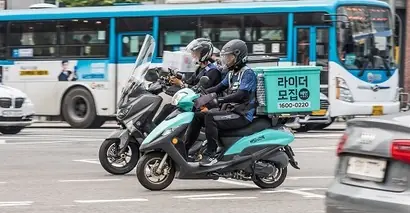
Why Did the Delivery Apps' '360 Billion Won' Plan Fail?
It is understood that the KFTC focused more on the genuine willingness to improve market order and the effectiveness of victim relief measures rather than the scale of the plan. It appears the rejection was influenced by the view that, despite the large financial support proposed, the plans lacked sufficient measures to directly rectify the problematic business practices. A KFTC official stated, "Whether to initiate a consent decree is decided through committee deliberation, and specific details of final decisions are not disclosed," adding, "However, when judging the initiation of a consent decree, we prioritize not only victim relief but also the restoration of competitive order."
Baemin was accused of favoring its 'Baemin Delivery' service while putting 'store delivery' (handled by the business owners themselves) at a disadvantage. While they proposed changes to exposure methods and improvements in store delivery quality, the committee seemingly deemed these insufficient as practical improvements. Similarly, there is skepticism in the industry regarding whether Coupang Eats clearly addressed the 'most-favored-customer' conditions required of restaurant owners (prohibiting them from offering better conditions to other delivery apps). This contrasts with the PB case, where direct improvements to the problematic practices were presented during the KFTC investigation.
In particular, some view the coupon and promotional subsidies in the delivery apps' plans as not being purely for victim relief. Questions have been raised as to whether these structures, while appearing to benefit consumers and store owners, ultimately help maintain the market dominance of Coupang Eats and Baemin. A KFTC official noted, "The review process examined whether the measures were solely for the benefit of consumers and stores, or if they were structured to be advantageous to Baemin and Coupang Eats as well."
Although mutual growth plans were discussed at the social dialogue body for delivery apps, launched last year under the leadership of the Democratic Party's Euljiro Committee, no clear results were achieved. Some interpret that the passive attitude shown by both companies during this process may have influenced the KFTC's decision. An industry insider remarked, "Although they presented large-scale support plans, it was unclear how much they would actually reform the problematic practices. The committee likely had suspicions that these were merely performative gestures."
With the rejection of the consent decree applications, the likelihood of fines reaching hundreds of billions of won for Woowa Brothers and Coupang has increased. Industry projections suggest potential fines of 200 to 500 billion won for Woowa Brothers and 200 to 300 billion won for Coupang. Given the KFTC's expressed intent to reach a swift conclusion due to the gravity of the matter, it is highly probable that a plenary meeting to determine the scale of the fines will be held in the second half of this year.
Woowa Brothers stated, "We regret that the consent decree application, which aimed to quickly restore market competitive order and provide direct support to small business owners, was rejected. We will continue to listen closely to our partners and do our best to build a delivery ecosystem where owners, customers, and platforms can grow together." Coupang stated, "We plan to sincerely clarify the company's position through future deliberation processes."