

[비즈한국] As the number of foreign tourists actively embracing food as part of Korean culture increases, analyses regarding the 'K-food craze' have emerged. Today, I would like to move away from our subjective perspective and discuss this more objectively.
This can be viewed through the lens of 'snackpacking.' A snack refers to food that can be eaten conveniently, and snackpacking is the act of packing such snack-type foods. While it previously referred mainly to foods like desserts, the meaning has now expanded to relate to travel and tourism.
Snackpacking can be considered a new travel method for modern travelers. American Express identified snackpacking as one of the travel trends for 2026. American Express conducted a survey on food preferences among over 8,000 people across the United States, Australia, Canada, India, Japan, Mexico, and the United Kingdom, all of whom travel at least once a year. 50% of respondents sought to experience local flavors at grocery stores in their travel destinations, while 69% preferred street food and 53% preferred local bakeries. In other words, travelers prefer neighborhood bakeries, street food stalls, or local shops over established famous restaurants. They are particularly fond of places that have gone viral, with 75% of Gen Z respondents saying so.
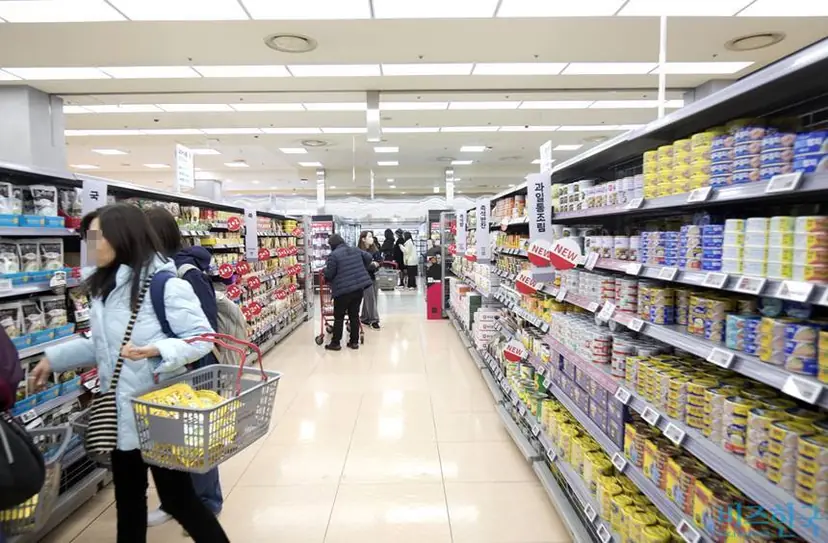
According to the American Express report, 76% of respondents worldwide believe that what they discover during their travels leaves a more lasting impression than any material souvenir. It means that they attach greater significance to a bottle of honey or a bag of potato chips purchased at a travel destination. Foreign tourists stopping by convenience stores to purchase various K-foods can be approached in this context. The same applies to eating tteokbokki at Gwangjang Market or visiting low-cost retail stores like Daiso. People who engage in this kind of snackpacking are called 'snackpackers.'
Then, what is the psychology behind becoming a 'snackpacker' who engages in snackpacking?
It can also be related to the 'snacking' trend. According to a food culture trend report released by the Korea Agro-Fisheries & Food Trade Corp. (aT) in December 2025, the proportion of Germans eating lunch dropped rapidly from 61% in 2020 to 45% in 2024, while the proportion of people eating snacks doubled from 15% to 30% during the same period. In the United States, 35% of respondents said they eat snacks more on weekdays than on weekends.
We can also confirm a change in the perception of snacks. While 78% of the Baby Boomer generation thought of snacks as treats eaten between meals, Gen Z considers them a concept of a meal that can be eaten on the go and provides nutrition. It is infused with the culture of a practical and efficient generation that seeks meals suited to their situation, regardless of time and place. There is also an analysis that in South Korea, the proportion of snack consumption as a meal substitute for people aged 25-44 exceeded 20%, which is 8-10% higher than other age groups.
Especially during travel, it is difficult to eat three full meals a day. Moreover, visiting famous restaurants can be time-consuming or offer poor value for money. Snacks can be easily and quickly procured and eaten. Also, these foods are usually high-calorie, intense flavors favored by the younger generation.
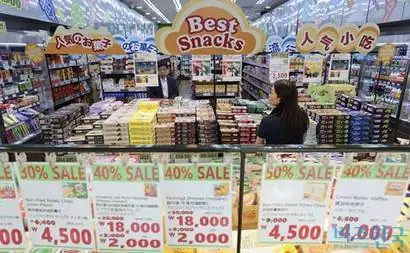
In the aforementioned survey, the younger the generation, the more they answered that spontaneous encounters with locals were the highlight of their trip. They also prefer food they happen to come across by chance. They prefer food with its own history, tradition, and character created by individuals rather than the general reputation of the food. They like it if it has cultural identity. This is different from the 'snob effect' that simply rejects what many people prefer.
The important thing is the aspect of diversity and new discovery. Gen Z is relatively less attracted to standardized or uniform food formats or choices. Considering this, there is a possibility that food from regions outside of Seoul could appeal to foreigners. It will be especially popular if it is a strong, unique food that can be eaten conveniently while on the move, rather than a full three-course meal.
The author, Kim Heon-sik, has been walking through or navigating the forest of pop culture phenomena since his 20s, with the expectation that there is a way to make the world a better place through culture. He continues on the same path in the 21st century, where AI and quantum computers are active, with the same belief.