

[비즈한국] The record-breaking performance and bonus windfall of South Korea's semiconductor 'two tops,' Samsung Electronics005930 and SK Hynix000660, are shaking up the real estate market in the southeastern Gyeonggi region. With the payment of hundreds of millions of won in bonuses becoming a reality, there are signs that a massive influx of capital from semiconductor belt employees will flow into the property market.
In fact, employees from both companies unanimously say, "Many people around us are looking to buy homes, and those who have already bought are paying off their mortgages and planning to 'jump' to higher-value areas." The common sentiment is that neighborhoods accessible within a one-hour commute—ranging from Dongtan and Yongin to Anyang, Gwacheon, Seongnam (Bundang), Wirye, Songpa, and Gangnam—are the primary target areas for purchase.

"I should have taken more risks to buy"
A (30), an employee who has been at Samsung Electronics for two years, is one such example. This February, he took out a mortgage of about 400 million won from a bank and a real estate-related loan from his company to purchase an 84-square-meter apartment near Seongbok Station in Yongin for the low 700-million-won range. Although it felt like a stretch at the time, he considers it a success so far, as the apartment is now trading in the mid-900-million-won range—an increase of over 200 million won. However, he has some regrets. With expectations of receiving at least 200 million won in bonuses next year, he laments not buying an "even more expensive house."
A explained, "After going through the transaction, I realized that expenses like acquisition taxes and renovation costs add up quickly. If I had known I would receive such a large bonus, I would have maxed out my loans to buy an apartment even closer to the subway station. Apartments closer to the station have seen even sharper price increases.
Real estate prices in regions known as the "semiconductor shuttle zone" (areas within range of shuttle buses), such as Dongtan in Hwaseong, Giheung-gu in Yongin, and Bundang-gu in Seongnam, show no signs of cooling down. In particular, Dongtan-gu in Hwaseong saw apartment prices rise by more than 4% in just two weeks this month. With forecasts suggesting that over 40 trillion won in liquidity could enter the market next year when bonuses and company loans are combined, critics say the "real estate buying craze" has truly been ignited.
This year, Samsung Electronics decided to pay 10.5% of its operating profit as a special semiconductor bonus. Based on the projected operating profit (360 trillion won), the bonus scale reaches 38 trillion won. Considering taxes and restrictions on company stock disposal periods, about 7 to 8 trillion won will be released into the market. For SK Hynix, which decided to provide 10% of its operating profit as bonuses, the figure comes to about 15 trillion won when applying performance projections (260 trillion won in operating profit, 26 trillion won in bonuses) and taxes. Additionally, Samsung Electronics has introduced a new housing loan program that provides up to 500 million won at a 1.5% annual interest rate through labor-management agreements.
Analysts suggest it is a natural progression that home prices in the "Gyeonggi southeastern semiconductor belt," which offers convenient commutes to Samsung Electronics' Giheung, Hwaseong, and Pyeongtaek campuses and SK Hynix's Icheon and Yongin campuses, would rise first.
Employees in their early 30s are 'studying real estate' intensely
Buying property has become a 'common interest' among employees of Samsung and SK Hynix. In particular, employees in their early 30s are also actively participating.
B, an employee in his early 40s at SK Hynix, explained, "Most colleagues in their early to mid-30s who are preparing for marriage are very interested in real estate. They look up where the shuttle buses stop and often ask which nearby apartments are good. Since most employees live in Yongin or Bundang, they prefer areas where they can balance 'commuting and education.'" Demand for homeownership is firmly supported by those looking to settle in Bundang or Dongtan, where company shuttle buses arrive at their doorstep and school districts and infrastructure are well-established.
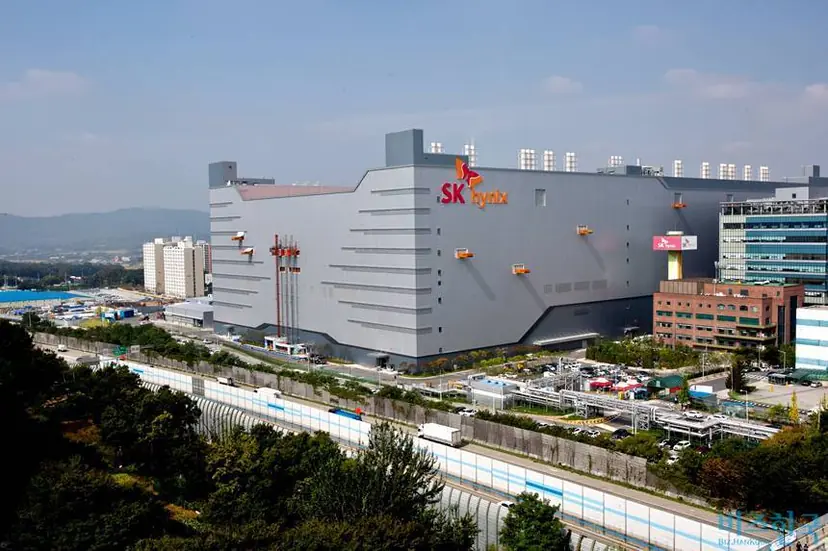
C, an employee in his early 30s working in Samsung's semiconductor division, also noted, "As I am getting married to a girlfriend who works for a Samsung subsidiary in Giheung, I am planning to buy an apartment near Dongtan Station before the wedding. I originally had no intention of buying, but since I'll be receiving a bonus, I'm currently studying real estate because I'll be able to purchase without overextending myself."
Employees who already own homes are also considering "trading up." D, an employee in his late 40s who bought an apartment near Jeongja Station in Bundang, is considering "trading up to a higher-value area" after paying off all his loans in three years and using his accumulated cash. When he first bought the home, he took out a loan of about 400 million won, but thanks to dual income, he paid it off entirely in three years. With 20 years of tenure, he expects to receive at least 500 million won in bonuses next year. D has started "organizing a list" by creating an Excel file to buy an apartment in Seocho or Banpo.
D explained, "I found out that loans for Gangnam are practically non-existent, but since there is a company loan program, I think I can afford it if I assume I'll receive bonuses for another two to three years. With the money I get from selling my current home plus 500 to 600 million won in bonuses, I should be able to make the purchase. I'm currently visiting sites in Seocho or Banpo, where the commute is manageable."
As signs of real estate overheating fueled by large corporate bonuses are detected, the Ministry of Land, Infrastructure and Transport and financial authorities are visibly on edge. The government is contemplating ways to lock up this bonus liquidity to curb the growth of household debt and stabilize the real estate market. The Ministry plans to hold a Housing Policy Deliberation Committee meeting to discuss whether to designate areas like Dongtan in Hwaseong as regulated zones. It is also considering measures such as designating land transaction permit zones to cap rising house prices.
However, concerns are mounting that such approaches will not be able to extinguish the ignited price increases. This is because housing prices are rising due to demand for homeownership stemming from the bonus payments of local semiconductor companies. The argument is that the "land transaction permit zone" tactic, intended to suppress external speculative demand, will be ineffective here. Furthermore, since employees are utilizing ample cash (bonuses) and company loan programs, analysts suggest that even if regulations like the DSR (Debt Service Ratio) are strictly applied, achieving the goal will not be easy.
A, mentioned earlier, predicted, "They say loans are difficult to get, but since company real estate loan programs and in-house credit loans are well-structured, everyone uses them as their first priority when buying a house. Even if people are using loans to buy homes right now, wouldn't there be more people buying with cash once the bonuses come in early next year? I think people will be looking to buy homes even more next year than this year."