

[비즈한국] If you are an investor holding Samsung Electronics005930 or SK Hynix000660, you might have already marked your calendar for the earnings report coming from the US early on the 25th, Korea time. The main character isn't these two companies, but their competitor, Micron. Micron is set to announce its third-quarter fiscal results after the New York stock market closes on the 24th (local time). As it has the earliest fiscal year among the three major memory chipmakers, it serves as a weather vane for the industry. In other words, you can get a sneak peek at the future of the stocks you hold by looking at a competitor's performance first.
To start with the numbers, they look spectacular. The guidance provided by the company suggests revenue of approximately $33.5 billion and a gross margin of about 81%. Supplies for High Bandwidth Memory (HBM) used in AI servers are effectively sold out until the end of the year. The problem is that the market isn't entirely convinced of this boom. Analyst estimates for revenue vary widely, from $33.7 billion to $40.9 billion—a massive gap of over $7 billion. This discrepancy highlights the fact that no one is certain how long AI data center investments will continue at their current pace. Simply put, the market's interest is not focused on 'how good this quarter is,' but on 'whether this positive trend will last.'
Therefore, the part investors need to read in this earnings report isn't the size of the revenue. It is whether the current HBM craze is a 'structural growth' that differs from the past, or if it is yet another 'cyclical peak' where the industry has run ahead of itself, as it has always done. Memory is a classic pro-cyclical industry that has historically repeated booms and busts. If the new demand for AI has broken that fate, it would be a different story, but that has yet to be proven. One clue is the profit margin. Typically, memory prices see margins collapse before revenues decline. Whether the 81% margin, which is significantly higher than the historical average, continues to rise or peaks and turns downward is a signal to gauge the direction of the cycle. And this signal applies not just to Micron, but also to Samsung Electronics and SK Hynix, which sell the same products in the same market.
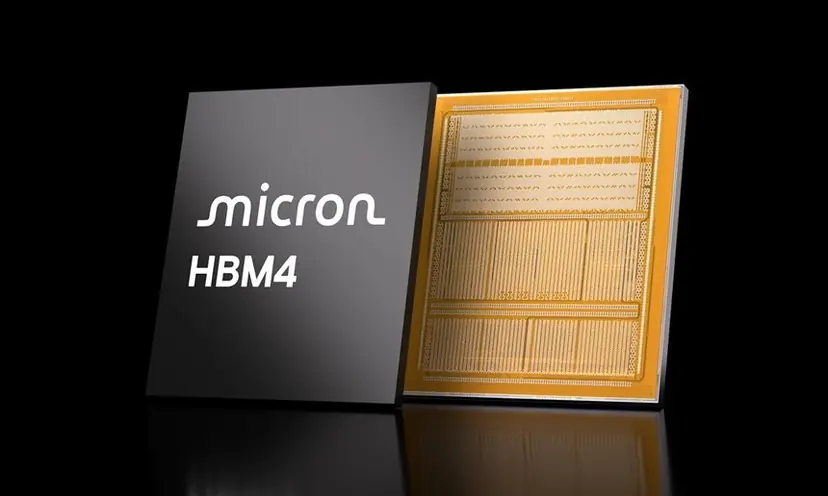
The global HBM market is divided among SK Hynix (approx. 43%), Samsung Electronics (approx. 33%), and Micron (approx. 24%). South Korean companies effectively hold three-quarters of the market. Since Micron is the first to report its results, investors should listen for three things during their conference call. First, the visibility of HBM supply for 2027. If volumes through next year are filled with long-term contracts, it will be compelling evidence of 'structural growth.' Second, the progress of mass production for the next-generation HBM4 product. Nvidia has certified Micron, Samsung, and SK Hynix for its next-gen AI platform, and the speed of this competition will determine the market share of all three companies next year. Third, the direction of prices and margins mentioned earlier. Management's remarks on these three points will become a window for reading the next quarter of the Korean memory stocks you hold.
However, there is a word of caution. You should not assume that the stock price of Korean companies will follow Micron's precisely. The three companies have different speeds for HBM4 mass production and different customer compositions, so it is risky to hastily sell off Samsung or SK Hynix because Micron drops, or to chase the stock because it rises. Also, it should be noted that while Micron is a dollar-denominated asset exposed to exchange rates, Samsung and SK Hynix, held by Korean investors in Won, can see their stock prices fluctuate based on currency variables. Rather than being swayed by one quarter's surprise or disappointment, it is more important to read the direction of the cycle indicated by the earnings.
The history of memory has always reached its peak alongside the conviction that 'this time is different.' What Micron needs to answer on the 24th is not its own revenue figures, but the question of which direction the next chapter for the two stocks held by countless Korean investors is heading.