

[비즈한국] Kim Yong-beom, Chief of Policy for the President, has warned of the possibility that liquidity could pour into the real estate market following the semiconductor boom. His assessment is that if performance bonuses, wage increases, and export proceeds inflow manifest with a time lag in the second half of the year, real estate buying sentiment could be stimulated once again. With Kim directly mentioning the need to adjust holding and capital gains taxes, the real estate tax reform package slated for July is drawing attention.
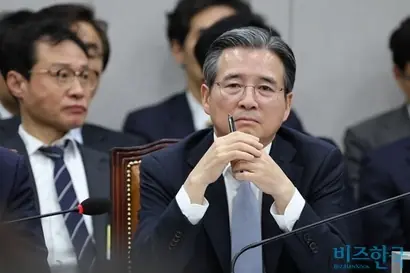
In a post on his Facebook page on the 20th, Kim described this year's Korean economy as an "all-time boom," yet stated, "Looking back at the past, such money has repeatedly tended to flow into the real estate market." He noted, "Luxury consumption is reviving, and real estate buying sentiment in preferred areas could also start to stir again," and pointed out, "The real hurdle will be at the end of the year and early next year."
What caught Kim's attention is the time lag of the boom. While semiconductor performance and stock prices react first in the first half, once performance bonuses, wage hikes, and export proceeds start flowing in earnest from the second half onwards, demand fueled by cash could move into the real estate market. This reflects an awareness that this current boom could stimulate demand based on liquid cash rather than borrowing capacity, meaning existing demand-suppression measures may have limitations.
According to the Bank of Korea, nominal GDP for the first quarter of this year increased by 17.1% compared to the same period last year. While the real GDP growth rate remained at 3.8%, nominal indicators jumped significantly as rising semiconductor prices and improved terms of trade boosted national income. Kim evaluated that the expansion of global AI investment boosted semiconductor demand, while corporate performance, the stock market, the current account, and tax revenue indicators all improved simultaneously.
The problem is that the warmth of the boom may not spread evenly across the entire economy. Kim stated, "The national average has improved, but that average cannot explain the reality for everyone." While semiconductor company profits and stock prices have skyrocketed, the perceived economic temperature for self-employed individuals and domestic-demand companies is different. There is concern that the gap between the improvement of macroeconomic indicators and the actual perceived economy could widen.
Kim also directly mentioned the normalization of real estate taxation. He said, "It is necessary and the right direction to reasonably adjust holding and capital gains taxes," but added, "If people are confident that they can still make a profit even after paying taxes, typical regulations might fall short." This is interpreted to mean that if the cash liquidity increased by the semiconductor boom flows into the metropolitan housing market, it may be difficult to prevent overheating through loan regulations alone.
Such remarks align with the direction of real estate tax reform previously signaled by President Lee Jae-myung. During a press conference marking his first year in office on the 8th, President Lee stated regarding real estate policy, "We will soon organize taxation, finance, regulations, and supply all at once," adding, "The tax issue will likely be possible by July." He also explained that there is a need to lower the expected return on real estate by reducing the burden of holding taxes.
Recent real estate market indicators also support this concern. According to the Korea Research Institute for Human Settlements, the consumer sentiment index for the Seoul housing sales market dropped from 138.2 in January to 117.8 in March of this year, but rose for two consecutive months to 124.9 in April and 135.6 in May. The national index also rose 4.7 points from the previous month to 116.7 in May, entering an upward phase. Buying sentiment is strengthening again, centered around Seoul and the metropolitan area.
The key is how much the government can control the flow of liquidity heading toward the real estate market. Kim stated, "If the national wealth earned by semiconductors is absorbed as unearned income from real estate and the fruits of growth are concentrated only among a few, this boom will not last long." The real estate tax reform package expected in July is likely to be the benchmark for assessing the government's policy direction in response to expanded liquidity.