

[비즈한국] At a summit held in Evian, France, on the 17th, leaders from the G7 nations agreed to take joint action to reduce dependency on supply chains for critical minerals, including rare earth elements, lithium, and nickel.
The leaders expressed concerns over attempts to weaponize resources, such as specific countries imposing export controls. While the country in question was not explicitly named, the statement is interpreted as being aimed at China, which has exercised influence through rare earth export restrictions.
The joint statement outlined a goal to reduce reliance on any single country for rare earth imports to 60% or less by 2030, with an ultimate goal of lowering it to 50%.
German Chancellor Friedrich Merz stated, “We have agreed in various forms to cooperate much more closely on critical raw materials,” adding, “We held in-depth discussions with invited countries on how we can diversify.”
The Vitamins of Modern Industry
Rare earth elements refer to a group of 17 elements: the 15 lanthanides (atomic numbers 57 to 71) plus scandium (Sc) and yttrium (Y). Because they possess strong magnetism or specific luminescence properties that emit light at precise wavelengths, these materials have no ready substitutes. Since they form the foundation for a wide range of technologies, from electric vehicles (EVs) and AI data centers to robotics and defense systems, they are often called the “vitamins of modern industry.”
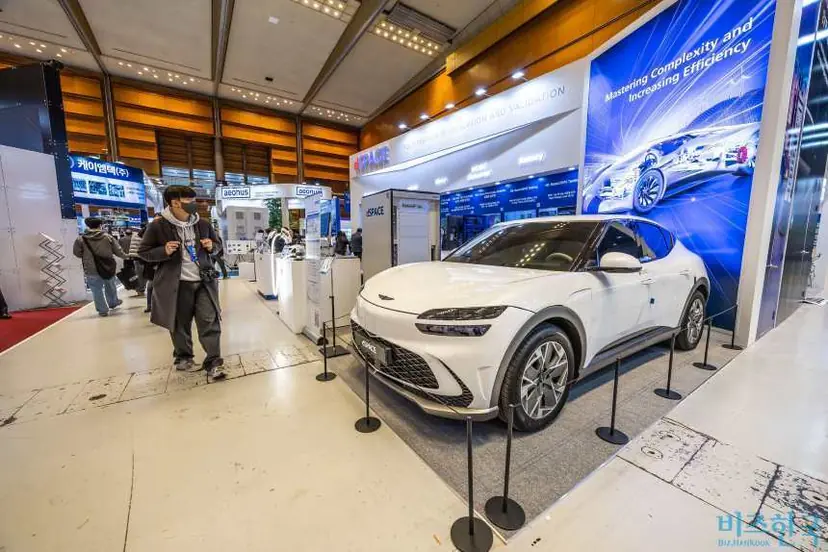
The role of rare earths is particularly crucial in the energy transition. One electric vehicle requires 2–5kg of rare earth magnets, and a 1-megawatt offshore wind turbine requires about 500kg. As Europe plans to ban the sale of internal combustion engine vehicles starting in 2035 and continues to expand wind power generation, demand is skyrocketing.
Although the word ‘rare’ is in their name, they are not actually scarce on Earth. The problem is that concentrated deposits are difficult to find, and even when found, they are difficult to extract, making them economically unviable.
Nearly 100% Dependency…
The G7 has agreed to jointly invest in and expand industrial capacity across the entire value chain, from mineral extraction to processing and recycling. The G7 stated that 195 projects have already been announced this year, with 64 billion euros (112 trillion won) in investment secured. They plan to mobilize public and private capital to build a sustainable critical mineral supply chain and expand cooperation with developing countries. To carry these plans forward, they also plan to launch the ‘G7 Critical Minerals Resilience and Production Alliance.’
However, the numbers suggest that the road ahead will not be easy.
According to a report by the European Parliamentary Research Service (EPRS) last November, Europe imports 100% of its heavy rare earths, 85% of its light rare earths, and 98% of its rare earth magnets from China. The dependency level itself is at a dangerous stage.
In fact, when China tightened its export controls on rare earths last October, magnet imports dropped significantly, forcing European and American automakers to scale back production. Prices of rare earths in Europe soared to as much as six times higher than in China.
Bloomberg noted, “Given that many potential developers are delaying projects due to financing constraints, regulatory barriers, social opposition, and technical challenges, the 2030 deadline is likely an ambitious goal.”
The forecast suggests that extraction and refining will take years and cost an astronomical amount, and meeting Europe’s strict environmental regulations (such as those regarding noise and land disruption) will be difficult.
While meeting the goals may be met with skepticism, hope for self-sufficiency is not entirely lost. Once again, various startups are stepping in to turn this geopolitical crisis into an opportunity.
‘Sovereignty Starts Subsurface’
While major Chinese mines are structured for open-pit mining, European rare earth deposits are expected to be found at depths of hundreds to thousands of meters, trapped within hard crystalline rock.
For example, rare earths at Norway’s Fen mine, considered the largest in Europe, are estimated to be between 468m and 1000m below the surface. Exploration at the Per Geijer rare earth deposit in Kiruna, Sweden, is also underway at depths of around 700m. However, conventional mechanical drilling wears down quickly in hard rock, and costs increase exponentially as a result.
In this regard, Hades Mining, a startup founded last year in Munich, Germany, by CEO Max Werner, a former military officer, is garnering attention. The company’s slogan is ‘Sovereignty starts subsurface.’
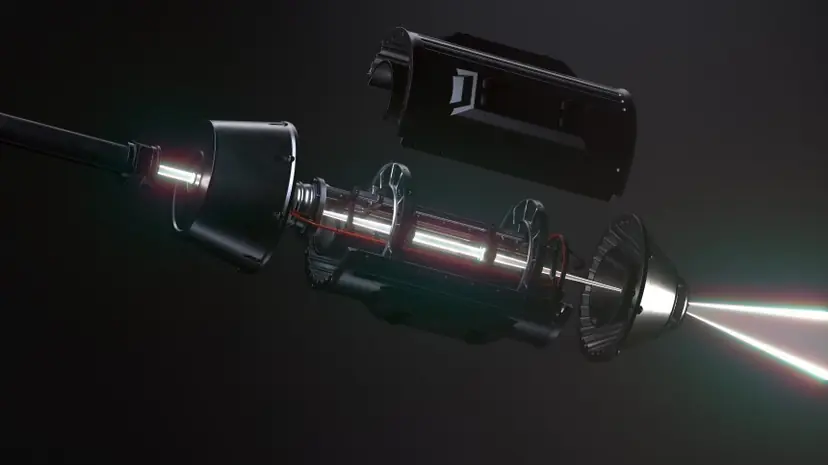
Hades Mining is developing technology to excavate bedrock using high-heat lasers to extract critical minerals like rare earths, a method that can drastically reduce drilling time.
CEO Werner expressed confidence in an interview with foreign media, saying, “Experimental results showed excavation rates of 30–50 meters per hour, which is dozens of times faster than conventional methods.”
Unlike open-pit mining, environmental impact can also be minimized. A special solution that dissolves minerals is injected into the holes drilled by the laser, causing the minerals within the rock to dissolve. The solution is then pumped back to the surface, the minerals are filtered out, and the remaining solution is sent back underground—a closed-loop structure using a single hole for both injection and extraction.
In addition, Hades is developing technology to produce geothermal energy through these holes. They have also unveiled ambitious plans that even aim for resource extraction outside of Earth.
In February of this year, just nine months after its founding, Hades closed a 15 million euro (26.3 billion won) seed round, an exceptional speed. Its total funding stands at 20.5 million euros (36 billion won). Hades aims to have its first mining site operational by 2029.
If You Don’t Have It, Don’t Use It
There is also a new approach. Instead of mining more to meet skyrocketing demand, some are choosing not to use rare earths at all. Alice & Bob, a quantum computing startup based in Paris, has opted for this.
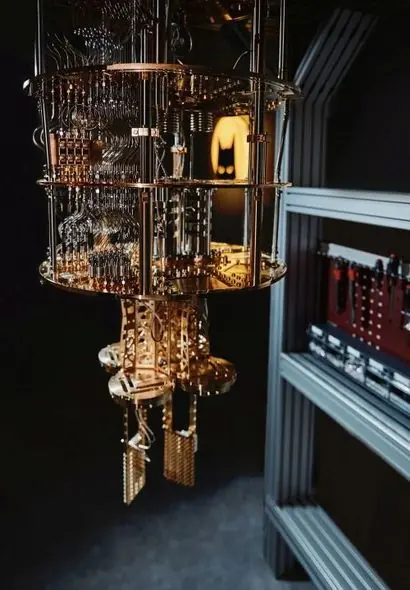
This startup is seeking answers in the ‘molecular structure of high-performance permanent magnets that do not contain rare earths.’ Last March, they received a $3.9 million (6 billion won) investment from the Advanced Research Projects Agency-Energy (ARPA-E) under the U.S. Department of Energy.
Juliette Peyronnet, General Manager of Alice & Bob in the U.S., stated, “Designing high-performance magnets without using rare earth elements is one of the grand challenges in materials science,” adding, “It is very difficult to simulate with conventional computers, but quantum computers can accelerate the discovery of new magnets.”
According to Alice & Bob, magnets have strong magnetic properties because the electrons within atoms move in complex, intertwined ways. Calculating these movements increases the number of possibilities astronomically. No matter how fast a supercomputer is, it has yet to reach a conclusion. Since the discovery of neodymium-iron-boron (NdFeB) magnets used in EVs and wind turbines in the 1980s, no solution has been found for over 40 years. If quantum computers can break this computational barrier, the answer to a problem that has remained unsolved for decades might emerge on a monitor first, rather than in a laboratory.
The author, Lee Jung-woo, has spent 17 years as a journalist, covering a wide range of fields including major industries like automobiles, secondary batteries, and heavy industry, as well as defense, diplomacy, environment, education, and health/welfare. He has specifically covered industrial structural changes centered on mobility, energy transition, and sustainability on the ground. He currently resides in Berlin, Germany, and works as a partner at the startup accelerator '123 Factory'.