

[비즈한국] Socar403550 has set out to secure future growth engines by significantly expanding its business objectives. The company plans to extend its business scope into vehicle sales, finance, insurance, and autonomous driving. However, market observers point out that while Socar has presented a future blueprint, it has yet to provide a clear solution to break through its current growth stagnation.
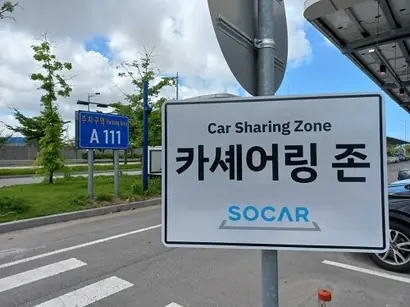
Socar expands business amid slowing car-sharing growth
On the 4th, Socar held an extraordinary general meeting of shareholders and passed a resolution to amend its articles of incorporation. It added 12 new items to its existing 33 business objectives, including new vehicle sales, passenger transport, insurance agency/brokerage, credit finance, credit and mortgage lending, and vehicle leasing.
Industry insiders view this amendment not merely as business diversification, but as groundwork for its transformation into a mobility platform. It is interpreted as a strategy to move beyond its existing vehicle-rental-centered business structure and expand into a comprehensive mobility platform encompassing vehicle sales, finance, insurance, and autonomous driving services.
However, the amendment is currently just opening up the possibility of entering new businesses. No specific business plans or revenue models have been disclosed yet. A Socar representative explained, "The intention is to expand into a 'full-stack mobility' provider that solves all service needs throughout the vehicle usage process," adding, "Insurance was also added as a business objective because it is an indispensable part of the vehicle usage journey."
The background behind Socar's expansion is the growth limitation of its car-sharing business. Socar is currently considered the number one player in the domestic car-sharing market. It is known that three companies—Socar, Green Car, and Turu Car—account for 90% of the total market, with Socar holding an 82% share. Despite its overwhelming dominance, the car-sharing market itself has reached a saturation point, making it difficult to find further growth opportunities.
While Socar's annual revenue growth rate exceeded 30% until 2022, concerns about a slowdown began to emerge as the growth rate stayed in the single digits from 2023 onwards. Last year, the company managed to swing to a profit with an operating profit of 23.2 billion KRW, but Q1 revenue this year reached 97.1 billion KRW, a 26.1% decrease compared to the same period last year (131.5 billion KRW). While it maintained a profitable trend with an operating profit of 1.389 billion KRW, this was a 1.8% decrease compared to the same period last year (1.414 billion KRW).
Industry experts believe Socar is defending its profitability through cost reduction and operational efficiency. The average number of vehicles in operation for Socar's short-term car-sharing decreased from 23,400 in 2024 to 20,300 last year, and further to 19,100 in the first quarter of this year. Conversely, the vehicle utilization rate rose from 34.7% to 37.8%, and then to 38.1% during the same period. The strategy is to support performance by increasing the utilization of remaining vehicles instead of maintaining a larger fleet.
A Socar representative stated, "Through the 'Socar 2.0' strategy, we have increased utilization through supply optimization matched to demand and vehicle redeployment," adding, "We expect to maintain our profitability in the second half of the year while simultaneously investing in new businesses and autonomous driving based on overall efficiency in supply, demand, and pricing."
Autonomous driving remains distant, short-term growth unclear
The interpretation that Socar is playing the 'Lee Jae-woong card' again is tied to this sense of crisis. Lee Jae-woong, founder and COO of Socar, stepped back from management in 2020 when the 'Tada Prohibition Act' passed the National Assembly, making it difficult to operate the Tada service. He returned to Socar's management this March, six years later.
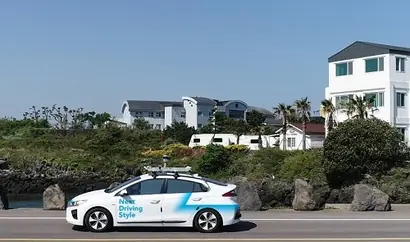
With Lee's return, Socar is accelerating its autonomous driving business. As the growth of its traditional car-sharing business is clearly slowing, it appears the company is focusing on transforming into a mobility platform with autonomous driving as a new growth pillar. In April, the company conducted a third-party capital increase worth 65 billion KRW targeting Krafton, and subsequently established Apex Mobility, a joint venture for autonomous driving with Krafton worth a total of 150 billion KRW.
The problem is that autonomous driving is a business where performance cannot be expected in the short term. Even global autonomous driving companies are pouring in massive funds without yet proving a clear revenue model. Given the requirements for technology development, regulatory adjustment, and commercialization, it is considered a field that requires significant time and cost.
In fact, even in the field, assessments are that the autonomous driving business is still in its early stages. An industry insider remarked, "Since the business is not yet concrete, I understand there is little to explain separately, so there are not many mentions of it."
A Socar representative stated, "As autonomous driving is still in the stage of proving technology, we are not setting strategies centered on revenue. Apex Mobility is currently in the stage of focusing on building partnerships," adding, "We will be able to speak about specific commercialization timing for the autonomous car-sharing business once the direction is set."

The market evaluates that most of the growth strategies presented by Socar remain long-term tasks. Concrete business models for vehicle sales, finance, and insurance have not been disclosed, and autonomous driving also requires considerable time before commercialization. Critics point out that realistic growth drivers to pull performance in the next 2 to 3 years remain unclear.
The shared bicycle business that Socar has nurtured as a new business is also failing to produce expected results. Since acquiring Nine-to-One in 2021, Socar has operated the shared electric bicycle service 'Elecle' in over 30 cities nationwide. However, Nine-to-One is currently in a state of complete capital impairment. Q1 revenue this year was 3.27 billion KRW, down 5.9% from the same period last year, while net loss increased by 150% to 8.9 billion KRW. Socar has provided capital support nine times since the acquisition to sustain the business.
Recent instances of employees losing their stock options have also fueled market concerns. According to filings, the number of stock options held by Socar decreased by 15.8% from 1.73 million shares in February to 1.456 million shares in June. A significant portion was due to the cancellation of stock options following employee resignations. Some interpret this as a sign that internal expectations regarding the company's future growth are not what they used to be.
A Socar representative stated, "In the second half of the year, we aim for double-digit growth in the car-sharing sector through strengthening new services and diversifying our vehicle portfolio," adding, "Elecle is also undergoing business structure reorganization and operational efficiency, and we aim to achieve positive operating cash flow this year."