

[비즈한국] There is a word that golfers use often: ‘field’. It is the ‘field’ in conversations like, “When are you going to the field?” or “I’m going to the field this weekend.” Golfers often complain that they hit well at the practice range but not on the ‘field’, and when a pro goes for a round to provide swing tips and course management advice, it is called a ‘field lesson’. Would an American or British person understand if you said ‘field lesson’? They would not.
For South Korean golfers, ‘field’ equals ‘golf course’, but to them, ‘field’ does not mean a golf course. While the New York Mets’ home stadium is Citi Field, the Chicago Cubs’ is Wrigley Field, and Liverpool’s is Anfield, they only use the term ‘golf course’ for golf courses. ‘Field lesson’ should be called a ‘playing lesson’ or ‘on-course lesson’. Unfortunately, the ‘field’ used by South Korean golfers is a representative example of Konglish.
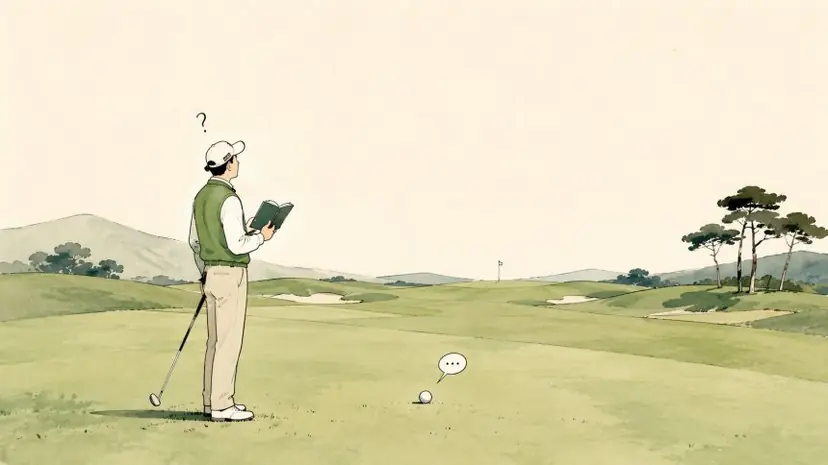
Of course, this doesn't mean we should stop using these words just because they are incorrect. It is just about being aware of them. If you ever have the chance to play a round abroad, wouldn't it be better to use the correct English terms since foreigners won't understand you otherwise? In fact, doesn't the word ‘field’ itself excite the hearts of South Korean golfers, making them feel as if they are going on a picnic to the most well-manicured nature?
Sports terminology follows the language of the country where the sport originated. Taekwondo terms are in Korean, and Judo terms are in Japanese. The reason why there is so much English in golf terminology is that many modern sports began in English-speaking countries, especially in the UK. It is widely believed that golf also started in Scotland. Terms from the Scots language gradually became Anglicized, and especially during the British Empire era in the 18th and 19th centuries, the aristocracy spread golf to a wider world and systematized both the rules and terminology.
As golf was first introduced to Joseon around 1900 and was influenced by Japan, our own unique golf terms were born. The most representative one is ‘double par’. ‘Double par’, meaning a snowman (double par), is even used as if it were an official term in screen golf. Someone asked an American golfer, “In Korea, there is a term called ‘double par’ in golf. Try to guess what it means.” The American golfer replied, “Is it two over on a hole?” His impression of a ‘double’ is closer to a double bogey. ‘Double par’ is a term used only in Korea and Japan. Of course, in Japan, it is called ‘daburu pā’.
A word that South Korean golfers truly love and keep tucked away in their hearts alongside their expectations whenever they head out for a round is ‘Rabe’. If you ask what ‘Rabe’ is an abbreviation for, they often correctly answer ‘life best’ or ‘lifetime best score’. The ‘Rabe’ we love so much is a term never used in the UK or the US. It sounds plausible enough that you might think they would understand, but the response you would likely get is, “What?”
They use terms like ‘personal best score’ or ‘career low’. Again, I am not saying we should stop using the terms we have been using. The words we have used are infused with the memories of those times and scenes. For South Korean golfers, ‘Rabe’ clearly contains more earnest hope and romanticism than just a ‘personal best score’.
Many South Korean golfers refer to a ‘round’ as ‘rounding’. Some even shorten it to ‘randing’. It is an awkward term that native English speakers have never heard before, but somehow, ‘rounding’ sounds more cheerful and exciting than ‘round’.
Just so you are aware, let me mention a few more. Calling a par-3 a ‘short hole’, a par-4 a ‘middle hole’, and a par-5 a ‘long hole’ is also unique to South Korean golfers. If you think about the meaning and usage, you can see why we might say that. The ‘hand first’ often used in lesson programs is correctly called ‘hand forward’. The word ‘lie’, which refers to the condition of the ball, is used in English as ‘good lie’ or ‘bad lie’, but we use it to mean ‘break’, such as ‘left lie’ or ‘right lie’.
If you play a round with foreigners, you will notice they don't use the word ‘nice’ very often. We repeatedly say ‘nice shot’, but the words that come out of their mouths are ‘good shot’ or ‘great shot’. I wrote about these Konglish golf terms so that you might be aware of them. Of course, I still use the word ‘field’ myself. Just hearing that word transports my heart onto the green grass. I also use the word ‘Rabe’ frequently. There is a phrase I always write if I have the chance to say something to someone:
‘My Rabe is yet to come.’
Who is the writer Kang Chan-wook? An advertiser and writer. He started as a copywriter at Cheil Worldwide and is currently the CEO of the video production company ‘Era’s View’. He loves golf and earned a USGTF teaching professional certification. With a passion for writing, he has published golf books such as ‘The Joy of Golf’, ‘Bad Golf’, ‘Sincere Golf’, and ‘Golf Thoughts, Thought Golf’. He operates the YouTube channel ‘Bad Golf’, sharing various stories and thoughts surrounding golf with readers and viewers.