

[비즈한국] The fashion platform industry is engaging in a series of collaborations with esports teams. The goal is to attract fan bases primarily composed of the younger generation to their respective platforms. They are expanding their sports intellectual property (IP) merchandise businesses by directly planning official uniforms and goods, as well as selling them on their platforms.
According to global consulting firm Deloitte, the South Korean esports market is projected to grow from approximately 417.4 billion KRW last year to about 723.6 billion KRW by 2034. Following the adoption of esports as an official event at the 2022 Hangzhou Asian Games, Lee 'Faker' Sang-hyeok, a gold medalist in League of Legends (LoL), received the Blue Dragon Medal, the highest honor for sports in the country, from President Lee Jae-myung last January. As the market size increases, its recognition as an official sport is also rising.
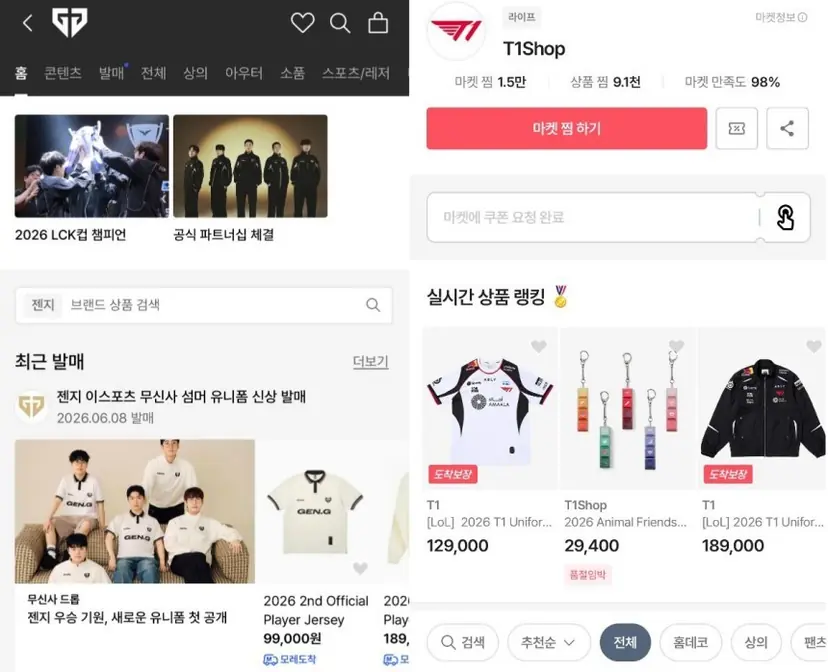
In response, Ably Corporation signed an official sponsorship deal with LoL team T1 late last year and began selling collaborative products on its platform. As the company operates the women's fashion platform 'Ably,' the men's fashion platform '4910,' and the Japanese fashion platform 'Amood,' it plans to introduce esports-related merchandise to users of each platform while securing T1 fans as new users. The T1 exclusive merchandise collection launched last April exceeded 100 million KRW in transaction volume on its first day of sales.
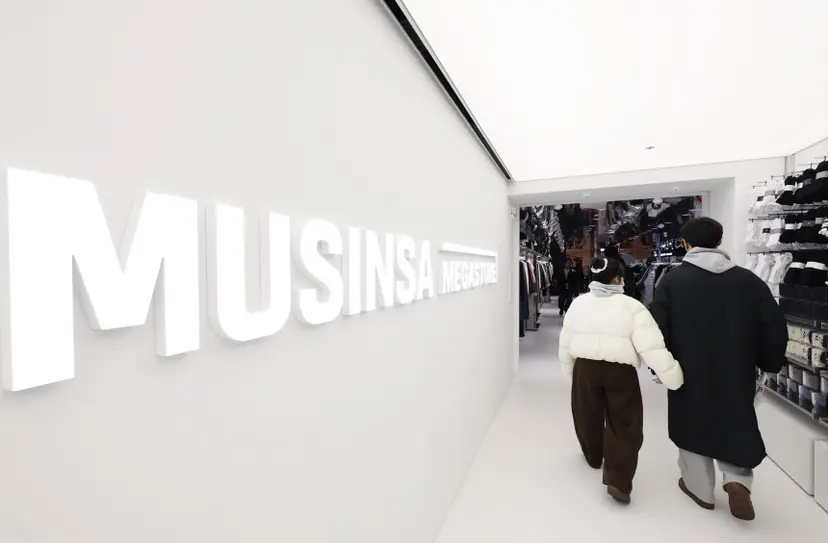
Musinsa has also partnered with Gen.G Esports starting this year. They are sponsoring the entire professional team, including their LoL and Valorant squads, while directly planning and supplying official uniforms and accessories.
Focusing on Connecting Young Fan Bases to Consumption
The method of fashion companies collaborating with sports teams is not a new concept. Sports team sponsorships have existed for a long time. Adidas sponsors the Doosan Bears, and Pro-Specs sponsors the LG Twins. Hyungji Elite093240 also supplies uniforms and merchandise to teams like the Lotte Giants, Hanwha Eagles, and SSG Landers. However, in the traditional sports uniform business, specialized sports brands like Nike and Adidas have long held a dominant position.
Esports is particularly favorable for combining sponsorship with product sales because its core fan base is young, and the consumption cycle—where fans watch games online and then purchase official uniforms and goods on fashion platforms—is seamless. With the expansion of the business, the foundation to plan and distribute uniforms and goods utilizing team IP has been established, marking the beginning of full-scale sports collaborations.
The retail industry views these collaborations as effective not only for product sales but also for strengthening brand image. By collaborating with esports fandoms, these platforms can position themselves as trendsetters in the market and leave a lasting impression on consumers. Since esports are broadcast online and in offline arenas, the brand logos on player uniforms receive significant exposure. Furthermore, unlike traditional sports where the sponsorship ecosystem has been solidified for decades, the esports market is still taking shape, leaving plenty of room for early entry.
'Conversion Rate' Is More Crucial Than Merchandise Sales
However, it is difficult to determine the effect of acquiring new customers based solely on the initial sales of collaborative products. Users who visit the platform to buy uniforms and merchandise might purchase only what they need and never return.
One of the expected benefits for fashion platforms collaborating with teams is the influx of new customers. If a fan who registered on the platform to buy a uniform or merchandise ends up purchasing other apparel or accessories and continues to use the service, the collaboration effect can lead to revenue for the existing fashion business. Conversely, if purchasing team merchandise remains a one-time event, the revenue impact is likely to be concentrated only on specific products and the promotional period. This is why, to evaluate the effectiveness of these collaborations, one must look not just at initial transaction volume, but also at whether acquired users continue their consumption on the platform thereafter.
Both companies have not yet disclosed specific performance metrics such as the number of new users acquired through esports collaborations or their revisit rates.
An Ably representative stated, "T1 has high support from the younger generation, and since our platform's users overlap with this demographic, we judged that it would create positive synergy," adding, "We plan to strengthen our partnership with T1 moving forward." Musinsa commented, "It is a win-win structure where we can attract esports fans as new customers and the team can expand its fandom through Musinsa customers," noting that they are also "open to the possibility of expanding into other product categories such as merchandise."