

[비즈한국] Korea Railroad Corporation (KORAIL) is accelerating the adoption of artificial intelligence (AI) systems. KORAIL recently held a board meeting and approved a plan to establish a 'Rail AI Hub.' The project aims to develop generative AI services based on demand surveys in stages and build an AI infrastructure and data platform to support enterprise-wide AX (AI Transformation) management.
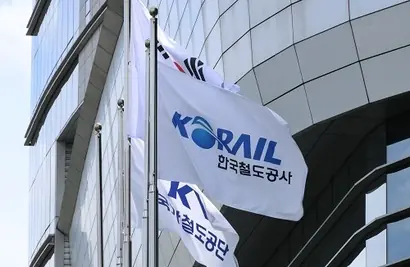
The domestic industry, regardless of the sector, is showing great interest in AI. In this context, it is not surprising that KORAIL is also focusing on AI. A KORAIL official explained, "The Rail AI Hub is a project to build a company-wide common AI and data platform that allows for the safe and standardized use of generative AI throughout KORAIL," adding, "We plan to provide it in the form of APIs (Application Programming Interfaces) so that it can be used not only for employee support, such as internal data analysis and task automation, but also in customer-facing systems like ticket reservation and issuance in the future."
KORAIL is not an IT specialized company. For this reason, the corporation stated that instead of developing AI models independently, it will build the Rail AI Hub by leveraging the technology and solutions of AI specialized firms. They explained that the method involves building an on-premises (internal data operation) based enterprise-wide common AI infrastructure and platform to ensure internal data can be utilized securely.
Some observers predict that KORAIL's push for AX will also impact the working environment for employees. While using AI could reduce the workload for general staff, restructuring or voluntary retirement is difficult due to the nature of public enterprises. It is reported that even within the KORAIL board, there have been requests to review the impact of AI adoption on the working environment and to prepare countermeasures.
In response, a KORAIL official stated, "The Rail AI Hub will reduce simple and repetitive tasks, enabling employees to focus on high-value tasks such as safety, service quality improvement, and planning and analysis," and added, "Regarding changes to the working environment, we plan to carry out the collection of opinions from the field, phased implementation, user training, and the creation of AI utilization guidelines in parallel." The official continued, "In particular, for areas where work methods are changing, we will push forward with training and change management activities so that employees can utilize AI, and we will secure internal acceptance through communication between labor and management where necessary."