

[비즈한국] Geopolitical conflicts and the global climate crisis have converged, leading to the repeated blockage or severe restriction of key logistics routes that have supported the modern global economy. As the maritime and land trade routes that served as the major arteries of global trade face simultaneous crises, a red light has turned on for the entire global supply chain.
This complex crisis situation is demanding a fundamental paradigm shift in the global logistics industry. If the top priority for global logistics networks in the past was 'efficiency'—minimizing logistics costs and reaching destinations in the shortest time—it has now become a survival standard for companies and countries to secure 'safe detour routes' that are not shaken by external, unpredictable variables, even if it entails additional costs and time. We take an in-depth look at the status of these emerging supply chain detour routes replacing existing trade paths and their macroeconomic implications.
The key maritime trade routes that maximized global trade efficiency for decades are facing unprecedented geopolitical and climatic 'polycrisis,' causing serious functional failures. An unprecedented situation is unfolding simultaneously where the Suez Canal and the Panama Canal—known as the two major choke points of global maritime logistics—are seeing their normal operations threatened by military conflict and extreme drought, respectively.
The Strait of Hormuz in the Middle East, a representative energy transport route, has no viable full-scale detour in the event of armed conflict or blockade; thus, every crisis has dealt a massive shock to the global logistics ecosystem in the form of skyrocketing freight rates and supply delays. The Panama Canal in the Americas is experiencing limitations in vessel passage due to extreme drought and water shortages caused by the climate crisis, and vessels are opting to significantly bypass the Suez Canal via the Cape of Good Hope at the southern tip of Africa due to rising geopolitical tensions in the Middle East. Even the Trans-Siberian Railway (TSR), once considered the most efficient land route connecting Asia and Europe, has seen its normal cargo transport practically paralyzed in the wake of the prolonged war and international sanctions.
This global bottleneck is forcing a structural reorganization of the global supply chain, going beyond simple cargo delivery delays. From a macroeconomic perspective, this has emerged as a key risk that triggers soaring logistics costs, leads to price hikes in final consumer goods, and induces worldwide inflation. The United Nations Conference on Trade and Development (UNCTAD) projected that global trade volume would decrease by 4.6% compared to the previous year, warning that if the abnormal situation at the two major canals continues, global trade will shrink even more severely.
The Collapse of Global Choke Points and the Arrival of Polycrisis
The Red Sea and Bab al-Mandab Strait routes, which connect to the Suez Canal—the shortest maritime route linking Asia and Europe—have been exposed to serious security threats in the aftermath of the Gaza War that broke out in October 2023. The Houthi rebels in Yemen, supported militarily by Iran, continue to exert force by firing missiles and drones at commercial ships passing through these waters and detaining vessels.
This route is a vital logistics artery responsible for over 20% of global container trade, 12% of total maritime oil trade, and 8% of global liquefied natural gas (LNG) trade. However, as the risk of armed conflict heightened, more than 57 large container ships abandoned their entry into the Red Sea and decided to detour to the Cape of Good Hope at the southern tip of the African continent. The detour via the Cape of Good Hope adds approximately 9,000 km to the voyage compared to the existing route through the Suez Canal, and it takes an additional 7 to 10 days.
The increased sailing distance leads to massive vessel fuel consumption, which translates directly into skyrocketing freight rates. In fact, freight rates for container ships from Shanghai, China, to the UK have surged nearly fourfold compared to before the crisis, and major global retailers are experiencing serious product delivery delays. Furthermore, with the added move by Iran to suggest an alternative route near the Strait of Hormuz while attempting to collect transit fees, logistics risks in Middle Eastern waters are increasingly escalating.
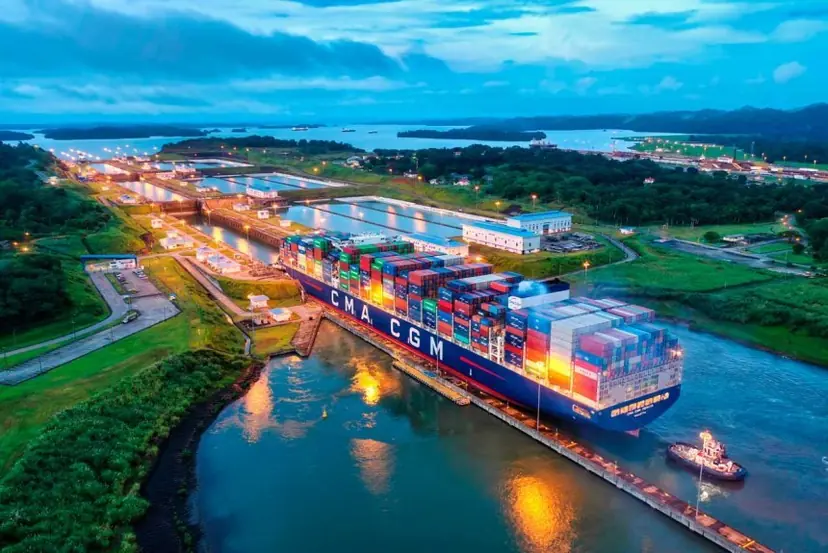
If geopolitical risks are threatening maritime security, the Panama Canal on the other side of the globe is hampered by a structural crisis brought on by global climate change. The Panama Canal features a unique lock system that requires approximately 200 million liters of fresh water to be discharged from nearby Gatun Lake into the sea to adjust water levels every time a ship passes through the locks. In the past, the abundant rainfall characteristic of the Central American rainforest climate naturally replenished the discharged fresh water, but the recently intensified climate crisis has broken this natural cycle.
The acceleration of global warming has intensified the El Niño phenomenon, in which sea surface temperatures near the Pacific equator rise abnormally, causing unprecedented lack of rainfall and extreme dry seasons in Central America, including Panama. As the extreme drought without rain has been prolonged, the water level in Gatun Lake has plummeted to a critical point where normal canal operation is impossible.
Consequently, the Panama Canal Authority (ACP) introduced a desperate measure to restrict the number of vessels capable of daily passage from the existing 38 to 22 to secure essential water for canal transit. As vessel traffic has decreased, severe congestion has become routine, with wait times to pass through the Panama Canal increasing from 15 days to up to 20 days. In particular, as the transit of LNG ships heading from the U.S. and other regions to Asia has been restricted, it has had the fatal result of reducing LNG transport via the Panama Canal by up to 73%.
Beyond maritime routes, land-based transit hubs crossing continents are also collapsing. In the past, the Trans-Siberian Railway, which started at Asian ports such as Busan, passed through Vladivostok in the Russian Far East, and headed to Europe, was considered a very stable and efficient logistics route capable of reaching Europe in about 30 days.
However, the situation has completely reversed since the Russia-Ukraine war broke out in 2022, as Western nations imposed comprehensive economic sanctions against Russia. With global insurance companies refusing coverage for cargo transiting through the northern corridor, payment systems blocked, and reputational risks in Western markets reaching extreme levels, global shippers have effectively abandoned this route.
Seeking New Detours, A Paradigm Shift to Multimodal Transport Systems
As geopolitical threats and the climate crisis combine, the existing efficiency-centered logistics system has reached its limits. Global companies that relied on single maritime transport routes have begun actively seeking new, predictable, and stable infrastructure to replace the lost functionality of the canals.
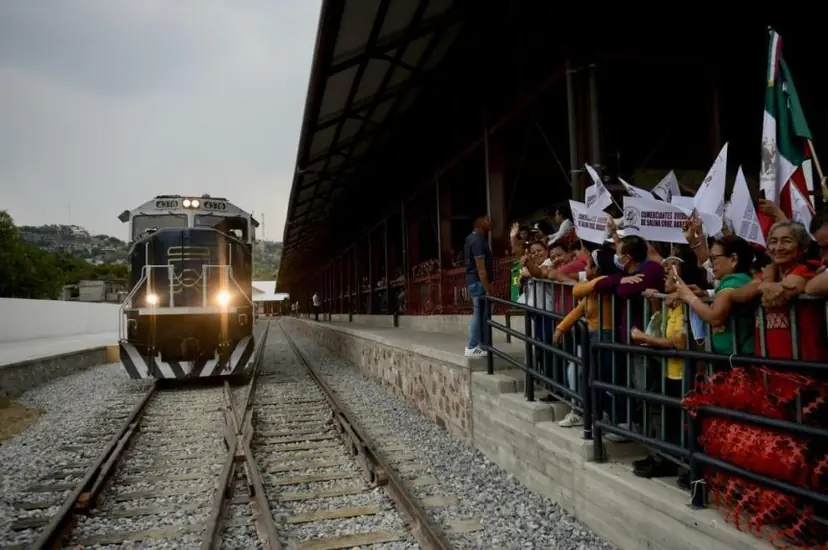
Meeting this demand, Mexico has begun operating a 300km multimodal logistics rail line crossing the Isthmus of Tehuantepec as an alternative to the Panama Canal, a so-called 'Dry Canal.' While there is the physical inconvenience of transshipment between ships and rail, it is receiving attention as a route that can dramatically resolve the uncertainties of the Panama Canal, as it can connect both coasts in just 9 hours to cross the continental land bridge and 72 hours including all transshipment.
Panama has also introduced a new paradigm to bypass the structural limitation of drought. Instead of relying solely on waterways, it has embarked on a new 'Interoceanic Energy Corridor' project that connects terminals on both the Atlantic and Pacific coasts by constructing gas pipelines on land. Through this, vessels will be able to complete transcontinental energy transport via land piping networks without having to pass through the water-strapped canal.
In the Eurasia continent, the 'Middle Corridor (TITR),' which crosses Central Asia and the Caspian Sea to bypass Russia, which is blocked by sanctions, has been elevated beyond its existing status as a secondary alternative to an essential core route. Although there is a climatic constraint of falling water levels in the Caspian Sea, it is rapidly establishing itself as the backbone of new land-sea multimodal transport based on massive rail infrastructure investments by the countries along the route. As such, the massive reorganization of the global economic map to guarantee supply chain stability, even at the cost of time and money amidst macroeconomic crises, has already begun.
![[Supply Chain Detours] ① Finding Another Way to Avoid War and Climate Disaster](https://s.bizhankook.com/attachments/2026/07/12752f5971a9_639505e7.jpg)
![[Supply Chain Detours] ② Expectations and Concerns Surrounding the 'Trans-Mexico Railway' as an Alternative to the Panama Canal](https://s.bizhankook.com/attachments/2026/07/a7e020919bbb_9ef3d72b.jpg)
![[Supply Chain Detours] ③ How the Hormuz Blockade Reshaped the Maritime Logistics Map](https://s.bizhankook.com/attachments_webp_no_wm/2026/07/134357_no_wm_d75f72f0.webp)
![[Supply Chain Detours] ④ Is the ‘Middle Corridor,’ Spotlighted by the Russia-Ukraine War, the New Silk Road?](https://s.bizhankook.com/attachments_webp_no_wm/2026/07/134633_no_wm_84fcb68e.webp)